Elvish Tattoo Ideas: What to Know Before You Commit
A tattoo is one of the few decisions where “close enough” genuinely isn’t good enough, which makes Elvish tattoo ideas a slightly different challenge than picking a font off a design board. Get the translation wrong, mix up a script detail, or misjudge a phrase’s tone, and you’re not looking at a quick edit; you’re looking at something permanent. That’s exactly why this topic deserves more care than a five-minute Google search usually gets.
Here’s how to approach it properly, from choosing a phrase to verifying it before you ever sit in the chair.
Why Elvish Works So Well as Tattoo Inspiration
Part of the appeal is visual. Tengwar script has a flowing, almost calligraphic quality that reads beautifully on skin, unlike blockier scripts that can feel stiff in tattoo form. But the deeper appeal is meaning. Tolkien built real linguistic weight into Sindarin and Quenya, so a well-chosen phrase isn’t just decorative; it’s carrying genuine significance drawn from an entire constructed mythology.
That combination, visual elegance plus real depth, is rare enough to explain why this remains one of the most requested tattoo styles among fantasy fans.
Popular Categories of Elvish Tattoo Ideas
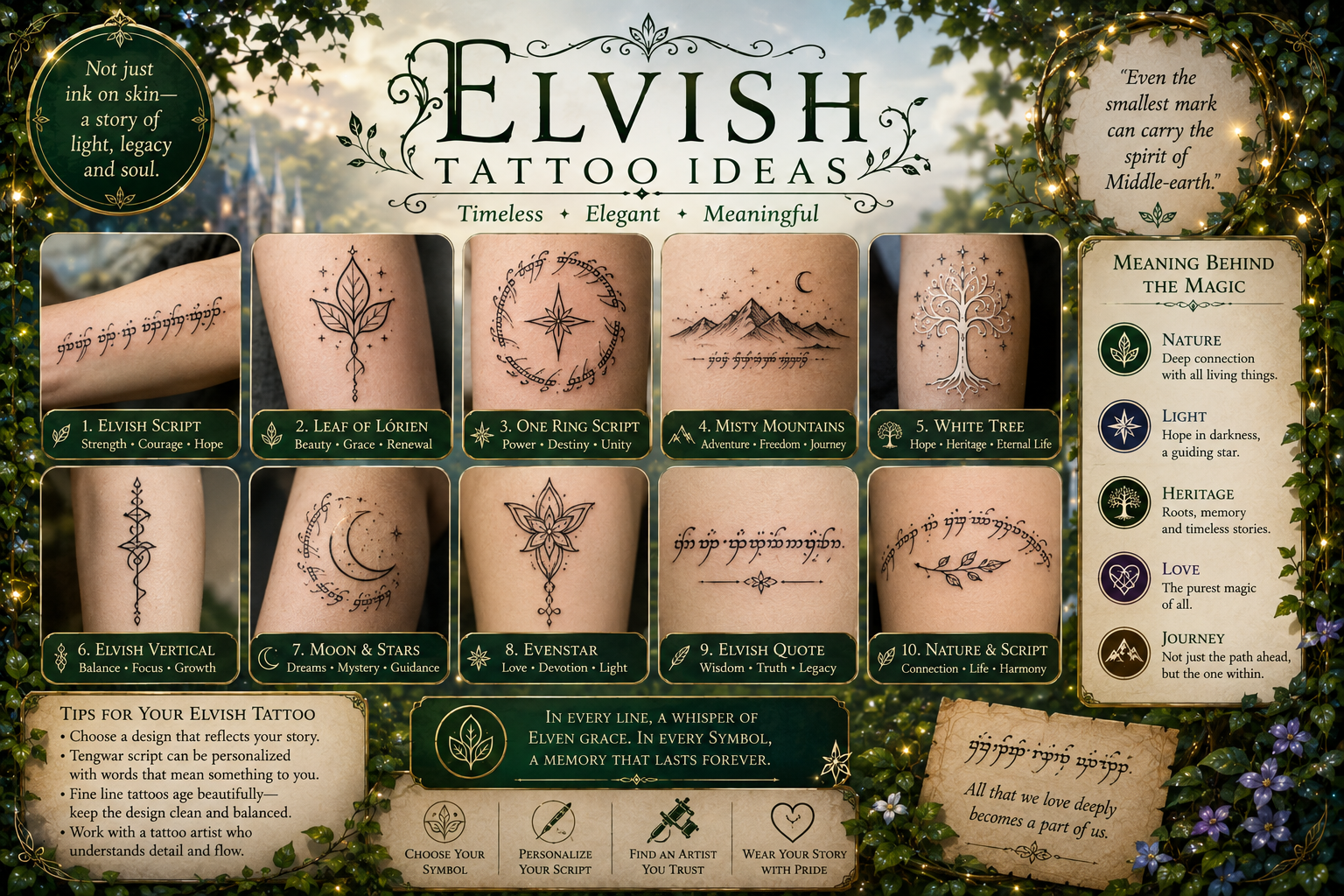
Most Elvish tattoo ideas fall into a handful of recognizable categories:
- Single names, transliterated phonetically into Tengwar script
- Short blessings or protective phrases, often tied to safety, strength, or hope
- Meaningful single words, like “light,” “star,” or “friendship,” translated into Sindarin or Quenya vocabulary
- Quotes drawn directly from Tolkien’s writing, though these require extra care since exact documented phrasing is limited
Shorter options across all four categories tend to translate more reliably, simply because Tolkien’s surviving vocabulary is naturally limited compared to a modern spoken language.
Choosing Between Script and Word Translation
There are really two different approaches here, and they produce very different results:
- Phonetic Tengwar transliteration keeps your original word or name intact, just rendered in Elvish script
- True translation replaces your word with an actual Sindarin or Quenya word carrying similar meaning
Neither is more “correct” than the other, but they answer different questions. If you want your own name in Elvish letters, choose transliteration. If you want an Elvish word meaning “courage,” choose true translation.
Steps to Take Before Getting Inked
- Confirm which language, Sindarin or Quenya, your chosen phrase belongs to, and don’t mix vocabulary between the two
- Cross-check your translation against more than one source, since even small errors become permanent once tattooed
- Ask for a written explanation of how each sound or word was translated, not just the final script image
- Bring a printed, verified version to your tattoo artist rather than relying on their interpretation of a screenshot
- Consider a small test placement first if you’re translating a longer or less common phrase
That third step matters more than people expect. A tool that explains its reasoning gives you something to actually verify, rather than just something to trust blindly.
Mistakes That Show Up Again and Again
- Trusting a single translation source without cross-referencing it
- Choosing a phrase too long or idiomatic for Tolkien’s documented vocabulary to support cleanly
- Mixing Sindarin and Quenya elements in the same design without realizing it
- Skipping pronunciation research entirely, even though most people eventually get asked what it says
- Rushing the decision because a design “looks right,” without confirming what it actually says
Every one of these is avoidable with a bit of patience before the appointment, not after.
Final Thoughts
Good Elvish tattoo ideas start with research, not inspiration alone. Take the time to choose a phrase Tolkien’s vocabulary can actually support, verify it against more than one source, and understand exactly what you’re about to make permanent. Do that groundwork properly, and what goes on your skin will carry real meaning long after the novelty of “cool fantasy script” wears off.