How to Write your name Elvish Guide
How to Write Your Name in Elvish: A Step-by-Step Guide
There’s something quietly magical about seeing your own name reimagined in another language, especially one built with the care and depth Tolkien poured into Elvish. Maybe you’re planning a tattoo, designing a bookplate, or just curious what your name would look like carved into a gate in Rivendell. Whatever the reason, an Elvish name translator can get you there, but only if you understand how the process actually works.
This guide breaks it down so your result feels authentic rather than random.
Why Names Are Trickier Than You’d Expect
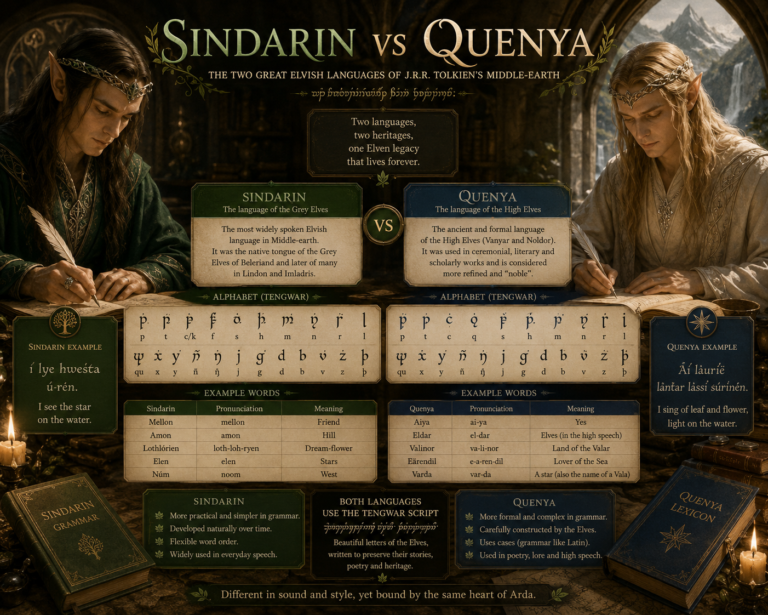
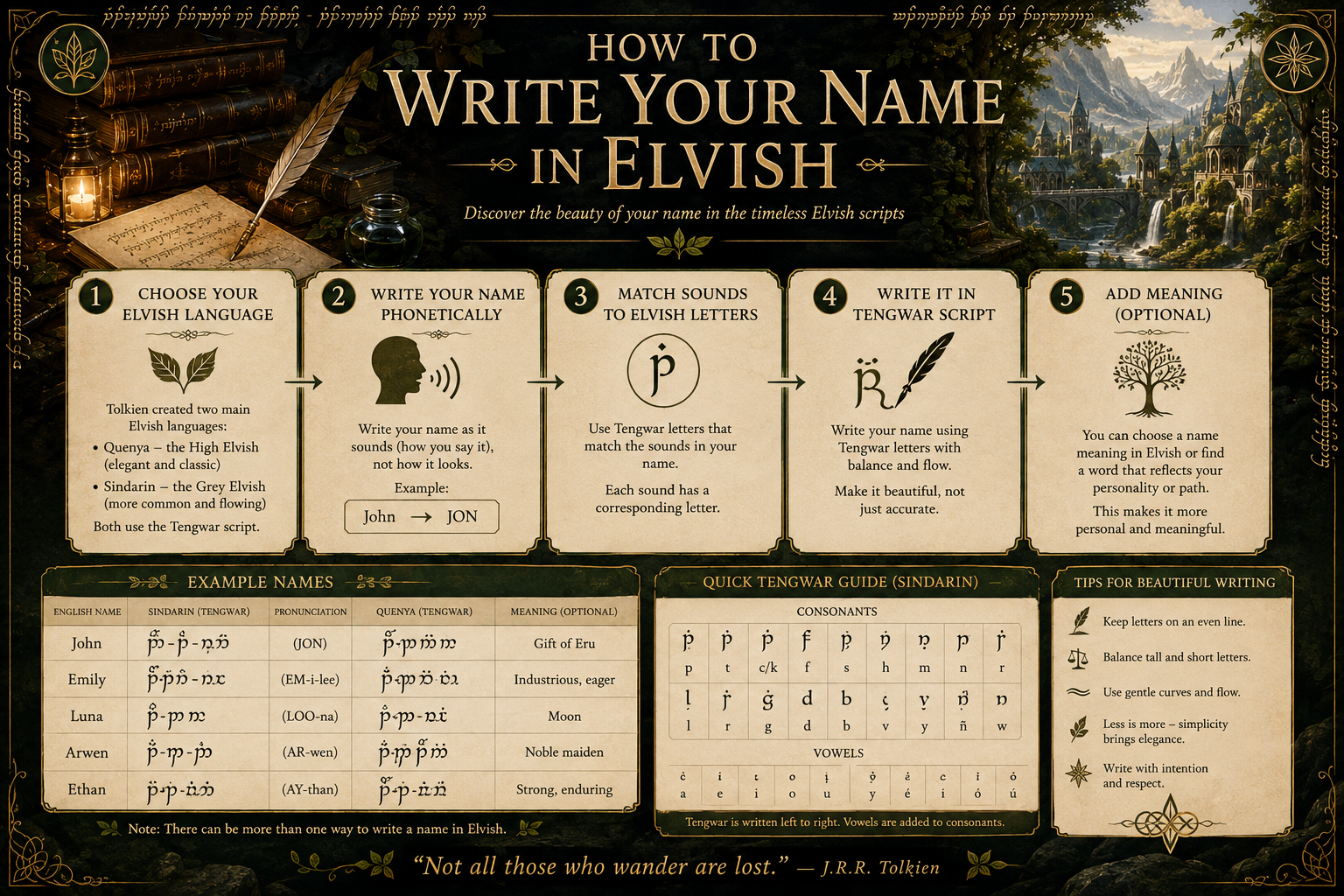
Names don’t always translate the way ordinary words do. Tolkien’s Elvish languages, Sindarin and Quenya, were built around meaning and sound patterns, not a one-to-one dictionary swap. So when you enter a name into an Elvish name translator, one of two things usually happens: the tool either transliterates the sounds of your name into Tengwar script, or it finds an Elvish word with a similar meaning and offers that instead.
Neither approach is “wrong,” but they produce very different results, and knowing which one you’re getting matters.

Step 1: Decide Between Sound and Meaning
Before translating anything, pick your approach:
- Phonetic transliteration – your name is converted into Tengwar characters based on how it sounds, keeping the name recognizable
- Meaning-based translation – your name’s meaning (if it has a known one) is translated into an Elvish word or phrase instead
Most people choose phonetic transliteration because it keeps their actual name intact, just written in a new script. Meaning-based translation tends to suit names with a clear, well-documented origin.

Step 2: Enter Your Name Carefully
Spelling matters more than people expect. Feed your name exactly as it’s meant to be pronounced, and double-check for regional spelling quirks (like “Katherine” versus “Catherine”) before submitting it. A reliable Elvish name translator will process the sounds precisely as entered, so small input errors carry through to the final script.

Step 3: Review the Tengwar Output
Once you’ve run your name through the translator, you’ll typically see two things: the Elvish letters (Tengwar script) and a written explanation of how each sound was mapped. Take a moment to read that explanation rather than skipping straight to the image. It tells you whether every sound in your name had a direct Tengwar equivalent, or whether an approximation was used.

Step 4: Cross-Check Before Permanent Use
If you’re planning to tattoo, engrave, or otherwise permanently use a name from your Elvish name translator, don’t stop at one result. Compare it against a second source, whether that’s another translator, a Tengwar reference chart, or a Tolkien linguistics community forum. It’s a bit like getting a second opinion before surgery: rarely necessary, but never regretted when it matters most.

Step 5: Learn to Read What You’ve Created
A translated name is far more meaningful once you can actually read it yourself. Tengwar assigns different letter shapes to different sounds, and once you learn even the basic consonant and vowel markings, your own name stops looking like decoration and starts looking like, well, your name.
What Makes a Trustworthy Elvish Name Translator
Plenty of tools will spit out something that looks impressive at a glance. Fewer will get the details right. Look for a translator that:
- Clearly states whether it used phonetic or meaning-based translation
- Shows its reasoning for how each sound or word was chosen
- Flags names or sounds with no clean Tengwar equivalent
- Is updated over time based on linguistic research and user feedback
Our tool was built with exactly these priorities, so you’re not left guessing how your name became what it became.
Common Mistakes to Avoid
- Assuming every name has an official “Elvish meaning” behind it
- Skipping the explanation and only looking at the script
- Using inconsistent spelling between translation attempts
- Treating a single result as final without cross-checking
- Choosing meaning-based translation for a name with no documented origin
Sidestepping these five habits will save you a redo later, especially if permanence is involved.
Final Thoughts
Turning your name into Elvish is part linguistics, part personal ritual, and a good Elvish name translator should respect both sides of that. Take the time to choose the right approach, read the reasoning behind your result, and learn just enough Tengwar to recognize your own name when you see it. Do that, and what started as a fun experiment starts to feel like something genuinely yours.