Elvish Words for Love: What They Mean and How to Use Them
Some feelings genuinely outgrow the English language, or at least start to feel a little worn out after enough birthday cards and movie dialogue. That’s usually the moment people go looking for Elvish words for love instead, drawn by the idea that Tolkien’s constructed languages might capture something English can’t quite reach. Turns out, they’re not entirely wrong.
Here’s a look at what these words actually mean, where they come from, and how to use them without stumbling into common mistakes.
Why Elvish Feels Different for Romantic Language
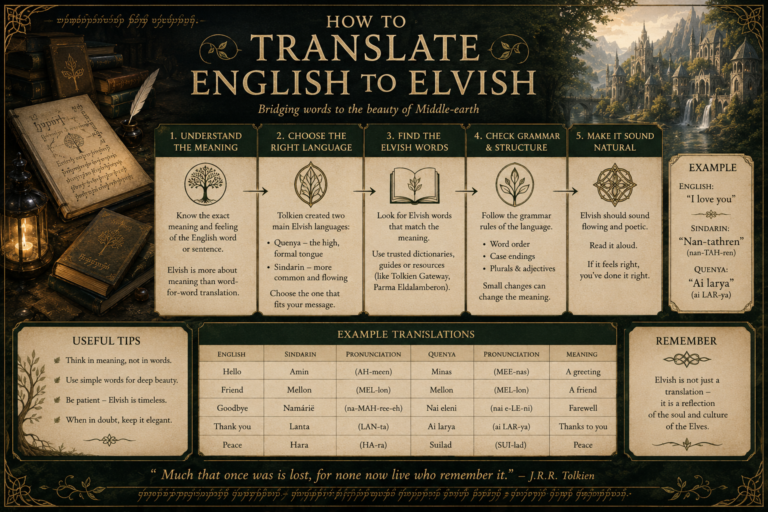
Sindarin and Quenya weren’t built around slang or shorthand the way modern languages naturally accumulate them. Every documented word carries a fairly direct, traceable meaning, which gives romantic vocabulary a certain sincerity that’s hard to fake. Saying “melda,” roughly meaning “beloved” in Quenya, doesn’t carry decades of overuse the way “babe” or “sweetheart” might. It still feels earned.
That freshness is part of the draw, but it also means these words deserve to be used with a bit of intention rather than tossed around casually.
Common Elvish Words Associated With Love
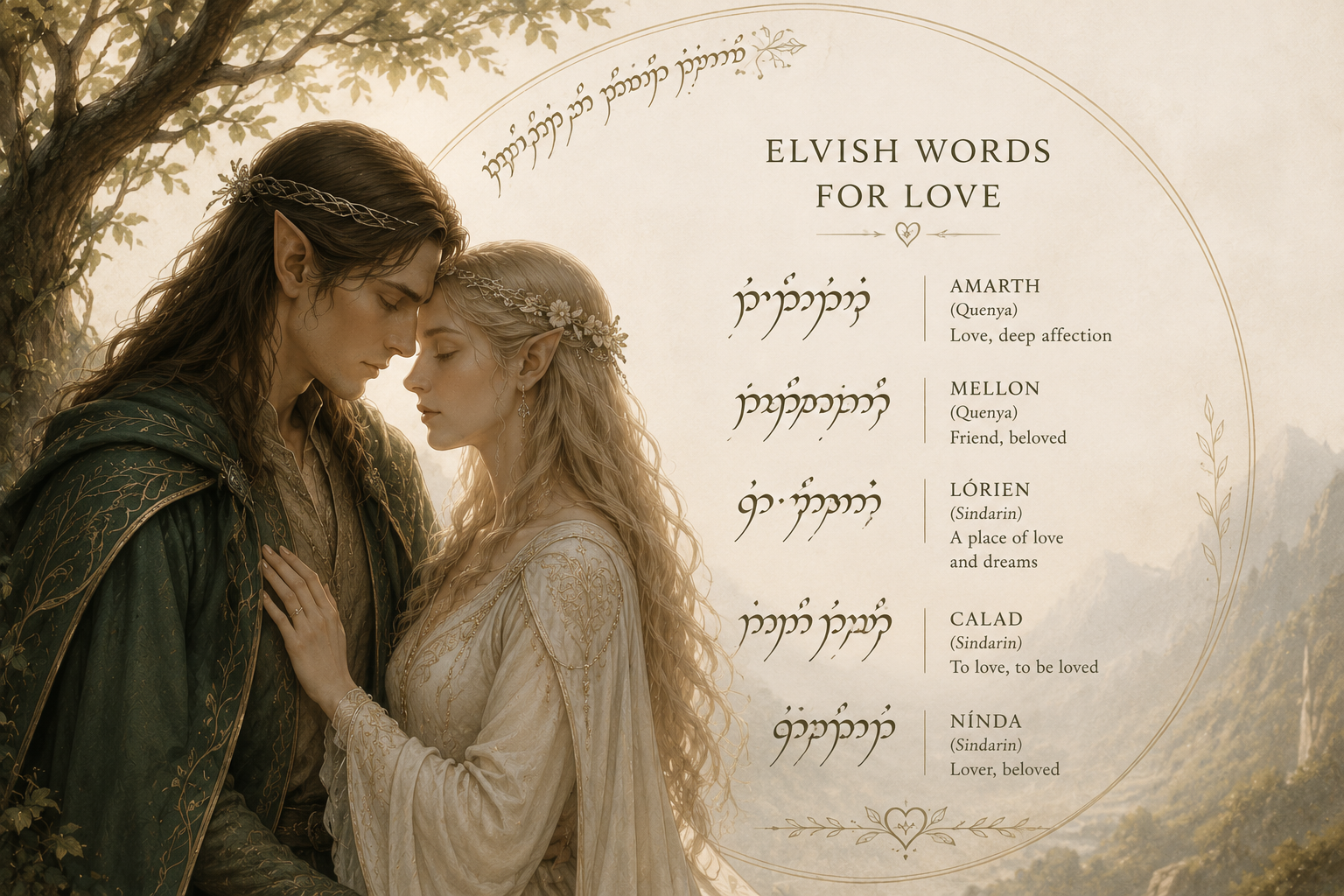
A handful of Elvish words for love show up frequently across fan translations and community resources:
- Melda / Meleth – roughly “beloved” or “love” in Quenya and Sindarin respectively, among the most requested romantic terms
- Aina – often associated with “holy” or “blessed,” sometimes used to elevate a phrase about a loved one
- Gwend – generally understood as “friend” or “close companion” in Sindarin, useful for phrases about deep bonds beyond romance
- Elenya – tied to “star-related,” frequently used poetically to describe someone cherished, echoing Elvish reverence for starlight
Each of these draws from documented vocabulary rather than being invented purely to sound romantic, which matters if authenticity is important to you.
Sindarin or Quenya for Romantic Phrases?
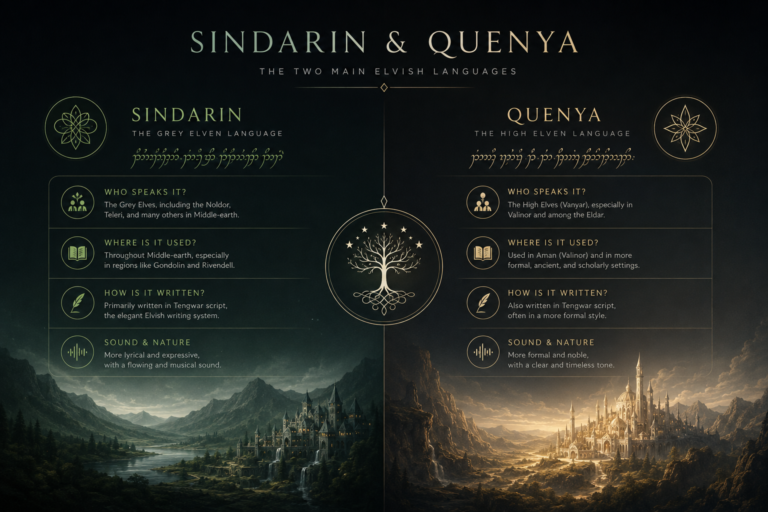
The choice here comes down to the same tonal split you’ll find throughout Tolkien’s languages:
- Sindarin feels warmer and more conversational, well suited for everyday terms of endearment
- Quenya feels more formal and elevated, fitting for a phrase meant to feel timeless or ceremonial
A quiet, everyday nickname probably belongs in Sindarin. A phrase meant for a ring inscription or a wedding line might sit better in Quenya.
How to Translate a Romantic Phrase Accurately
- Keep the phrase short; Tolkien’s documented vocabulary for abstract romantic concepts remains limited compared to a modern spoken language
- Confirm which language your chosen word belongs to before pairing it with anything else
- Cross-check the meaning against more than one source, since misattributed “Elvish word” lists circulate widely online
- Learn the literal meaning behind a word, not just its popular romantic association, before using it somewhere permanent
That last point catches people off guard fairly often. A word associated with love in casual usage might carry a slightly different literal meaning once you dig into its actual Sindarin or Quenya root.
Mistakes to Avoid
- Trusting a single online list without verifying the word’s documented origin
- Mixing Sindarin and Quenya vocabulary within the same phrase
- Assuming every romantic-sounding word has real linguistic backing behind it
- Skipping pronunciation practice for a word meant to be spoken aloud, like in a vow or toast
Small verification steps here go a long way toward avoiding an awkward correction later.
Final Thoughts
Elvish words for love carry a kind of sincerity that’s genuinely rare to find elsewhere, precisely because Tolkien built them with real linguistic care rather than convenience. Take a moment to verify a word’s actual meaning, choose the language that matches your tone, and use it with the same intention that went into building it. Handled that way, a single borrowed word can end up meaning more than an entire paragraph ever could.