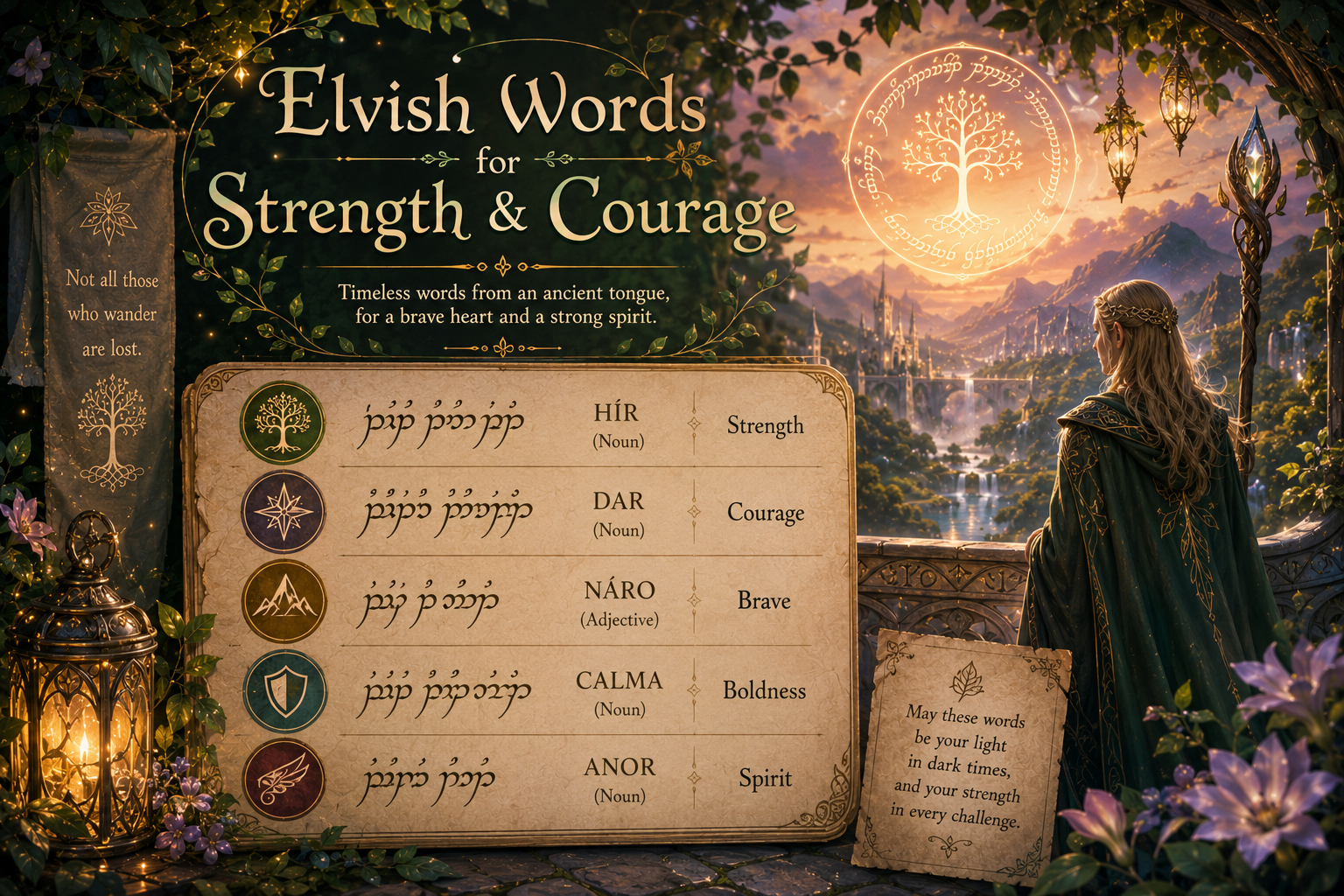
Elvish Words for Strength and Courage
Some words are requested more than almost any others when people start exploring Elvish translation, and strength and courage sit right near the top of that list. It makes sense. These are concepts people want to carry with them, whether on skin, in a piece of jewelry, or just as a quiet personal reminder. Elvish words for strength offer something a generic English tattoo or motto often can’t: real linguistic weight, drawn from a mythology built entirely around endurance against overwhelming odds.
Here’s what these words actually mean, and how to choose one that fits.
Why Strength and Courage Run So Deep in Tolkien’s World
Middle-earth’s entire narrative arc centers on small, seemingly powerless characters standing firm against forces far larger than themselves. That theme shaped the languages directly; Sindarin and Quenya both carry rich, well-documented vocabulary around bravery, endurance, and resolve, since Tolkien returned to these ideas constantly throughout his writing. It’s part of why this vocabulary category tends to be more reliably documented than more modern or abstract concepts.
Common Words for Strength
A handful of Elvish words for strength appear consistently across Sindarin and Quenya resources:
- Beleg – Sindarin for “mighty” or “great,” also used as a proper name within Tolkien’s writing
- Túr – Sindarin for “power” or “victory,” carrying a strong, assertive tone
- Ndore or related Quenya roots tied to endurance and steadfastness, often used in more formal contexts
- Alph – occasionally associated with resilience-adjacent imagery in fan translation communities, though less directly documented than other options here
Sindarin strength-related words tend to feel bold and direct, while Quenya alternatives often carry a more formal, almost heroic register.
Common Words for Courage
Courage carries slightly different vocabulary than raw strength, worth distinguishing carefully:
- Beren – meaning roughly “bold” or “brave,” also famously used as a character name in Tolkien’s legendarium
- Cam – tied to endurance in the face of hardship, in some Sindarin-derived interpretations
- Compound phrases combining “heart” with “strength” roots, since Elvish, like many real languages, sometimes builds courage-related meaning from heart imagery rather than a single standalone word
That last point matters for anyone hoping for a single clean word. Courage in Elvish sometimes comes through compound phrasing rather than one isolated term, so it’s worth confirming exactly what you’re getting before committing to it.
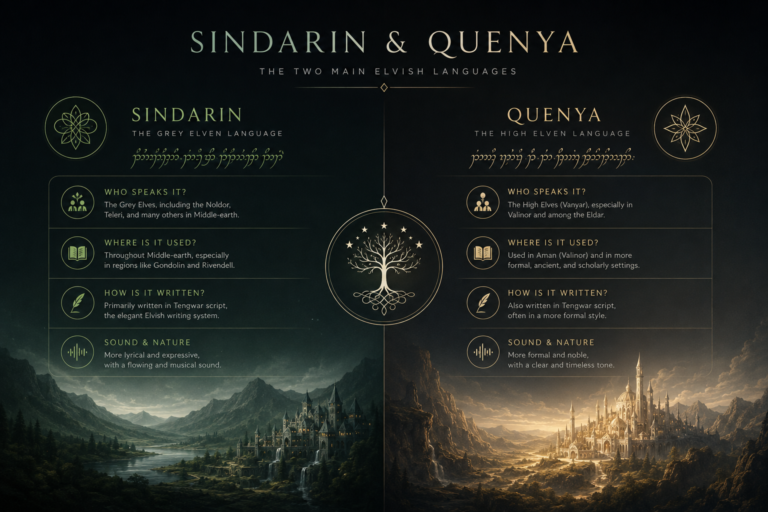
Sindarin or Quenya for Strength and Courage?
The familiar tonal split applies here too:
- Sindarin words feel grounded and immediate, well suited for something personal and direct
- Quenya words carry more formality and gravity, fitting for something meant to feel timeless or ceremonial
A personal reminder of resilience probably fits Sindarin’s warmer tone. A phrase meant to feel legendary or heroic might sit better in Quenya.
How to Choose and Verify Your Word
- Confirm whether the word you’ve found is directly documented or a fan-reconstructed approximation, since strength and courage vocabulary includes both
- Keep single-word choices simple; compound phrases require more careful verification
- Cross-check meaning against more than one source before permanent use, since misattributed word lists circulate widely
- Consider the character or story association behind a word, like Beren or Beleg, since these carry extra narrative weight beyond the literal translation
That first point deserves real attention if authenticity matters to you specifically, since not every popular “strength” word floating around fan communities traces back cleanly to Tolkien’s own documented vocabulary.
Final Thoughts
Elvish words for strength and courage carry genuine mythological weight, built from a story where quiet resolve consistently outlasts overwhelming force. Take the time to verify a word’s documented origin, choose the language whose tone matches your intent, and consider whether a single word or compound phrase actually captures what you’re after. Chosen with that care, a single Elvish word can carry as much meaning as an entire motto.