Sindarin vs Quenya: What’s the Difference Between Tolkien’s Elvish Languages?
Ask a casual fan what “Elvish” sounds like, and they’ll usually picture one language. Ask a longtime Tolkien reader the same question, and you’ll get a follow-up: which one do you mean? That single question sits at the heart of the Sindarin vs Quenya debate, and understanding it will change how you read, translate, and even pronounce Elvish from this point forward.
Here’s what actually separates the two, without the jargon overload most explanations bury you in.
A Quick History Lesson (Without the Overwhelm)
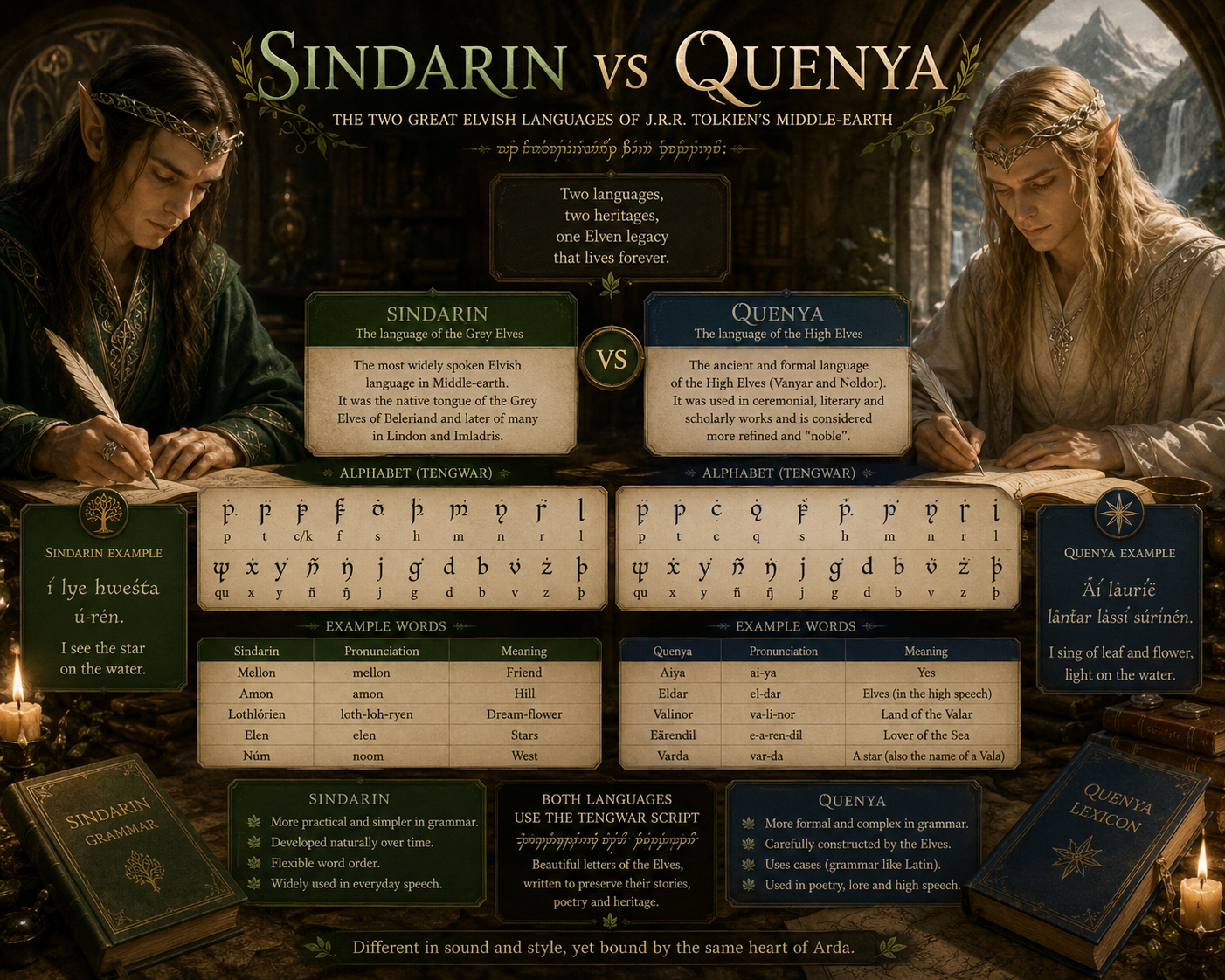
Tolkien didn’t invent one Elvish language and call it a day. He built an entire family of them, evolving over thousands of fictional years, much like real human languages branch and shift over time. Quenya and Sindarin are the two most developed members of that family, but they didn’t grow side by side. Quenya came first, spoken by the Elves who journeyed to Valinor, while Sindarin developed separately among the Elves who stayed behind in Middle-earth.
That split explains almost every difference you’ll notice between them.
Sound and Feel: Latin vs Welsh
If you’ve ever wondered why Quenya sounds more formal and Sindarin sounds more fluid, the answer lies in Tolkien’s own inspirations.
- Quenya draws heavily from Latin and Finnish, giving it a structured, almost ceremonial rhythm
- Sindarin draws from Welsh, producing softer consonant shifts and a more musical, flowing sound
You can hear this difference even without understanding a single word. Quenya feels like it belongs in a hymn; Sindarin feels like it belongs in conversation.
How They’re Used in Middle-earth
By the time the events of The Lord of the Rings take place, Quenya has become mostly ceremonial, reserved for songs, formal titles, and ancient lore. Sindarin, meanwhile, functions as the everyday spoken language among Elves in Middle-earth, and it’s the version most commonly heard in dialogue throughout Tolkien’s writing.
This distinction matters practically, too. If you’re translating a phrase meant to feel personal or conversational, Sindarin usually fits better. If you want something that reads as formal, ancient, or ceremonial, Quenya is the stronger choice.
Grammar Differences Worth Knowing
Both languages share Tolkien’s underlying linguistic logic, but the Sindarin vs Quenya grammar split runs deeper than most guides mention:
- Quenya uses a more complex case system, closer in spirit to Latin or Finnish grammar
- Sindarin shows heavier use of consonant mutations, where a word’s beginning changes depending on what precedes it
- Word order and pluralization patterns differ enough that vocabulary from one language rarely transfers cleanly into the other
This is exactly why mixing the two, even accidentally, tends to produce results that feel “off” to anyone familiar with either language.
Which One Should You Choose for a Translation?
If you’re deciding between the two for a name, tattoo, or piece of art, ask yourself one simple question: does this feel personal and everyday, or formal and timeless? That’s the real test behind any Sindarin vs Quenya decision.
- Choose Sindarin for names, everyday phrases, or anything meant to feel natural and spoken
- Choose Quenya for titles, ceremonial phrases, or anything meant to feel ancient and elevated
There’s no universally “correct” choice; it depends entirely on the tone you’re going for.
A Common Mistake to Avoid
One of the most frequent errors beginners make is blending vocabulary from both languages in a single phrase, unaware that Sindarin and Quenya don’t mix and match the way English and borrowed foreign words sometimes do. Each language has its own internal grammar, and combining them usually produces something neither language would actually recognize.
Final Thoughts
The Sindarin vs Quenya distinction isn’t just trivia for hardcore fans; it shapes how a translated phrase actually sounds, feels, and functions within Tolkien’s world. Sindarin brings warmth and familiarity, while Quenya brings weight and formality. Once you know which effect you’re after, choosing between the two stops being a guessing game and starts being a genuine creative decision.