Elvish vs Klingon vs Dothraki: How Fiction’s Languages Compare
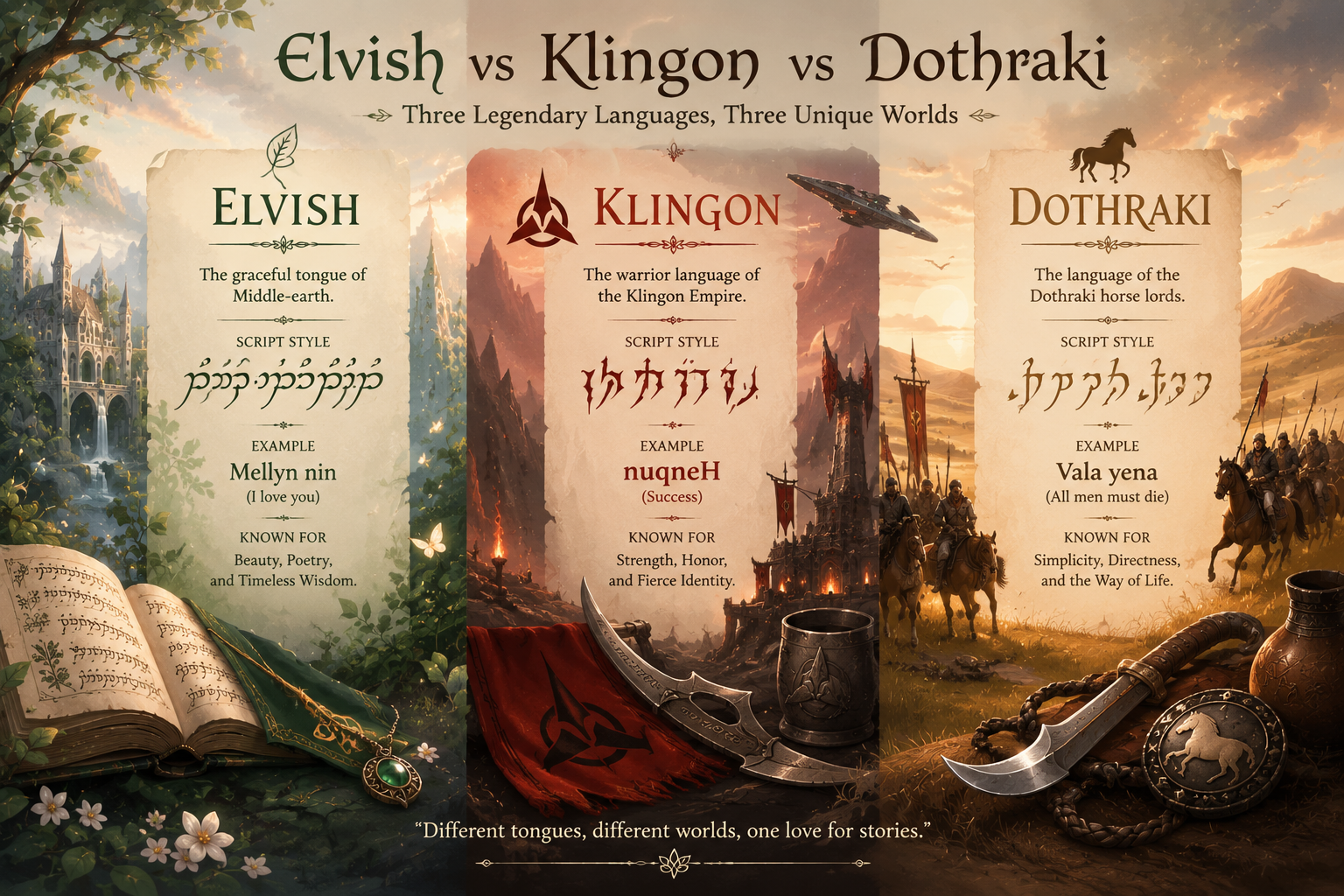
Fantasy and sci-fi have given us more than memorable characters; they’ve given us entire languages, some detailed enough that people genuinely learn to speak them. The Elvish vs Klingon vs Dothraki comparison comes up often among fans wondering which constructed language is the most complete, the most realistic, or simply the most fun to learn. The answer depends on what you’re actually looking for.
Here’s how these three genuinely stack up, and why the differences matter more than casual fandom trivia.
Where Each Language Came From
Understanding origin explains a lot about how developed each language ended up:
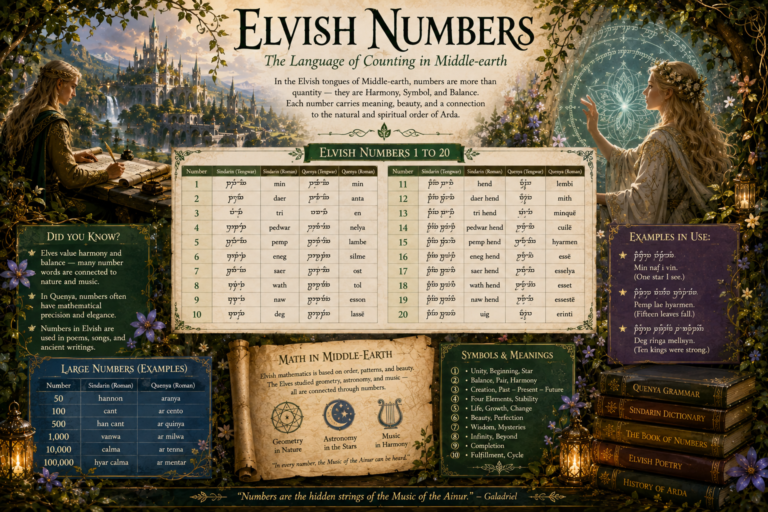
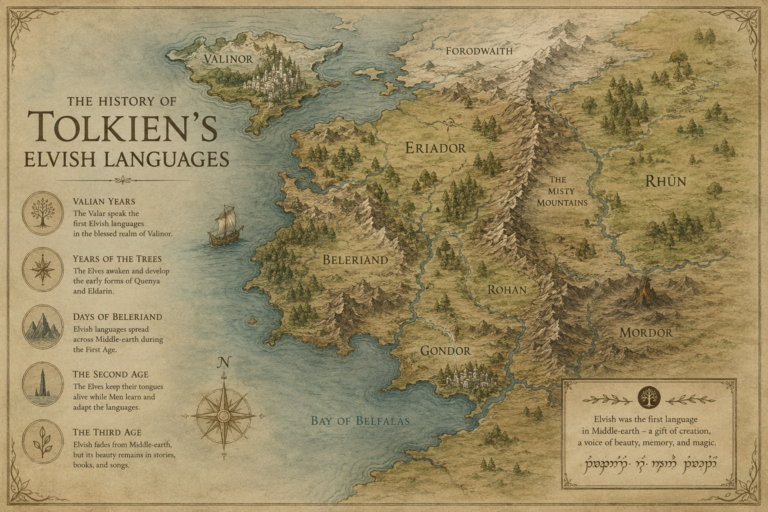
- Elvish (Sindarin and Quenya) was built by J.R.R. Tolkien, a professional philologist, over decades, starting as a private hobby long before Middle-earth existed as a story
- Klingon was developed by linguist Marc Okrand for Star Trek, designed intentionally to sound harsh and alien, built more quickly and with a specific dramatic purpose in mind
- Dothraki was created by linguist David J. Peterson for the Game of Thrones television adaptation, expanding a handful of words from George R.R. Martin’s novels into a fully functional language
Each language reflects its creator’s goals: Tolkien pursued personal, lifelong linguistic artistry, while Okrand and Peterson worked within tighter production timelines for film and television.
Comparing Vocabulary Depth
This is where the differences become most obvious:
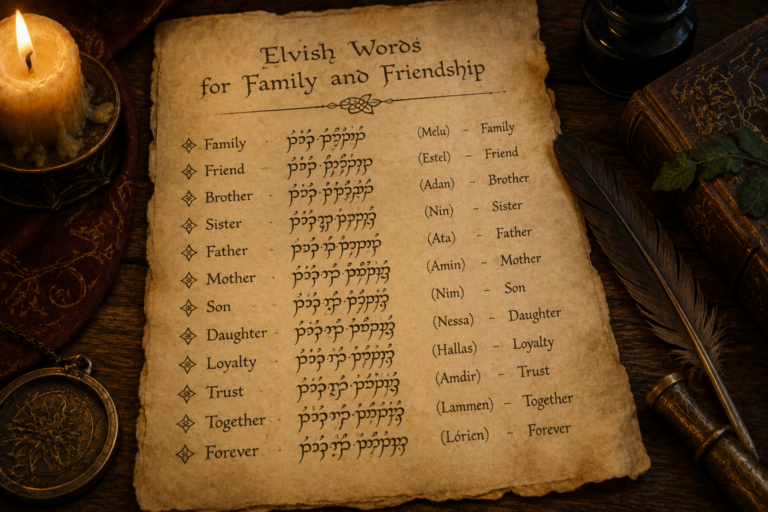
- Elvish vocabulary is extensive but famously incomplete, since Tolkien died before finishing it, leaving real documented gaps around modern or abstract concepts
- Klingon has a large, deliberately maintained vocabulary, actively expanded over decades by the Klingon Language Institute
- Dothraki started smaller but has grown substantially since the show’s debut, with Peterson continuing to develop it well beyond what appeared on screen
Klingon arguably has the most complete modern vocabulary of the three, partly because it was built with continuous expansion in mind from the start, unlike Elvish’s more fragmented, decades-spanning development.
Grammar and Structural Complexity
- Quenya, part of the Elvish family, uses a complex case system similar in spirit to Finnish, considered one of the more grammatically intricate constructed languages in fiction
- Klingon grammar deliberately inverts common human language patterns, placing sentence elements in an unusual order specifically to feel alien and unfamiliar
- Dothraki grammar was built to feel naturalistic, drawing loosely on real-world language patterns to sound plausible as a spoken, evolving tongue
All three were built with genuine linguistic rigor, which sets them apart from many fictional languages that amount to little more than a name generator with a fantasy coat of paint.
Can You Actually Learn to Speak Them?
Yes, to varying degrees, and dedicated communities exist for all three:
- Elvish has a smaller but deeply committed scholarly community, working from Tolkien’s own notes and posthumously published material
- Klingon has perhaps the most structured learning path, including official dictionaries, courses, and even a certification-style proficiency test
- Dothraki has grown a genuinely active online learning community since the show’s popularity, with resources continuing to expand
If ease of learning matters most to you, Klingon’s dedicated infrastructure gives it a practical edge. If depth of narrative and mythological meaning matters more, Elvish is hard to beat.
Which One Is “Best”?
There’s no single right answer, since each language excels at something different:
- Choose Elvish if you want a language layered with mythological and emotional depth
- Choose Klingon if you want the most structured, learnable, actively maintained option
- Choose Dothraki if you want a naturalistic-feeling language tied to a modern, ongoing production
Final Thoughts
The Elvish vs Klingon vs Dothraki comparison ultimately comes down to what you value in a constructed language: mythological depth, structured learnability, or naturalistic feel. All three represent genuine linguistic craftsmanship, built by people who took the work seriously rather than treating it as decoration. Whichever one draws you in, that seriousness is exactly why these languages have outlasted the franchises that first introduced them.