Elvish Blessings and Phrases Every Fan Should Know
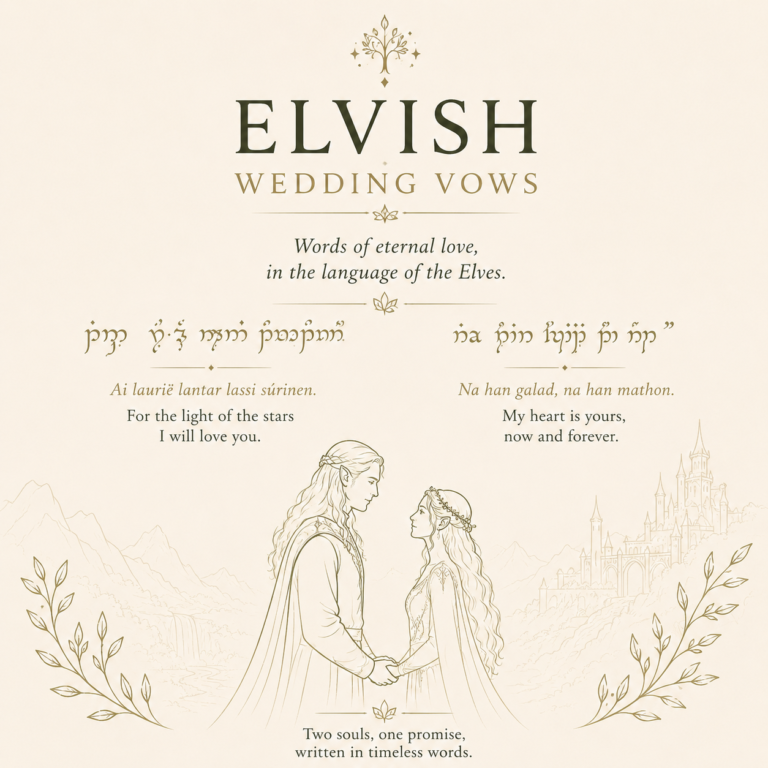
Some words carry weight far beyond their literal meaning, and Elvish blessings and phrases fall squarely into that category. They show up in wedding vows, tattoos, greeting cards, and quiet personal moments, usually because a single Elvish line can say something English somehow makes sound smaller. But borrowing these phrases well means understanding where they come from, not just how they sound.
This guide walks through the most meaningful ones, along with the context that makes them worth using correctly.
Why These Phrases Resonate With So Many Fans
Tolkien didn’t scatter Elvish phrases into his books as decoration. Every blessing, greeting, and farewell was built with intention, often reflecting themes of hope, protection, or friendship that run through the entire legendarium. That’s part of why these lines still feel meaningful decades later; they weren’t written to sound pretty, they were written to mean something.
Understanding that context turns a phrase from a nice-sounding string of syllables into something with actual emotional depth.
Common Elvish Greetings and Farewells
A few phrases have become widely recognized among fans of Elvish blessings and phrases, even outside dedicated Tolkien circles:
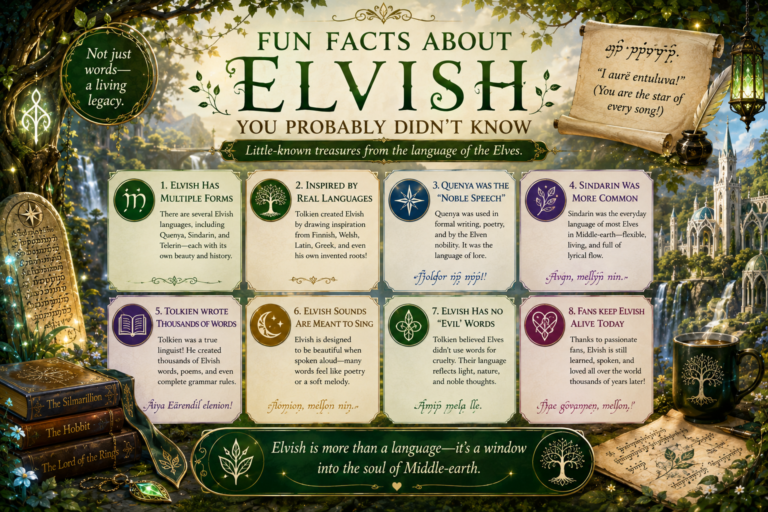
- “Mae govannen” – a warm Sindarin greeting, roughly meaning “well met”
- “Namárië” – a Quenya farewell, carrying a tone closer to “farewell forever” than a casual goodbye
- “Elen síla lúmenn’ omentielvo” – a Quenya phrase meaning something like “a star shines on the hour of our meeting,” often used for first encounters
Notice the tonal difference between the Sindarin and Quenya examples here. Sindarin greetings tend to feel conversational, while Quenya phrases often carry a more formal, almost poetic weight.
Blessings for Protection and Well-Being
Protective phrases are among the most requested Elvish blessings and phrases, often for tattoos or keepsakes meant to carry real personal meaning:
- Phrases wishing safety on a journey are common in Sindarin, reflecting the language’s everyday, spoken role in Middle-earth
- Blessings invoking light or stars often appear in Quenya, tying back to Elvish reverence for starlight as a symbol of hope
- Short protective phrases tend to translate more reliably than longer ones, since Tolkien’s documented vocabulary for abstract blessings remains limited
That last point matters if you’re hoping to use a longer, more elaborate blessing. Shorter, well-documented phrases are simply safer bets for accuracy.
Using Elvish Phrases Respectfully
Because these languages come from a beloved and carefully constructed fictional world, a little care goes a long way:
- Double-check any phrase against more than one source before using it permanently
- Understand the emotional weight of a phrase before applying it to a casual context; “Namárië,” for instance, isn’t a casual goodbye
- Avoid combining Sindarin and Quenya vocabulary in the same phrase, since the languages don’t mix grammatically
- Credit context when sharing translated phrases publicly, since misattributed “quotes” spread quickly online
None of this is about gatekeeping. It’s about making sure the words carry the meaning you actually intend.
How to Find and Verify an Elvish Phrase
- Start with a documented, well-known phrase rather than attempting to construct a long original sentence
- Cross-reference the translation against a second source or community resource
- Pay attention to which language, Sindarin or Quenya, the phrase belongs to, and keep that consistent
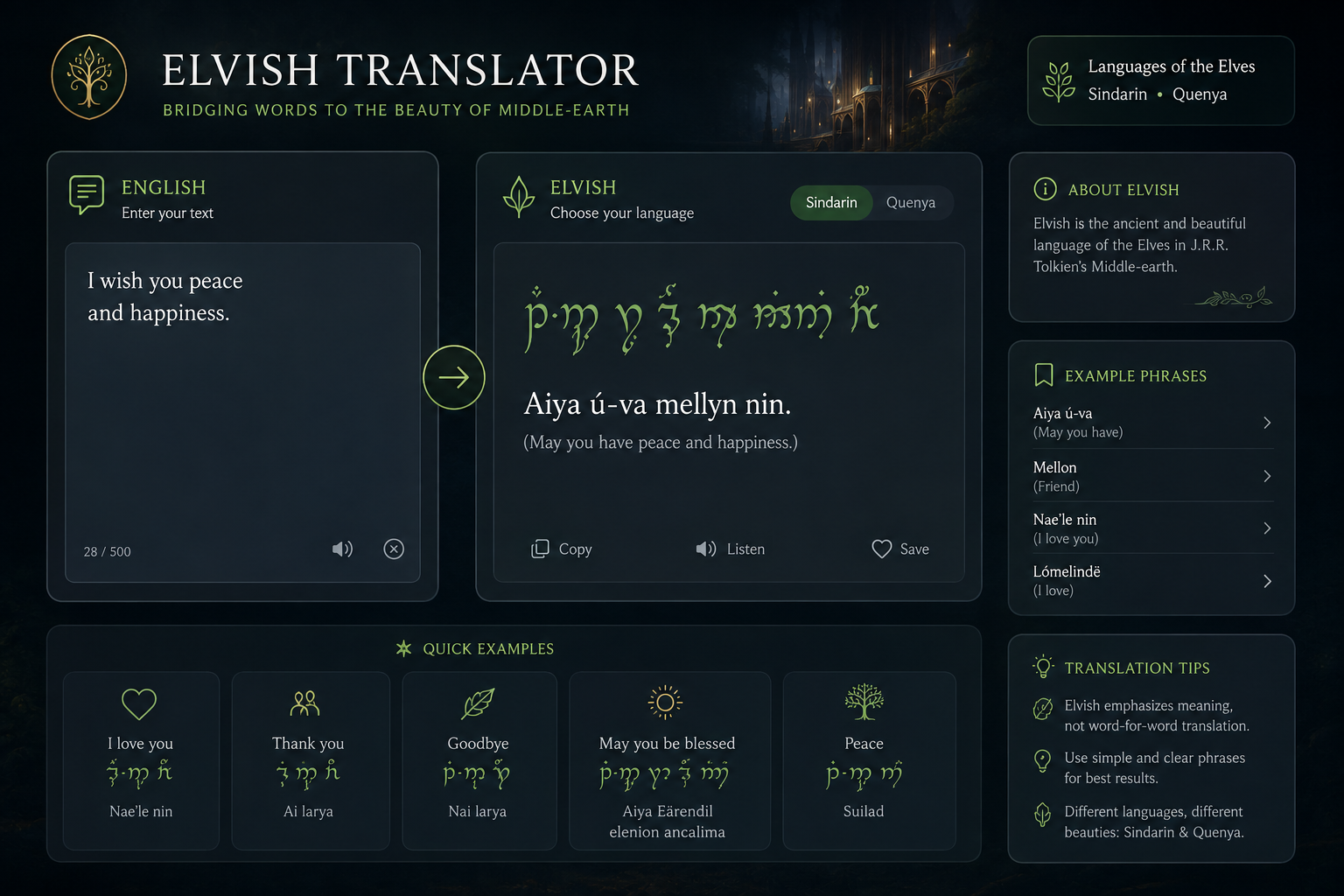
- Learn the literal, word-for-word meaning, not just the general sentiment, before committing to permanent use
Rushing this step is where most avoidable mistakes happen.
Final Thoughts
Elvish blessings and phrases carry more than surface-level charm; they carry pieces of a world built with genuine linguistic care. Take the time to understand where a phrase comes from, verify it before anything permanent, and use it in a context that matches its real emotional tone. Do that, and a few borrowed words from Middle-earth can end up meaning just as much to you as they did within Tolkien’s own story.