How to Say I Love You in Elvish
It’s one of the most searched Elvish phrases out there, and for good reason. Few sentences carry more weight than “I love you,” and saying it in a language built with as much care as Tolkien’s makes the moment feel a little more deliberate. Learning how to say I love you in Elvish isn’t complicated once you understand a few basics, but getting it right does take more than copying a random result off a search page.
Here’s how to say it correctly, in both Sindarin and Quenya, along with the context that makes it meaningful rather than just decorative.
The Short Answer
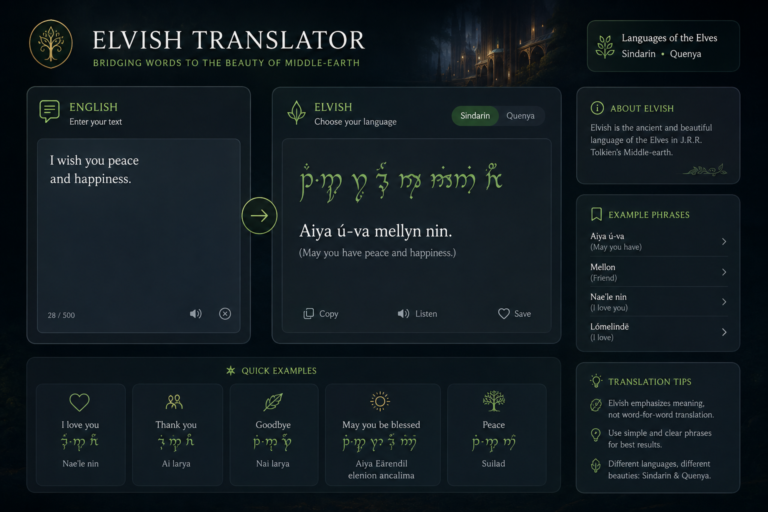
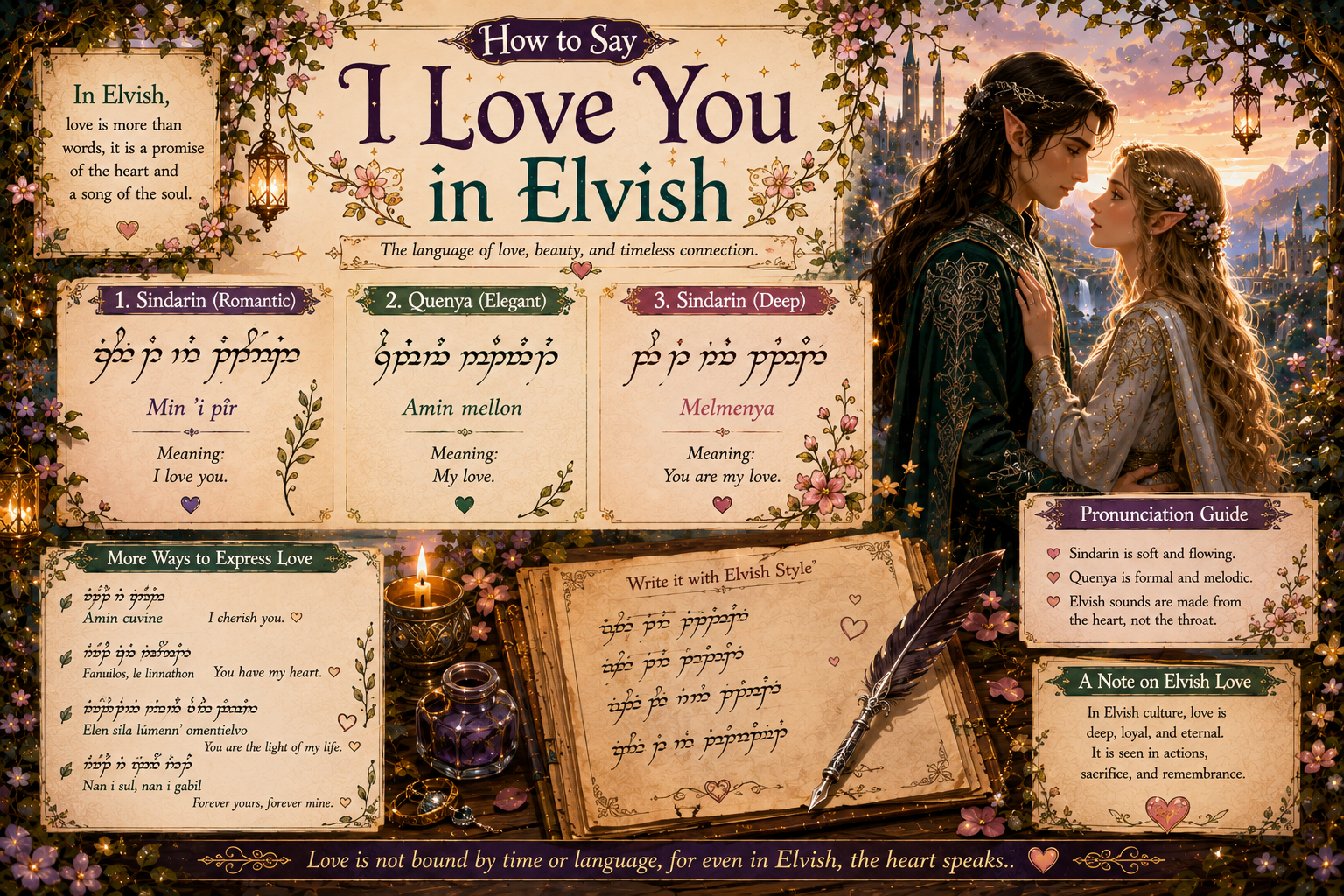
In Sindarin, a commonly cited phrase is “Le annon veleth,” roughly translating to “I give you love” or “I love you,” built from documented roots meaning “to give” and “love.” In Quenya, “Melin tye” is often used, drawing from “melë,” meaning “love,” combined with a first-person verb form.
Both are reasonable choices, but which one fits depends on the tone you’re going for.
Sindarin vs Quenya: Which Feels Right?
- Sindarin’s version feels warmer, more conversational, and closer to how Elves in Middle-earth actually spoke day to day
- Quenya’s version carries a more formal, elevated tone, closer to something you’d expect in a ceremonial or poetic context
A quiet, personal moment probably suits Sindarin better. Something inscribed for a wedding or meant to feel timeless might sit more naturally in Quenya.
Why This Phrase Requires a Bit of Caution
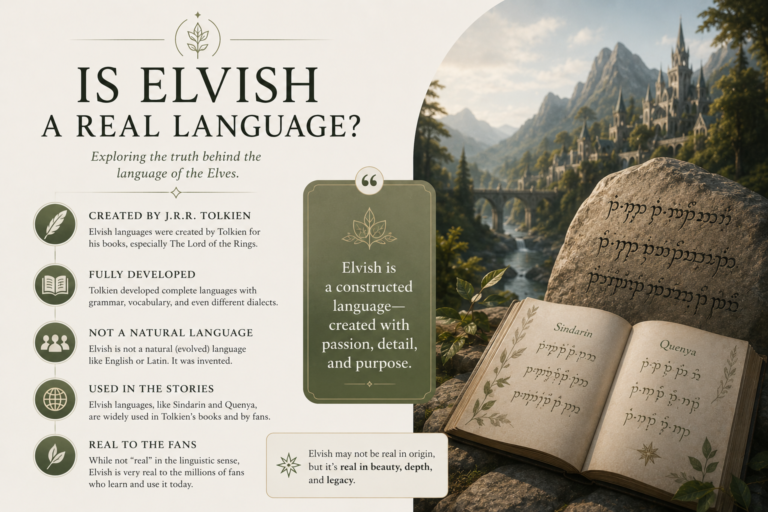
Here’s the honest caveat worth knowing: Tolkien never documented a single, universally agreed-upon phrase for “I love you” in either language. What circulates online today comes from careful, well-reasoned reconstruction by dedicated linguists working from documented word roots and grammar patterns, not a line pulled directly from Tolkien’s own writing. That doesn’t make it inauthentic exactly, but it does mean treating it as one interpretation rather than an unquestionable, official translation.
This is exactly the kind of nuance a transparent translation tool should explain rather than gloss over.
How to Pronounce It Correctly
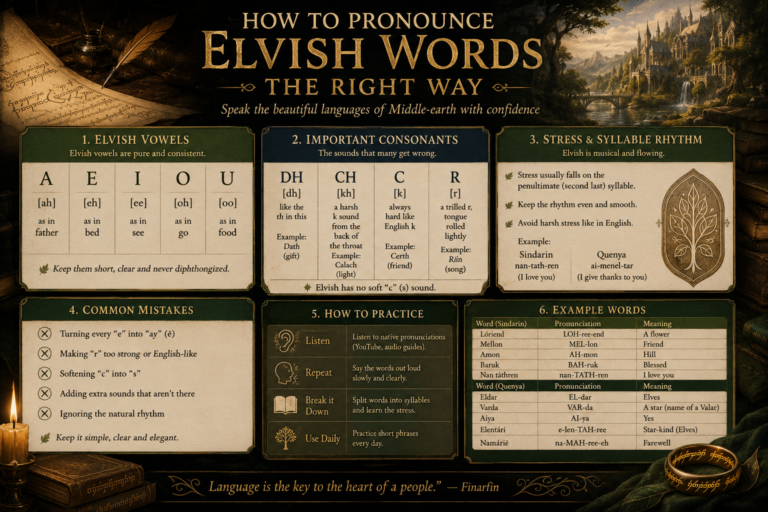
- Le annon veleth: pronounced roughly “leh AH-non VEH-leth,” with each vowel given its full, clear sound
- Melin tye: pronounced roughly “MEH-lin tyeh,” keeping the “e” sounds short and clean
Practicing slowly, syllable by syllable, before attempting full speed makes a noticeable difference in how natural it eventually sounds.
Using the Phrase Thoughtfully
- Confirm which language you’re using and stay consistent if you’re pairing it with other Elvish text
- Understand that this phrase is a scholarly reconstruction, not a line documented directly in Tolkien’s own writing
- Keep it as a standalone phrase rather than trying to extend it into a longer, more elaborate sentence
- Practice pronunciation before using it aloud somewhere meaningful, like a proposal or ceremony
That second point is worth repeating to anyone you share the phrase with, especially if authenticity matters to them specifically.
A Simpler Alternative
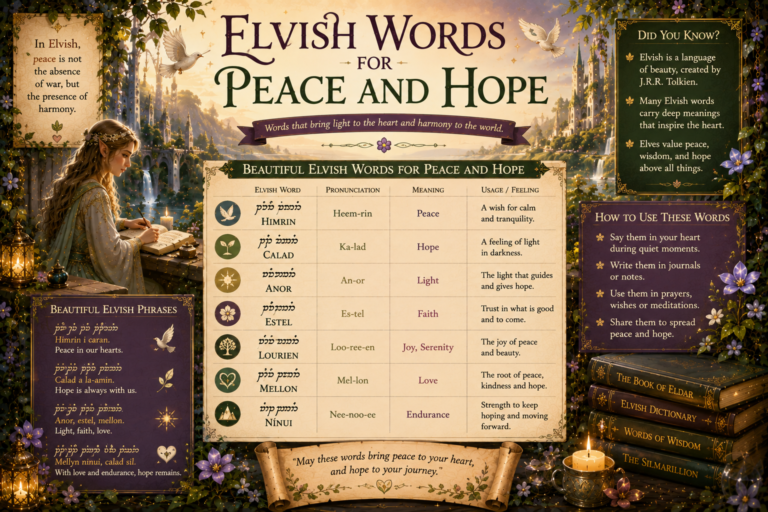
If you’d rather lean on Tolkien’s own documented vocabulary rather than a reconstructed full sentence, consider using a single, verified word instead, like Sindarin’s “meleth” (love) or Quenya’s “melda” (beloved). A shorter, fully documented word sometimes carries more genuine authenticity than a longer, reconstructed phrase.
Final Thoughts
Learning how to say I love you in Elvish adds something genuinely meaningful to a moment that already matters, as long as you approach it with a little honesty about what’s documented versus reconstructed. Choose the language that matches your tone, practice the pronunciation until it feels natural, and don’t be afraid to lean on a simpler, fully verified word if that feels more authentic to you. However you say it, the intention behind it is what actually carries the meaning.