Elvish Memorial Phrases: Words for Loss and Remembrance
Some translations carry more weight than others, and requests around memorial phrases sit firmly in that category. Whether it’s a tattoo honoring someone who’s passed, an inscription on a keepsake, or simply words chosen to sit with quietly during grief, Elvish memorial phrases offer a way to hold onto memory using a language built with genuine reverence for loss, hope, and the passage of time.
Here’s what these phrases mean, and how to approach choosing one with the care the moment deserves.
Why Elvish Feels Fitting for Remembrance
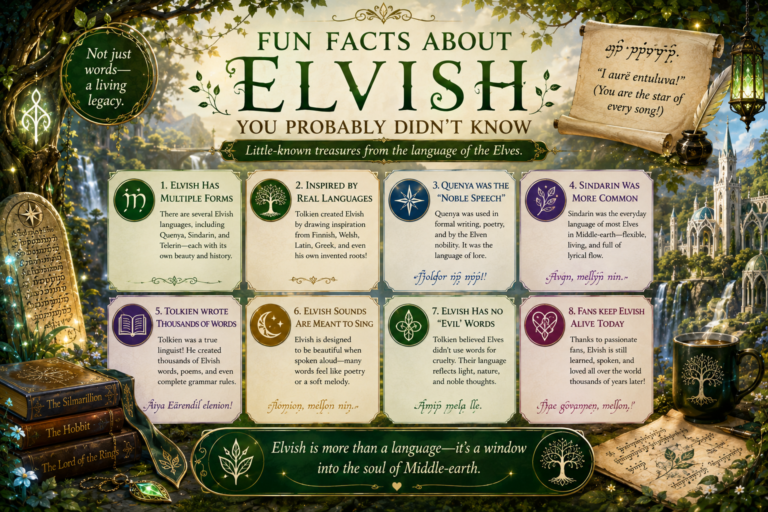
Tolkien wrote extensively about mortality and loss, particularly through the lens of Elves grappling with immortality alongside mortal companions who wouldn’t share it. That theme runs deep through Sindarin and Quenya vocabulary, giving both languages genuinely rich, well-documented words around memory, farewell, and the space between grief and hope. These weren’t invented as decoration; they came from a mythology that took loss seriously as a central theme.
That depth is part of why so many people turn here during difficult moments, rather than to something that feels generic or borrowed without context.
Words Associated With Memory and Remembrance
A handful of terms appear consistently across Sindarin and Quenya resources:
- Ëala – a Quenya term touching on spirit or essence, sometimes used in reflective, remembrance-focused contexts
- Nostalë – a Quenya word tied to memory or remembrance itself
- Iavas-adjacent seasonal vocabulary, sometimes drawn on poetically to reflect a completed life cycle, echoing Elvish seasonal reverence
Quenya vocabulary tends to dominate this category, reflecting its more formal, ceremonial register, well suited to moments meant to feel timeless.
The Farewell That Carries the Most Weight
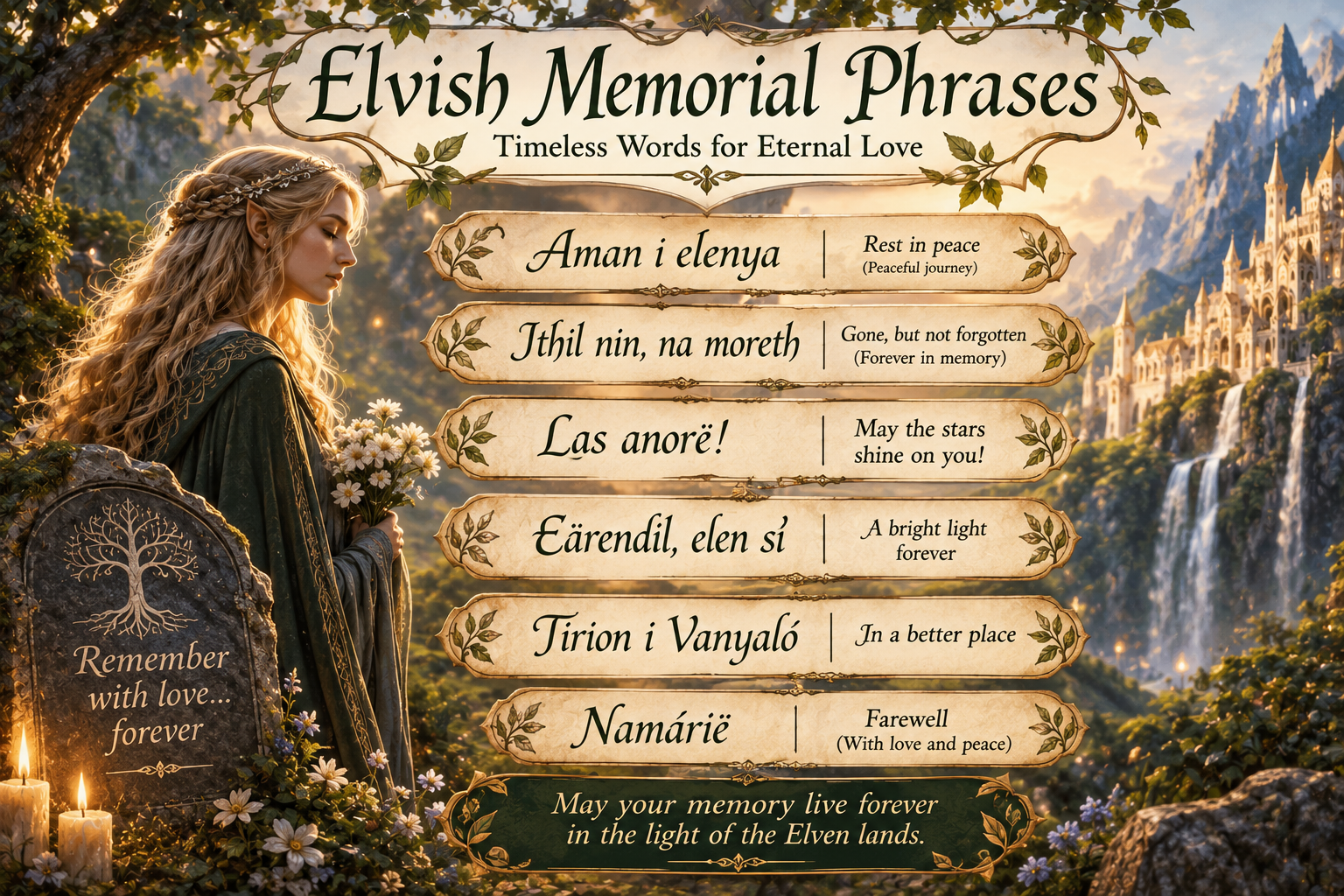
Namárië, mentioned elsewhere in discussions of Elvish farewells, deserves particular attention here. Unlike a casual goodbye, Namárië carries a tone closer to permanent parting, drawn directly from Tolkien’s own writing in Galadriel’s Lament. It’s one of the most documented, verifiable phrases available for anyone seeking language around final farewell specifically, rather than an everyday goodbye.
Because it’s directly documented rather than reconstructed, it carries an added layer of authenticity that some other memorial vocabulary can’t quite match.
Phrases About Hope and Continuity
Grief and hope often sit closer together than people expect, and Elvish vocabulary reflects that:
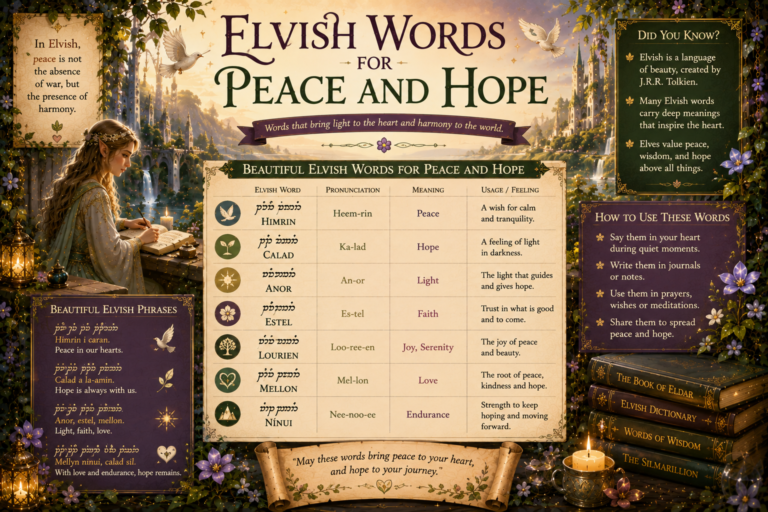
- Estel, the deeper, faith-like form of hope discussed in Tolkien’s writing, often appears in memorial contexts alongside words for loss
- Starlight imagery, reflecting Elvish reverence for stars as symbols of guidance through darkness, frequently pairs naturally with memorial phrasing
- Short phrases combining remembrance with continuity, rather than loss alone, tend to feel more balanced for ongoing, everyday reminders
Pairing a word for loss with one for hope, rather than choosing only one, often reflects the complexity of grief more honestly than either alone.
Choosing and Verifying an Elvish Memorial Phrase
- Take your time with this choice specifically; there’s rarely urgency behind a memorial piece the way there might be for other translations
- Cross-check any phrase against more than one documented source, given how emotionally significant accuracy becomes here
- Consider consulting with someone knowledgeable in Elvish linguistics directly if the phrase is going somewhere permanent
- Keep the phrase simple and sincere rather than elaborate, since shorter phrases translate more reliably
That first point is worth sitting with. Grief doesn’t need to be rushed, and neither does choosing the words meant to honor it.
Final Thoughts
Elvish memorial phrases carry a rare kind of sincerity, drawn from a mythology that treated mortality, memory, and hope as genuinely central themes rather than footnotes. Take the time this choice deserves, verify the words carefully, and consider pairing loss with hope if that feels true to what you’re honoring. Chosen with that care, a few borrowed words from Middle-earth can hold space for something that’s often difficult to put into any language at all.