Is Elvish a Real Language? Separating Fiction From Genuine Linguistics
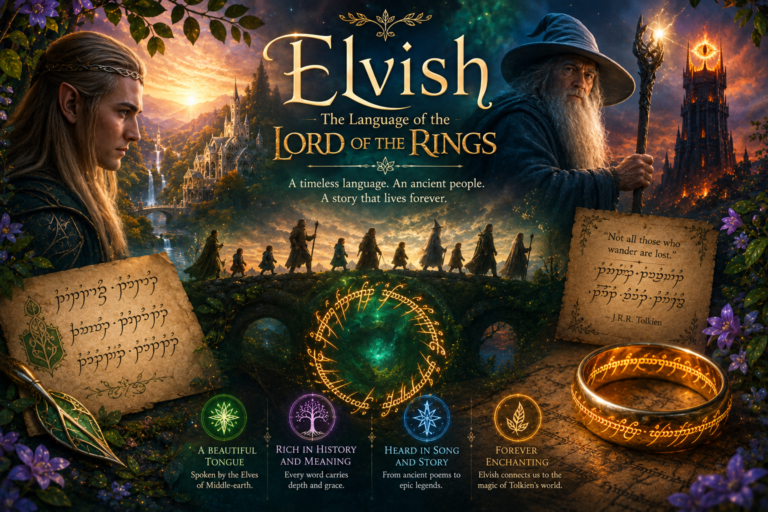
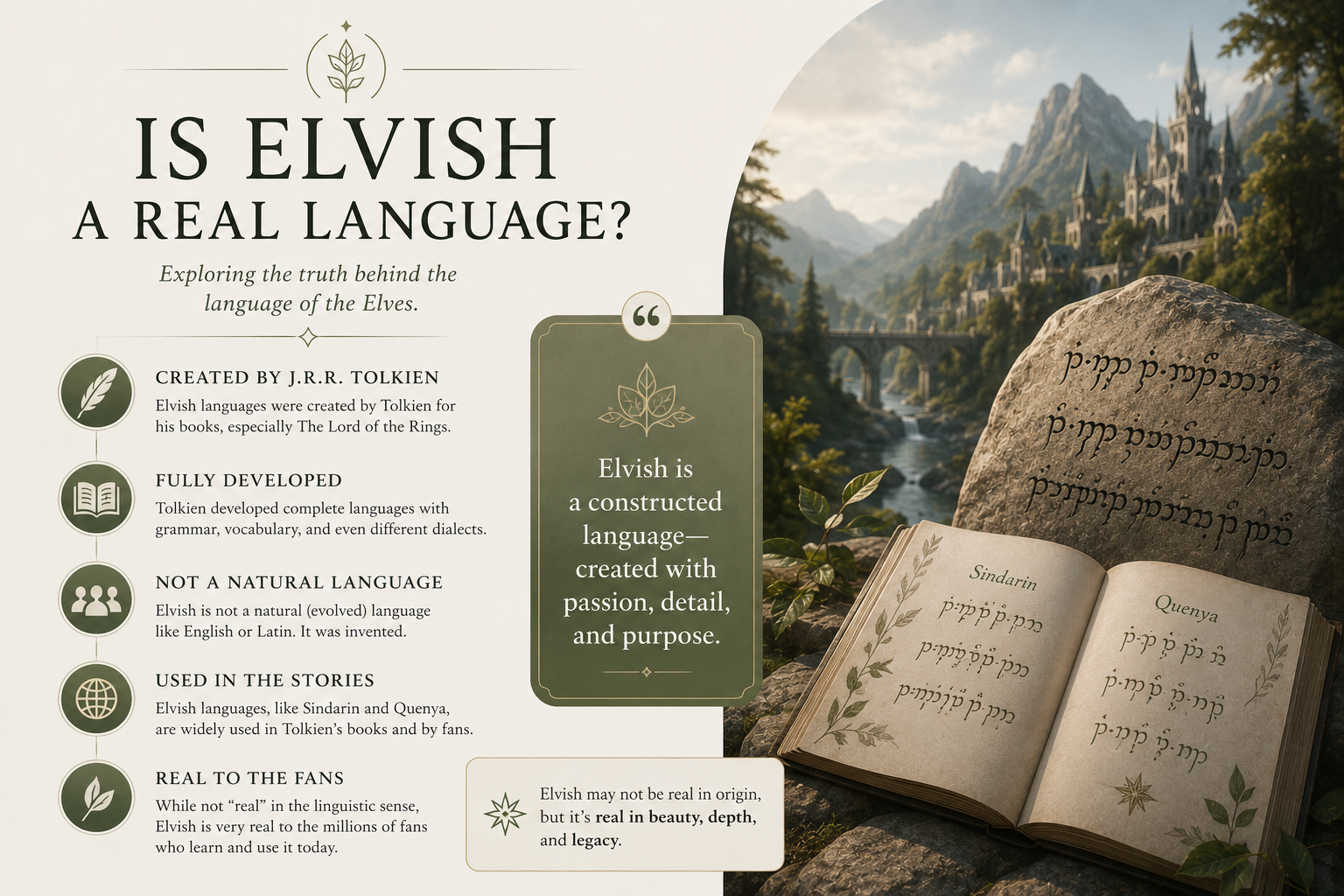
It sounds like a simple yes-or-no question, but “is Elvish a real language” turns out to have a genuinely interesting answer, one that surprises most people the first time they hear it. Elvish isn’t just movie dialogue dressed up to sound exotic. It’s a fully constructed language, built with the same structural rigor as languages taught in university linguistics departments, just without millions of native speakers walking around using it daily.
Here’s what that actually means, and why the distinction matters more than you’d expect.
What “Real Language” Actually Means
Linguists generally judge a language by whether it has consistent grammar, a structured sound system, and rules governing how words form and change, not by how many people happen to speak it. By that standard, Elvish checks nearly every box. Tolkien didn’t just invent random-sounding words; he built out grammar rules, verb conjugations, noun cases, and historical sound shifts, the same underlying architecture linguists study in natural human languages like Finnish or Welsh.
What sets Elvish apart from something like Spanish or Mandarin isn’t structure. It’s scale, and specifically, the size of its everyday vocabulary.
Tolkien Was a Linguist First, an Author Second
This detail explains almost everything. Before Tolkien became famous for The Lord of the Rings, he was a professional philologist at Oxford, specializing in historical and comparative linguistics. He didn’t create Middle-earth to house a story; by his own account, he built the languages first and grew a mythology around them to give those languages a place to live.
That order matters. Most fictional languages get built to serve a story. Elvish is closer to the reverse: a story built to serve the language.
Where Elvish Falls Short of a “Complete” Language
Here’s the honest caveat that keeps this from being a simple yes: Tolkien never finished building Elvish vocabulary for everyday modern life. There’s no documented Sindarin word for “computer” or “traffic jam,” for example, because Tolkien was constructing a language meant to exist within a specific fictional history, not one meant to handle 21st-century small talk.
This is why translating a full paragraph into Elvish is far harder than translating a short phrase or name. The grammar can often support it; the vocabulary sometimes can’t.
Can You Actually Learn to Speak This Real Elvish Language?
Yes, to a real and meaningful degree. A small but genuinely dedicated global community studies Elvish grammar, pronunciation, and vocabulary using Tolkien’s own writings and posthumously published linguistic notes. People do hold conversations in Sindarin and Quenya, write original poetry in both languages, and correspond with fellow learners, even if the total number of fluent speakers remains small compared to natural languages.
It’s a smaller circle than, say, Esperanto speakers, but the depth of study within that circle runs surprisingly deep.
Why This Question Matters for Translation
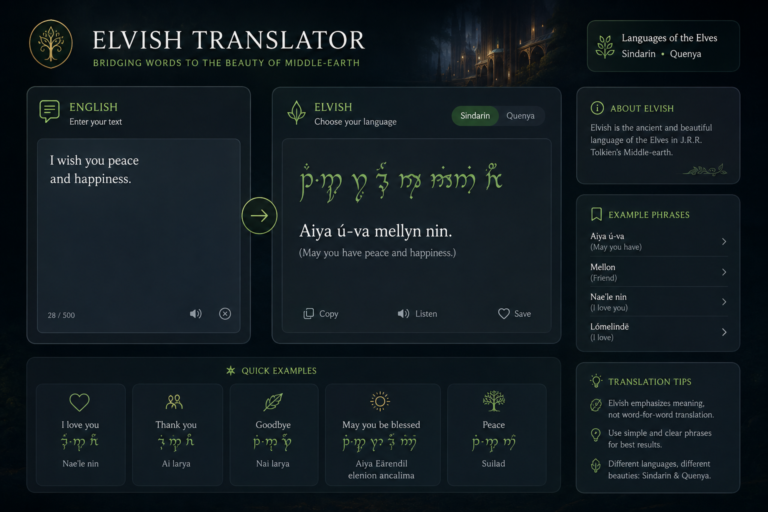
Understanding that Elvish is a real, structured language, just an incomplete one, changes how you should approach translating into it, and it’s really the core of the “is Elvish a real language” question people ask most. A trustworthy tool won’t pretend every English word has a ready Elvish equivalent; instead, it will work within the actual documented vocabulary and flag gaps honestly rather than inventing words and presenting them as authentic.
That honesty is the difference between a translation you can trust and one that just looks convincing at a glance.
Final Thoughts
So, is Elvish a real language? By every meaningful linguistic standard, yes, just one still limited by the vocabulary Tolkien had time to document before his death. It has genuine grammar, real historical depth, and an active community keeping it alive today. Understanding that nuance doesn’t diminish the magic of Elvish; if anything, knowing how carefully it was built only makes it more impressive.