Common Myths About Elvish, Debunked
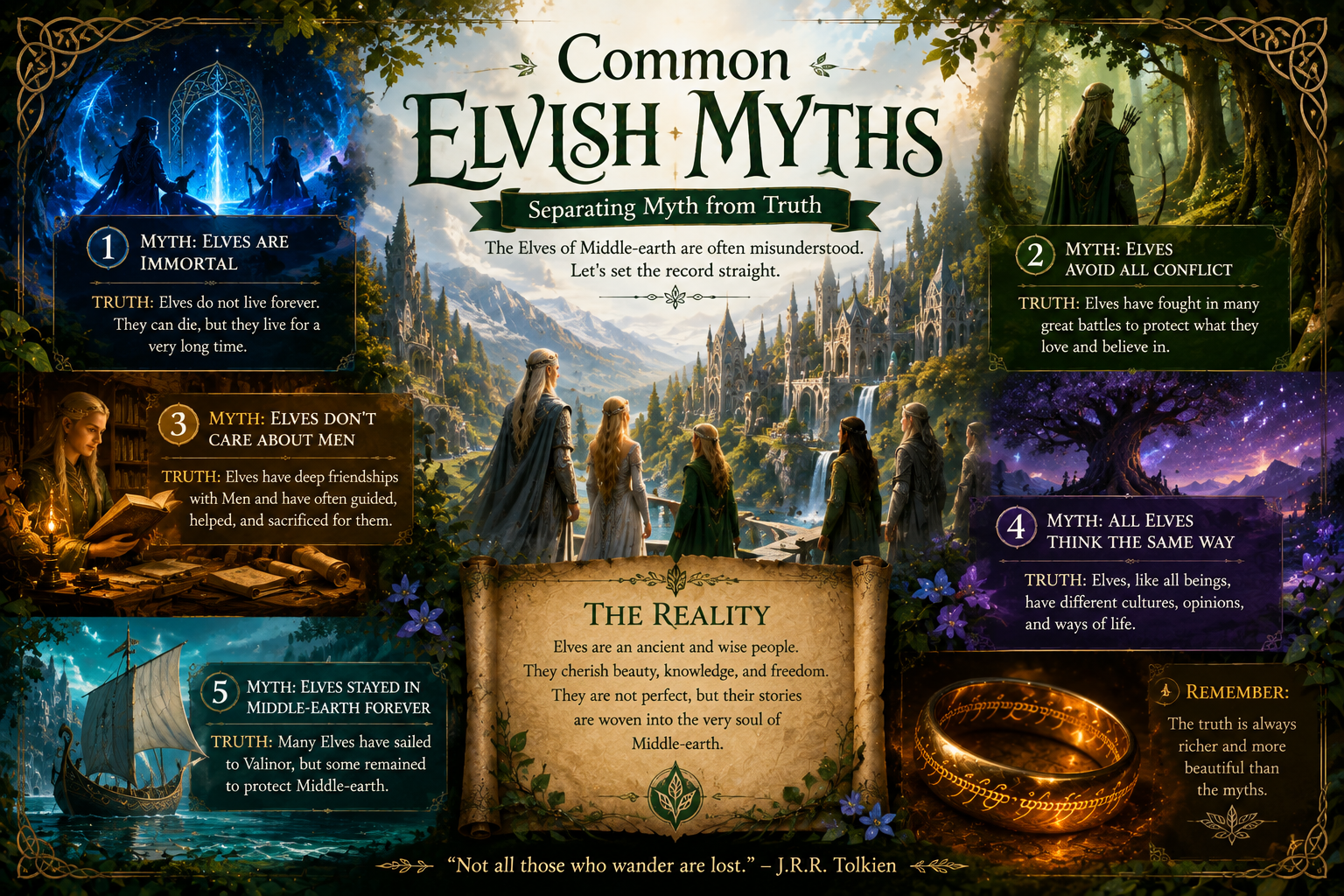
Few fictional languages have generated as much genuine fascination, and as much accidental misinformation, as Elvish. Between decades of fan translation attempts, movie adaptations, and casual internet lists, a handful of common myths about Elvish have quietly become “common knowledge” without ever being true. Clearing up these myths about Elvish matters, especially if you’re planning to use a translation somewhere permanent.
Here are the misconceptions worth retiring, and what’s actually true instead.
Myth 1: Elvish Is One Single Language
This is probably the most widespread misunderstanding out there. Elvish isn’t a single language at all; it’s a family of related languages, with Sindarin and Quenya being the two most developed. They differ in grammar, vocabulary, and even the real-world languages that inspired them, Welsh for Sindarin and Finnish for Quenya. Treating “Elvish” as one interchangeable language leads directly to mixing vocabulary that was never meant to combine.
Myth 2: Every English Word Has an Elvish Equivalent
It’s a comforting assumption, but it isn’t accurate. Tolkien died before completing Elvish as a fully modern language, which means plenty of everyday concepts, especially abstract or modern ones, simply have no documented Elvish word. A trustworthy translation source will acknowledge these gaps rather than inventing convenient-sounding substitutes and presenting them as authentic.
Myth 3: Tengwar Is Just a Secret Alphabet for English
Tengwar gets mistaken for a code, like a cipher swapping English letters for fancy symbols. In reality, it’s a flexible writing system capable of representing multiple languages, including Sindarin, Quenya, and yes, even English phonetically, but each application follows its own specific rules. A Tengwar transcription of English isn’t the same thing as an actual Elvish translation, even though both can look similarly striking.
Myth 4: Elvish Grammar Is Basically Just English With Different Words
This myth causes real translation errors. Sindarin and Quenya both follow their own internal grammar logic, including case systems and consonant mutations that don’t map cleanly onto English sentence structure. Directly translating an English sentence word-for-word almost never produces a result that would actually make sense in either Elvish language.
Myth 5: Any Online Elvish Generator Gives Accurate Results
Plenty of tools online claim to “translate” into Elvish instantly, but many of them are font generators in disguise, simply reshaping English letters into Tengwar-style symbols without touching actual Sindarin or Quenya vocabulary at all. A genuine translation tool works with documented language, explains its reasoning, and flags uncertainty. Speed alone isn’t a reliable signal of accuracy.
Myth 6: Elvish Died With Tolkien
While it’s true Tolkien never finished the language, it’s far from dormant. A dedicated global community continues studying, teaching, and expanding understanding of Sindarin and Quenya using his own notes and posthumously published material. People write original poetry, hold conversations, and actively research open questions in Elvish linguistics today, decades after Tolkien’s death.
Myth 7: Movie Elvish Is 100% Accurate to Tolkien’s Work
The Lord of the Rings films used a genuinely skilled linguist to construct dialogue, but portions of longer movie speeches necessarily involved educated reconstruction, filling gaps Tolkien’s own notes never covered. The films are a solid introduction to pronunciation and tone, but treating every line as verified, documented Tolkien Elvish isn’t quite accurate either.
Why These Myths Matter for Real Translation
Believing any of these misconceptions tends to produce the same outcome: a translation that looks convincing but doesn’t hold up under real scrutiny. Understanding what’s actually documented, what’s reconstructed, and what’s simply invented helps you approach Elvish translation with realistic expectations, especially before committing to anything permanent.
Final Thoughts
Common myths about Elvish tend to spread because Tolkien’s languages look complete and self-assured on the surface, when the real story is more nuanced, and honestly, more interesting. Understanding the difference between documented fact and popular assumption doesn’t diminish the magic of Elvish; if anything, it deepens appreciation for just how carefully, and how incompletely, Tolkien actually built it.