How Accurate Is Movie Elvish, Really?
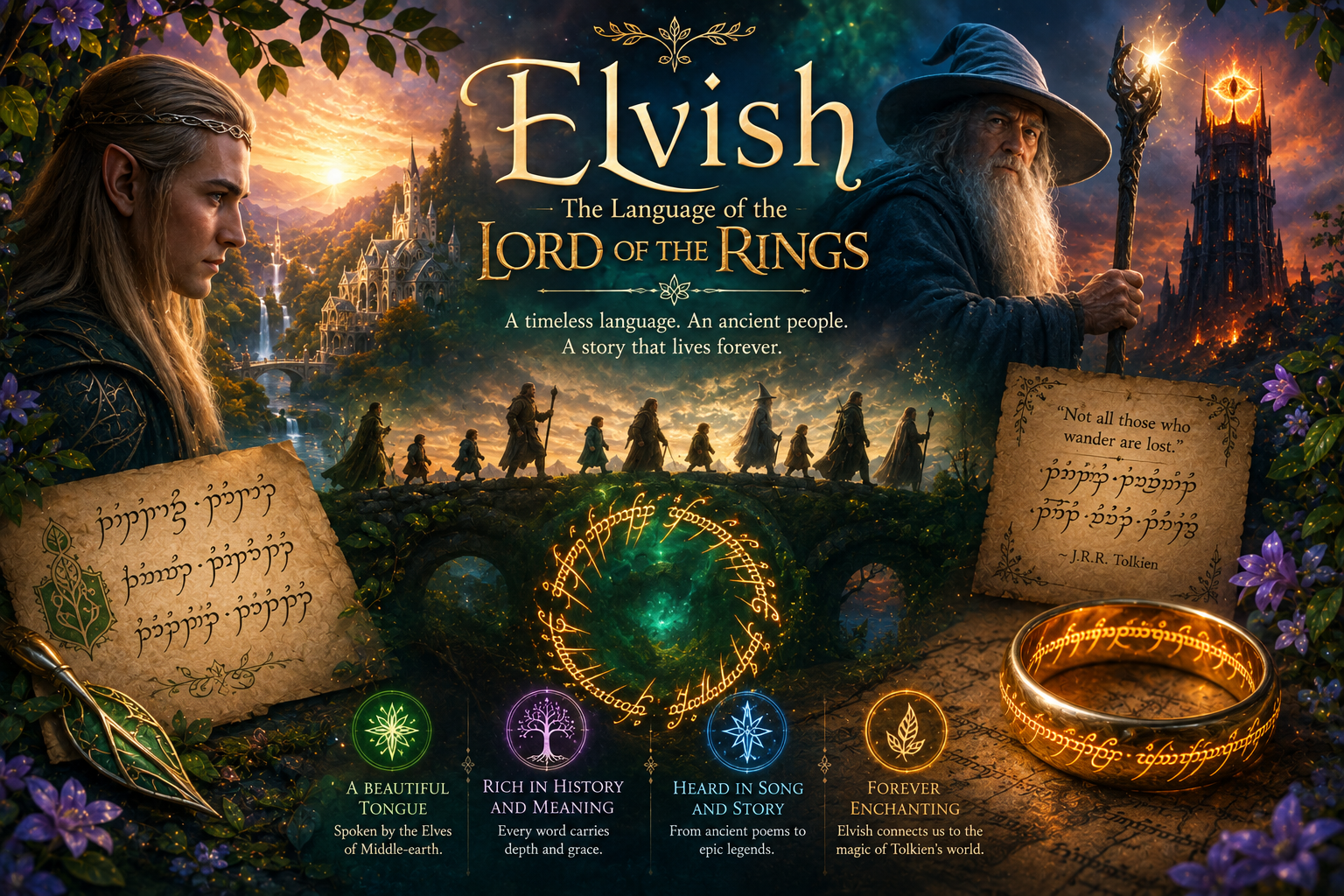
For most people, Peter Jackson’s Lord of the Rings trilogy is the first place they ever heard Elvish spoken aloud, which naturally raises a fair question: how accurate is movie Elvish compared to what Tolkien actually built? The honest answer sits somewhere between “genuinely impressive” and “creatively adapted,” and understanding that distinction helps separate what’s authentically Tolkien from what was smoothed over for the screen.
Here’s a closer look at what the films got right, where they diverged, and why either answer matters if you’re translating Elvish yourself.
Who Actually Built the Movie Dialogue
The films didn’t invent Elvish dialogue from scratch. Linguist David Salo was brought on specifically to construct usable Sindarin and Quenya dialogue based on Tolkien’s own notes, filling gaps where needed since, as covered elsewhere on this topic, Tolkien’s documented vocabulary was never fully complete. Salo’s work drew directly from published linguistic material, making the films considerably more rigorous than a typical fantasy production might attempt.
That level of care is part of why the movie Elvish holds up reasonably well under scrutiny from dedicated fans and linguists alike.
Where the Films Stayed Faithful
Several elements track closely with Tolkien’s actual linguistic work:
- Character names and established phrases, like “mellon” at the doors of Moria, come directly from Tolkien’s own writing
- Grammar structures in longer dialogue generally follow documented Sindarin and Quenya patterns rather than being invented freely
- Pronunciation largely respects Tolkien’s own phonetic rules, including consistent vowel sounds and rolled consonants
This faithfulness is exactly why the films remain a reasonable starting point for hearing Elvish pronounced correctly, even if they’re not a perfect academic reference.
Where the Films Had to Take Creative Liberties
Adapting an unfinished language for hours of spoken dialogue inevitably required some invention:
- Extended conversations needed vocabulary Tolkien simply never documented, requiring Salo to construct plausible new words following Tolkien’s established patterns
- Some pronunciation choices prioritized clarity and screen performance over strict phonetic precision
- A few phrases blend elements more freely than a strict linguistic purist might prefer, favoring dramatic flow over textbook accuracy
None of this was reckless invention, though. Salo’s additions were built to follow Tolkien’s own grammatical logic as closely as possible, rather than guessing randomly.
Why This Distinction Matters for Learning Elvish
If you’re using the films as a starting point for learning Elvish pronunciation or vocabulary, it helps to know which parts are documented Tolkien material and which parts are educated reconstruction. Treating every line of movie dialogue as gospel can lead to small inaccuracies creeping into your own understanding, especially around invented vocabulary that never appeared in Tolkien’s actual notes.
A good rule of thumb: names, short phrases, and simple dialogue are generally safe to treat as accurate. Longer, more elaborate speeches deserve a bit more skepticism.
Using Movie Elvish as a Learning Tool
The films remain genuinely useful for one thing in particular: hearing pronunciation done well by trained voice performances. Watching scenes with Elvish dialogue, ideally alongside published translations rather than fan-made subtitles, gives you a reasonably reliable sense of rhythm and sound, even where the underlying vocabulary involved some reconstruction.
Just pair that listening practice with a documented source when you’re translating something of your own, rather than reverse-engineering vocabulary straight from a movie script.
Final Thoughts
So, how accurate is movie Elvish? Considerably more accurate than most fantasy franchises manage, thanks to a linguist working carefully within Tolkien’s own framework, but not a flawless academic reproduction either. Enjoy the films as a genuinely solid introduction to how Elvish sounds, while leaning on documented sources when precision actually matters for your own translation.