
How to Learn Elvish Fast: A Realistic Study Plan
“Fast” and “constructed fictional language” don’t usually belong in the same sentence, but wanting to learn Elvish fast really does come down to one thing: order. Jump around randomly between vocabulary lists, pronunciation guides, and grammar rules, and progress stalls. Follow a structured sequence instead, and the pieces actually start reinforcing each other.
Here’s a study plan built around exactly that sequence, without wasted detours.
Why Most Beginners Trying to Learn Elvish Fast Slow Themselves Down
The most common mistake isn’t lack of effort; it’s starting in the wrong place. Diving straight into full sentence translation before understanding pronunciation or basic grammar tends to create confusion that compounds over time. Learning Elvish fast isn’t about cramming harder; it’s about front-loading the foundational pieces that make everything afterward click faster.
Week 1: Learn the Sounds Before the Script
Start with pronunciation, not writing. Elvish is phonetic, meaning consistent rules govern how letters sound, so mastering vowel and consonant patterns early pays off throughout every later stage. Focus specifically on the small details that trip up English speakers, like a Sindarin “dh” sounding like the “th” in “this,” or a trailing “e” that’s never silent.
Spend this week listening and repeating short words aloud rather than reading silently. Pronunciation habits set now are far easier to build correctly than to fix later.
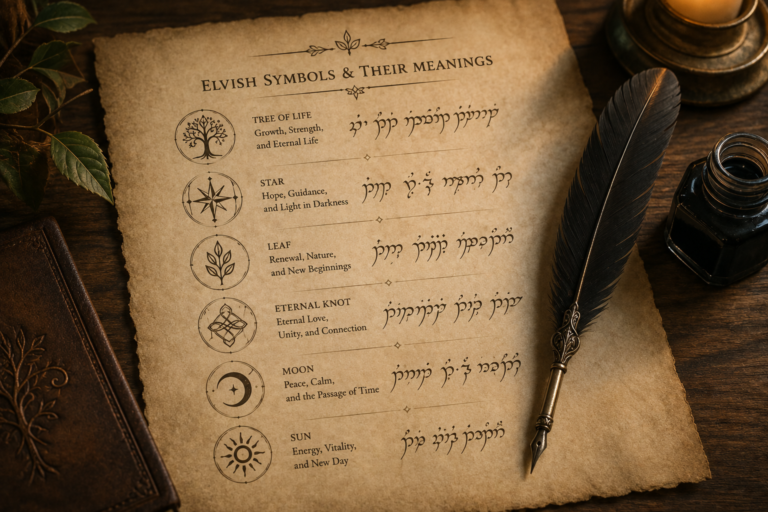
Week 2: Learn the Tengwar Alphabet
Once sounds feel familiar, move to the script itself. Tengwar isn’t a traditional alphabet; it’s a writing system where letter shapes represent sound families, with small tehtar marks indicating vowels. Learning consonant groupings by shared shape, rather than memorizing symbols individually, speeds this stage up considerably.
Practice reading short, familiar words you already know how to pronounce from week one. Seeing a word you can already say helps the script click faster than starting cold.
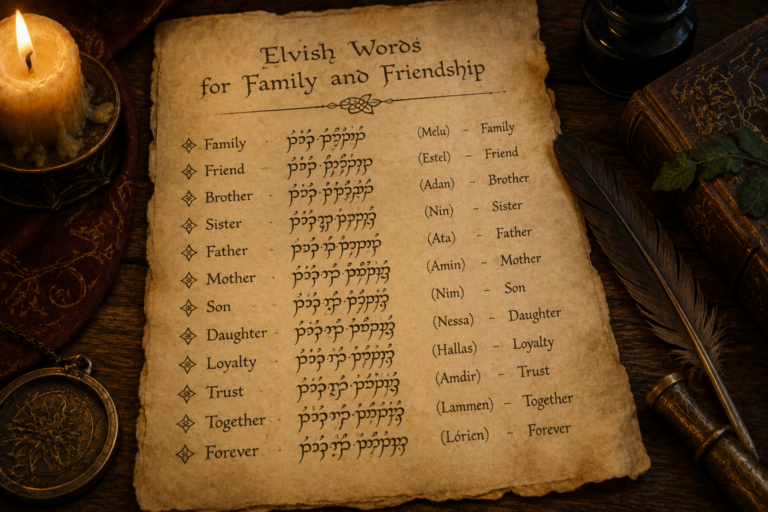
Week 3: Build Core Vocabulary
With sounds and script in place, start building a working vocabulary. Focus on high-frequency, well-documented words rather than obscure or reconstructed ones. Numbers, greetings, and common nouns tend to be reliably documented and give you the most usable return for the effort.
Decide early whether you’re prioritizing Sindarin or Quenya, since mixing vocabulary between the two creates confusion that’s hard to undo later. Most beginners find Sindarin’s everyday, conversational tone easier to build momentum with first.
Week 4: Introduce Basic Grammar Patterns
Grammar is where most learners hit a wall, mainly because Sindarin and Quenya both follow internal logic that doesn’t map onto English. Rather than memorizing every rule at once, focus on recognizing patterns: how word endings shift, how consonant mutations work in Sindarin, or how Quenya’s case system marks a word’s role in a sentence.
Short phrase translation practice fits well here, since it forces grammar and vocabulary to work together rather than sitting as separate, disconnected facts.
Ongoing: Reinforce Through Real Content
Once the basics feel steady, reinforcement matters more than adding new material constantly:
- Read short Elvish poetry or song excerpts alongside published translations
- Practice writing simple phrases in Tengwar calligraphy to reinforce both script and spelling
- Revisit pronunciation regularly, since habits can quietly drift without practice
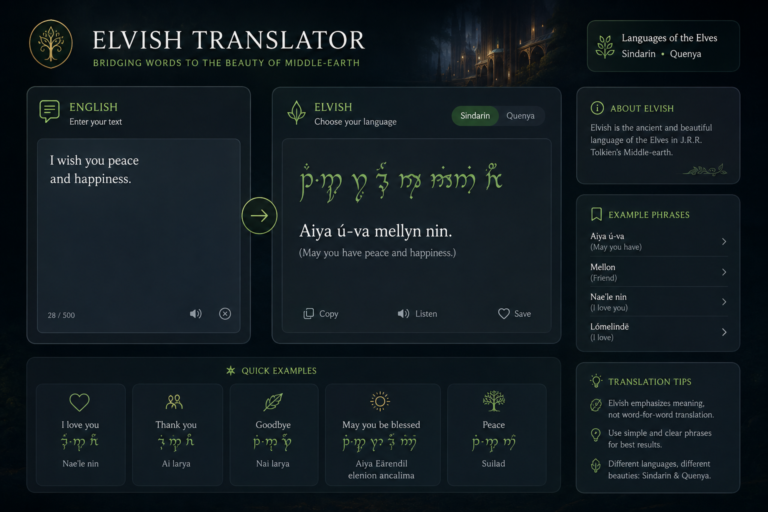
- Cross-check anything you translate yourself against a documented, transparent translation tool
This ongoing loop, rather than a single finish line, is genuinely how you learn Elvish fast in a way that actually sticks over time.
Mistakes That Slow Progress Down
- Skipping pronunciation to jump straight into vocabulary memorization
- Mixing Sindarin and Quenya before either one feels stable individually
- Trying to translate long, idiomatic English sentences too early
- Relying on a single unverified source for vocabulary or grammar rules
Avoiding these keeps momentum steady instead of stalling out around week three or four, which is where most self-taught learners tend to lose motivation.
Final Thoughts
Learning Elvish fast isn’t really about speed for its own sake; it’s about following a sequence that lets each stage support the next one. Master pronunciation before script, script before vocabulary, and vocabulary before grammar, and the whole process feels far less overwhelming than tackling everything at once. Stick with that order, and genuine progress happens faster than most people expect going in.