Elvish Baby Names: A Guide to Meaning, Sound, and Choosing One
Naming a child is one of the few decisions that follows someone for an entire lifetime, so it makes sense that some parents look past the usual baby name books and toward something with a bit more depth. Elvish baby names offer exactly that: a blend of musical sound, genuine linguistic history, and meaning drawn from one of the most carefully constructed fictional worlds ever written.
This guide covers where these names come from, what they mean, and how to choose one that actually fits.
Why Parents Are Drawn to Elvish Names
Unlike a lot of invented “fantasy” names, Elvish names weren’t built for flash. Tolkien, a professional philologist, gave nearly every name in his legendarium a real, traceable meaning rooted in Sindarin or Quenya vocabulary. A name isn’t just a pleasant sound; it’s often a small phrase in disguise, describing light, strength, wisdom, or nature.
That depth is part of the appeal. A name like this carries a story even before your child grows into one of their own.
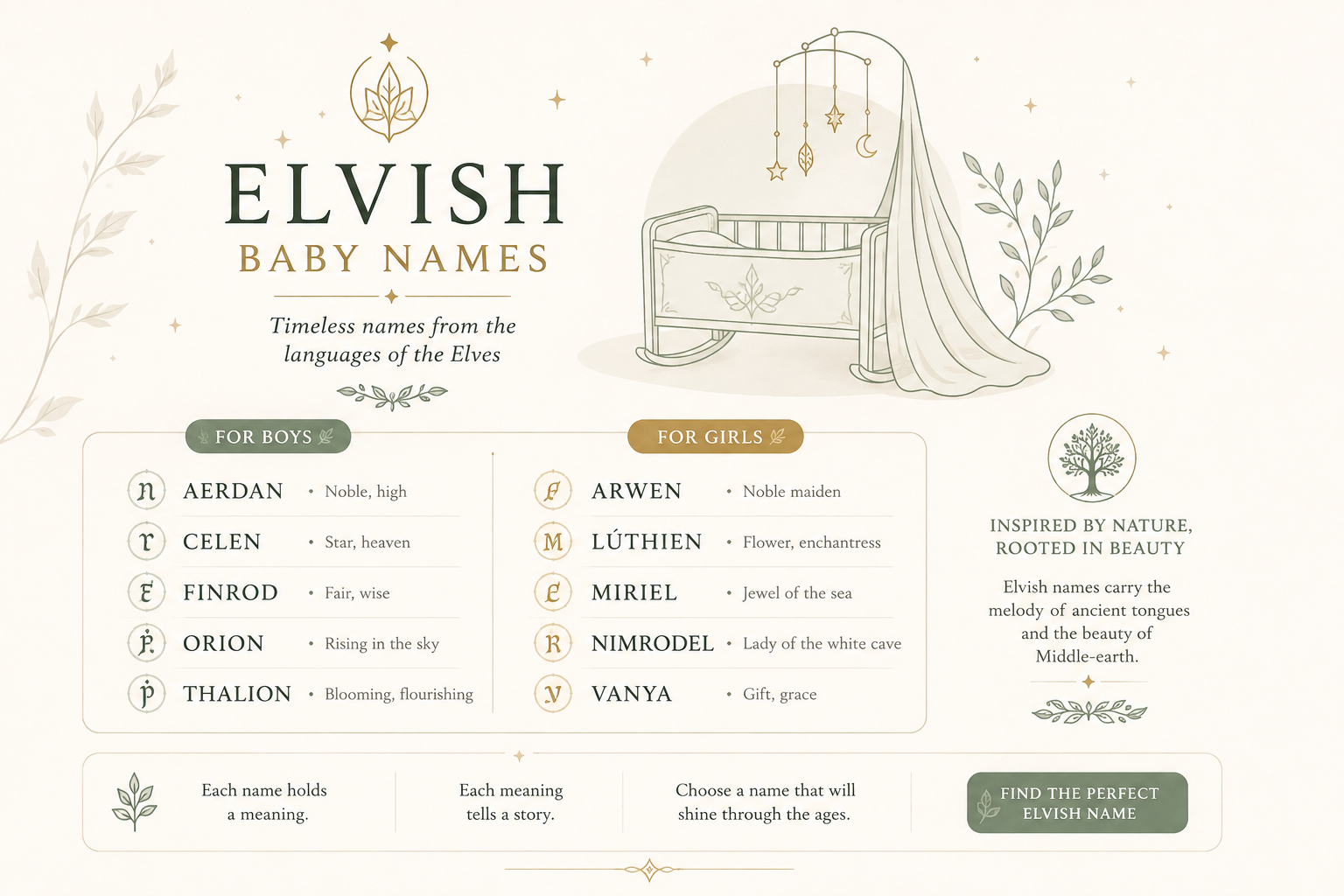
Popular Elvish Names and What They Mean
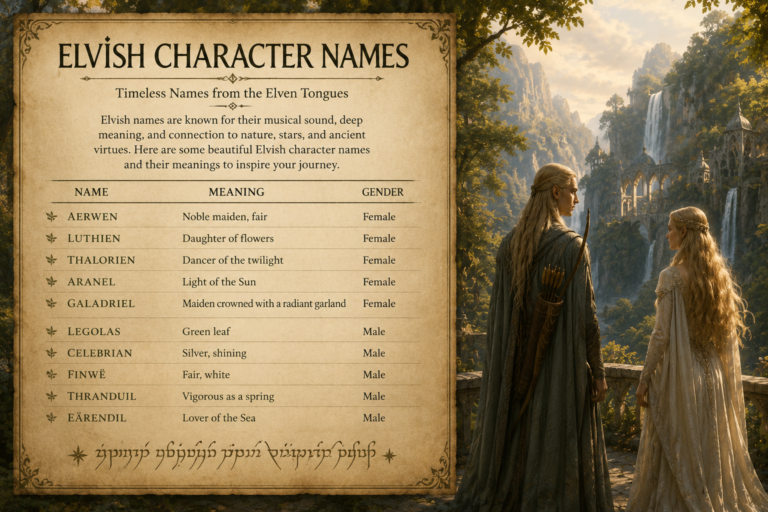
Some names have become well known even outside dedicated fan circles:
- Arwen – often associated with “noble maiden,” carrying a graceful, regal tone
- Legolas – generally understood to mean “green leaves,” tying back to nature and forest imagery
- Galadriel – linked to “maiden crowned with a radiant garland,” reflecting light and nobility
- Elrond – associated with “star dome” or “vault of stars,” evoking a sense of quiet grandeur
Each of these draws from real Elvish roots rather than being invented purely for sound, which is part of why they’ve held up as genuinely meaningful choices over the decades.
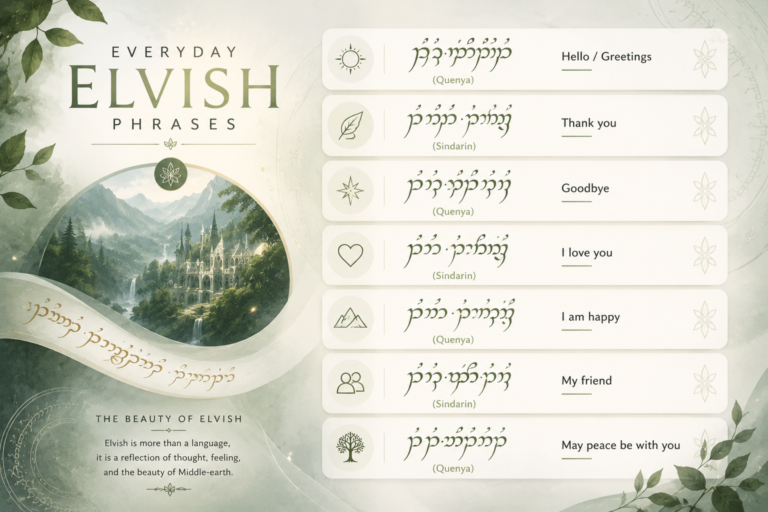
Sindarin vs Quenya Names: Which Feels Right?
Choosing between the two main Elvish languages often comes down to tone:
- Sindarin names tend to feel warmer and more grounded, fitting for a name meant to feel personal and approachable
- Quenya names often carry a more formal, ceremonial weight, closer to a name that feels timeless or elevated
Neither is objectively “better.” It depends on whether you want a name that feels like an everyday embrace or a name that feels like a quiet inheritance.
How to Choose a Meaningful Name From Elvish Baby Names Lists
- Start with the meaning you want to convey, whether that’s light, strength, courage, or nature, then work backward toward the vocabulary
- Say the name out loud repeatedly before committing, since Elvish pronunciation doesn’t always match English intuition
- Check how the name pairs with a middle or last name, since Elvish names often carry more syllables than typical English names
- Consider consulting a reliable source or translator to confirm the name’s documented meaning rather than relying on secondhand lists that sometimes circulate inaccurate translations
That final point matters more than it might seem. Not every “Elvish name” floating around online actually traces back to Tolkien’s real vocabulary.
A Word of Caution on Invented Names
Because Elvish wasn’t completed as a full modern language, some popular lists of Elvish baby names include names that were never actually documented by Tolkien, invented instead by fans or generators to fill gaps. There’s nothing wrong with an invented name if you like how it sounds, but if authenticity matters to you, it’s worth verifying a name’s origin before falling in love with it.
Final Thoughts
Elvish baby names offer something most naming trends can’t: a genuine linguistic backbone behind every syllable. Whether you lean toward the warmth of Sindarin or the formality of Quenya, take the time to understand a name’s real meaning, practice saying it aloud, and verify its origin if authenticity is important to you. Done thoughtfully, a name pulled from Middle-earth can feel less like a trend and more like a quiet, lasting gift.