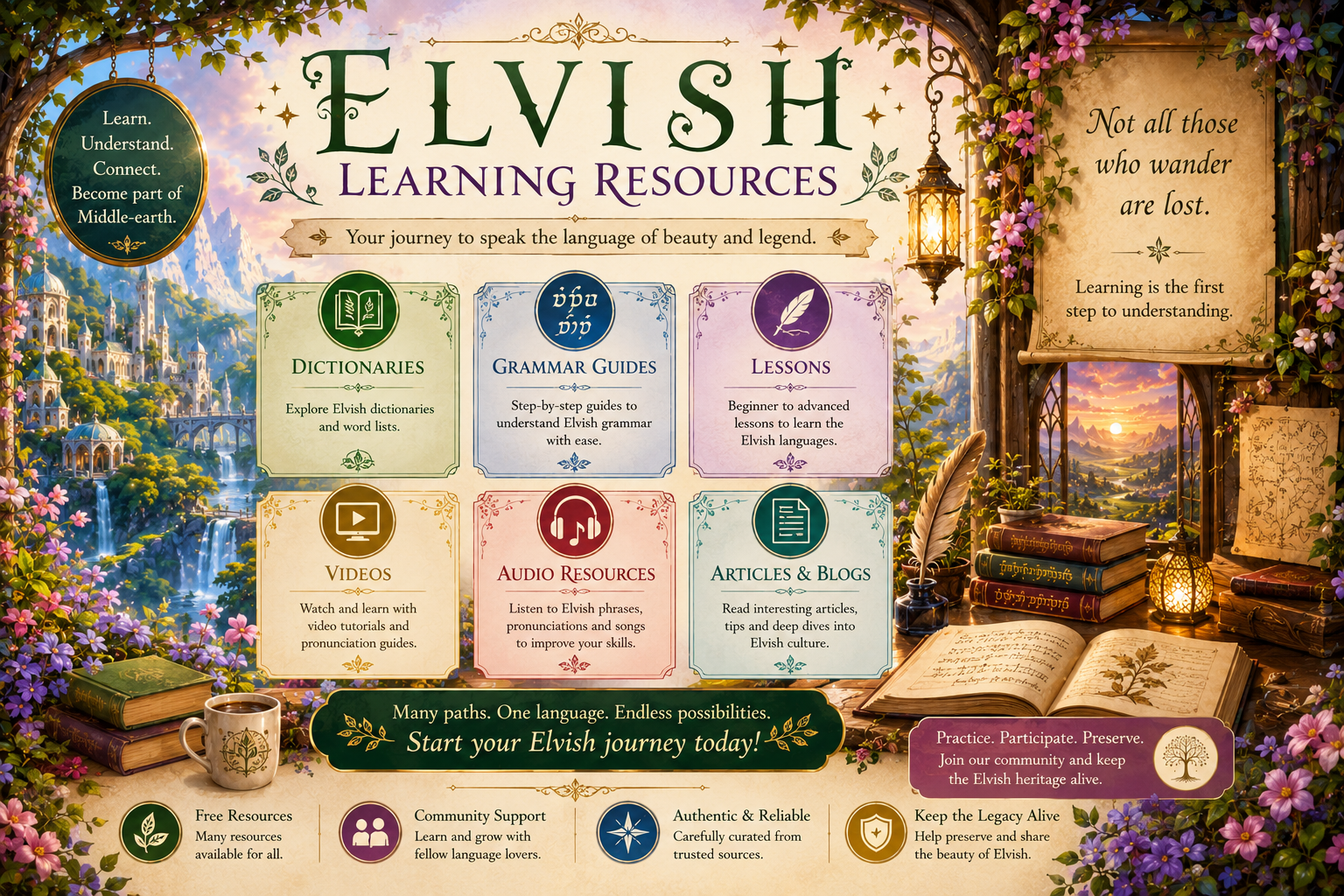
Elvish Learning Resources Worth Your Time
Getting serious about Elvish eventually means moving beyond a single translator tool or a scattered handful of blog posts. Genuine progress comes from combining a few different types of Elvish learning resources: foundational reading, structured references, and a community of people further along the same path. Trying to learn from just one source tends to leave real gaps.
Here’s a breakdown of where to actually look, and why each type of resource serves a different purpose.
Start With Tolkien’s Own Writing
Before anything else, it’s worth returning to the source material itself. Appendices in The Lord of the Rings, particularly Appendix E and F, contain genuine linguistic notes on pronunciation and writing systems straight from Tolkien. They’re dense, but they’re also the closest thing to a primary source you’ll find, and understanding them gives real context that secondhand summaries often flatten or simplify.
This step is easy to skip, but it’s genuinely worth the effort before relying entirely on fan-created material.
Foundational Reference Books
A few published works have become genuine cornerstones for serious learners:
- Scholarly grammar guides compiled from Tolkien’s own linguistic essays, offering structured breakdowns of Sindarin and Quenya grammar rather than scattered vocabulary lists
- Posthumously published collections of Tolkien’s linguistic notes, edited and organized by dedicated researchers who’ve spent decades working through his unpublished material
- Pronunciation-focused guides that walk through Tengwar and phonetic rules systematically, rather than assuming prior familiarity
These resources tend to be denser than casual fan content, but they reward the extra effort with genuinely reliable information.
Active Online Communities
Books only take you so far; a community gives you feedback, correction, and exposure to ongoing scholarly debate:
- Dedicated Elvish linguistics forums where members actively discuss grammar questions, translation challenges, and newly analyzed source material
- Long-running mailing lists and discussion groups focused specifically on Tolkien’s constructed languages, often populated by genuinely knowledgeable long-term researchers
- Social media communities where beginners and experienced learners exchange corrections and encouragement in real time
Community feedback matters more than people expect, since self-taught learners can develop small, consistent errors that go uncorrected without outside input.
Tools Worth Using Alongside Study
- A transparent, well-documented Elvish translator that explains its reasoning rather than just outputting an image
- A reliable Tengwar chart kept visible during practice sessions, rather than relied on from memory too early
- Audio resources or native-style pronunciation tools, since reading silently doesn’t build the same habits as speaking aloud
- Flashcard-style vocabulary tools focused on high-frequency, well-documented words rather than obscure reconstructions
Pairing structured study material with a genuinely accurate tool keeps your independent practice grounded in something verifiable, rather than guesswork.
How to Combine These Resources Effectively
- Start with beginner-friendly explanations before diving into Tolkien’s dense original appendices
- Use community forums to ask specific questions once you’ve hit a genuine sticking point, rather than before attempting it yourself
- Cross-reference vocabulary or grammar claims across more than one resource, since even dedicated scholars occasionally disagree on specifics
- Revisit foundational material periodically as your understanding deepens; details that seemed irrelevant early on often click later
That last point matters more than beginners expect. Material that felt impenetrable during a first read often becomes genuinely clear once foundational vocabulary and grammar patterns are already familiar.
Final Thoughts
The best Elvish learning resources work together rather than in isolation: primary source material for authenticity, structured references for grammar depth, active communities for feedback, and reliable tools for everyday practice. Combine a few of these deliberately rather than relying on a single scattered source, and genuine progress with Sindarin or Quenya becomes a realistic, achievable goal rather than a vague aspiration.