Elvish Font Generator vs Real Translator: Know the Difference
Type “Elvish” into any search engine and you’ll get flooded with results, most of them promising instant, magical-looking script in seconds. The problem is that a lot of these tools aren’t actually translating anything. An Elvish font generator and a genuine Elvish translator sound similar but do fundamentally different jobs, and mixing the two up is one of the most common mistakes beginners make.
Here’s how to tell them apart, and why the distinction matters more than it might seem at first glance.
What a Font Generator Actually Does
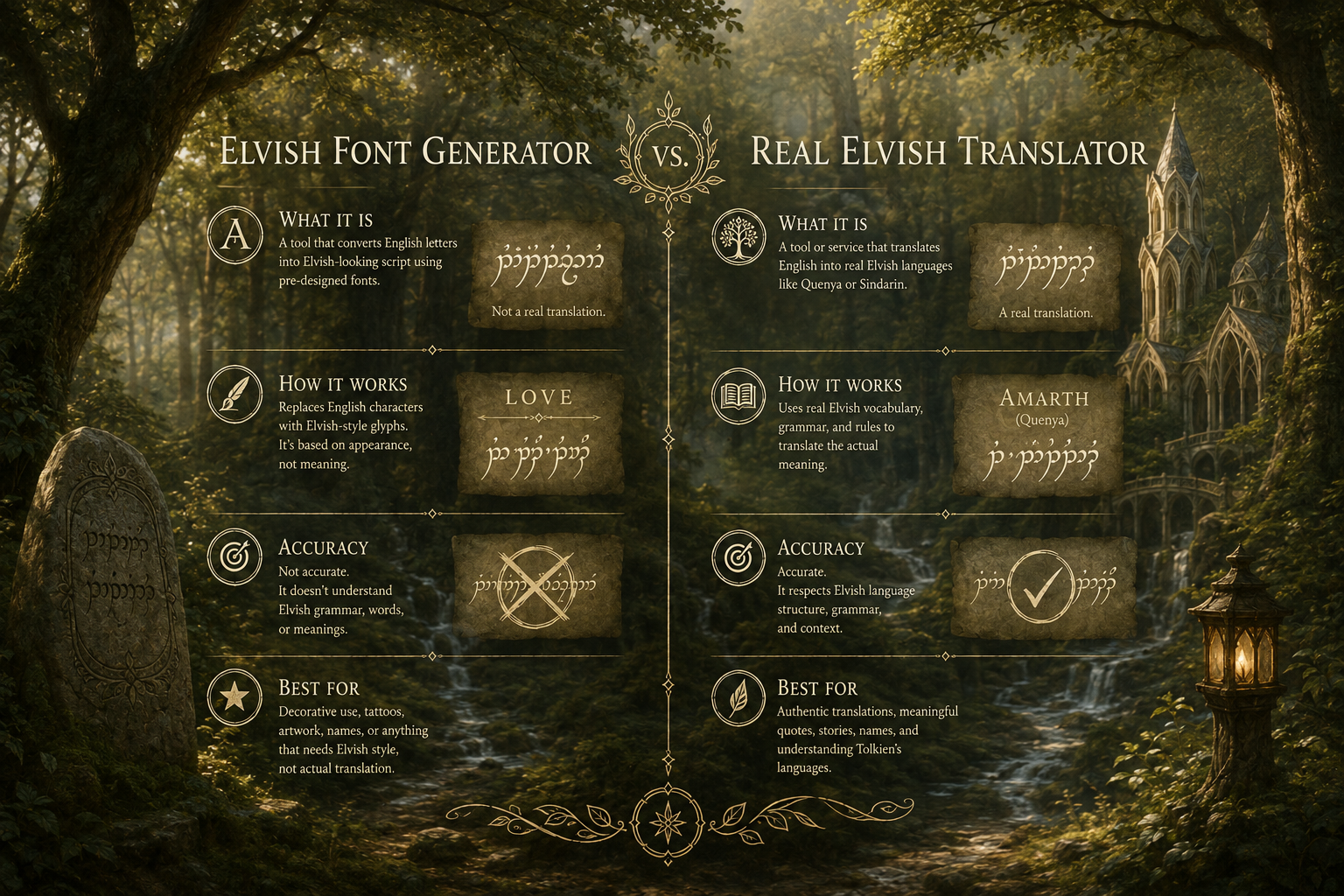
A font generator takes your English text and swaps each letter for a stylized symbol, purely based on visual shape. It’s essentially a font change, not unlike switching your document from Times New Roman to a decorative script. The output might look like Tengwar, but underneath, it’s still just English, letter for letter, dressed up in a different costume.
This can be a completely reasonable choice for pure aesthetics. What it isn’t, however, is Elvish.
What a Real Translator Does Differently
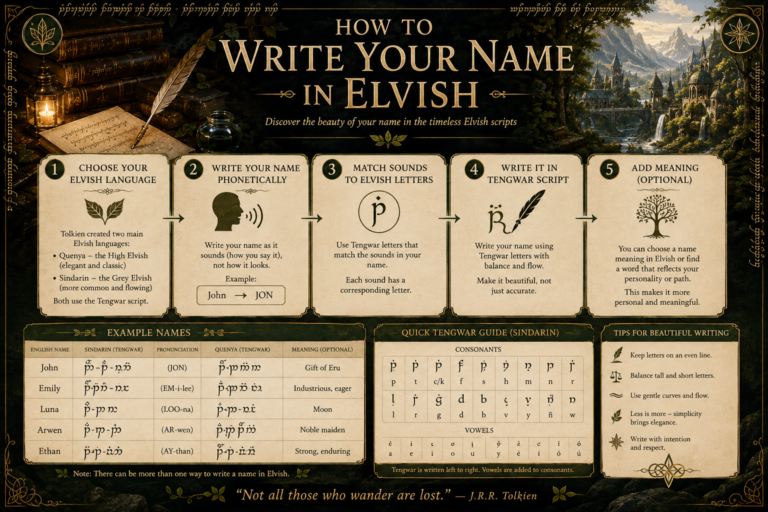
A genuine Elvish translator works with actual Sindarin or Quenya vocabulary and grammar, converting the meaning of your text, not just its letter shapes, into a documented Elvish word or phrase. The result is then rendered in Tengwar script, but the script is representing real Elvish sounds and words, not a disguised version of your original English sentence.
This distinction is exactly why two tools can produce wildly different-looking results from the same input, and why only one of them is doing anything linguistically accurate.
How to Spot Which One You’re Using
A few quick checks reveal the difference fast:
- Does the tool ask which language, Sindarin or Quenya, you want? Font generators skip this step because it’s irrelevant to what they’re doing
- Does it explain the meaning behind the output, or just show you an image? Real translation tools typically show their reasoning
- Does the tool flag words with no direct Elvish equivalent? Font generators can’t, because they’re not working with Elvish vocabulary at all
- Would a Tengwar-literate reader recognize actual Elvish words in the output, or just familiar English read through unfamiliar shapes?
If a tool can’t answer the first two questions, it’s very likely a font generator, not a true Elvish font generator or translator in the linguistic sense.
When a Font Generator Is Actually Fine to Use
There’s nothing wrong with an Elvish-style font generator for casual, decorative purposes; a party invitation, a fun social post, or artwork where the “look” matters more than linguistic accuracy. The issue only arises when someone mistakes decorative script for a real translation and uses it somewhere that matters, like a tattoo, wedding vow, or keepsake meant to carry actual meaning.
Knowing which category your project falls into upfront saves a lot of disappointment later.
Why This Distinction Matters for Permanent Use
If you’re translating something you plan to keep, wear, or display long term, the gap between a font generator and a real translator stops being a minor technicality. A font-generated result won’t hold up to scrutiny from anyone who actually reads Elvish, and worse, it can’t be independently verified the way a documented word or phrase can. A real translation, by contrast, can be cross-checked, explained, and trusted.
Final Thoughts
An Elvish font generator and a genuine translator might look similar at a glance, but only one of them is actually working with Tolkien’s languages. For quick decoration, a font swap is harmless fun. For anything meant to carry real meaning, permanence, or authenticity, it pays to know the difference and choose a tool that translates language, not just letterforms.