Elvish Character Names for D&D and Fantasy Games
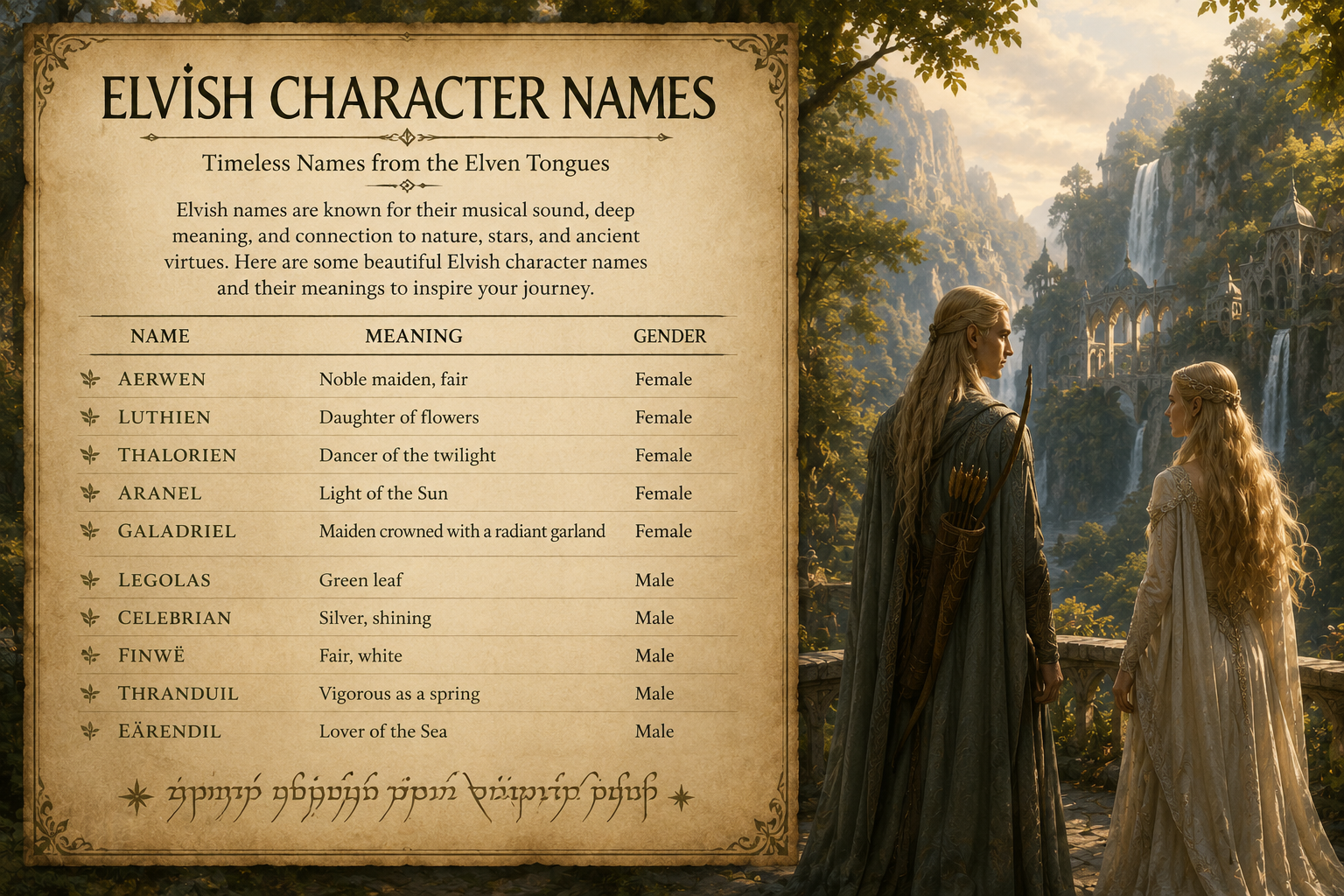
Rolling up a new elf character usually means facing the same blank cursor problem: the name generator options all sound vaguely similar, and nothing quite fits the backstory you’ve already imagined. Elvish character names pulled from Tolkien’s actual linguistic framework solve that problem differently, offering real meaning behind the sound instead of a randomly assembled string of elf-sounding syllables.
Here’s how to find a name that actually fits your character, not just your table’s aesthetic.
Why Tolkien-Based Names Work Well for Tabletop Games
D&D’s elves already borrow heavily from Tolkien’s influence, so leaning into genuine Sindarin or Quenya vocabulary tends to feel more cohesive than generic fantasy name generators, which often prioritize sound over any real meaning. A name built from documented roots gives your character an origin story practically built in, whether that’s “swift,” “starlit,” or “keeper of secrets.”
It also gives you something a lot of players skip entirely: a name your character would actually understand the meaning of within their own world.
Matching a Name to Character Traits
Building outward from personality or role tends to produce the most satisfying results:
- Swift or agile characters – look toward Sindarin roots tied to speed or wind, keeping the name short for quick use in combat narration
- Wise or scholarly characters – Quenya’s more formal register often suits characters meant to feel ancient or deeply learned
- Protectors or guardians – names built from roots meaning “shield,” “watch,” or “keep” carry that role naturally
- Rogues or secretive characters – shorter, softer Sindarin sounds often fit characters meant to move quietly through a story
Matching tone to trait this way gives your table an easy shorthand for who your character is, even before the roleplay begins.
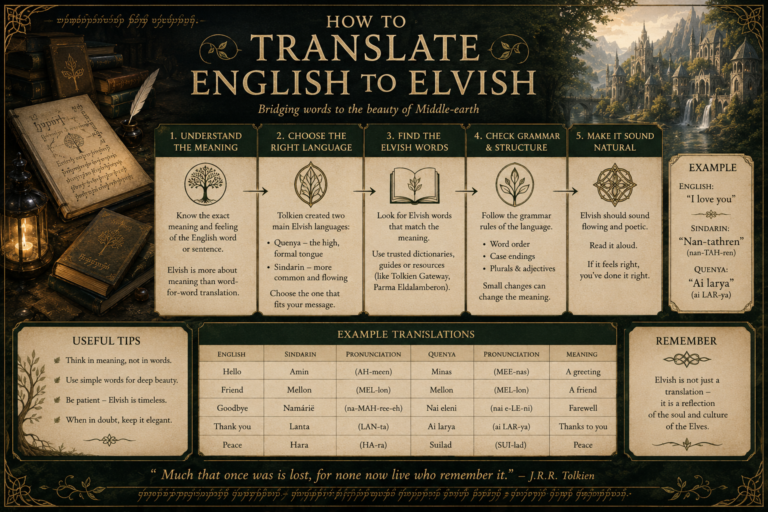
Sindarin or Quenya for Your Character?
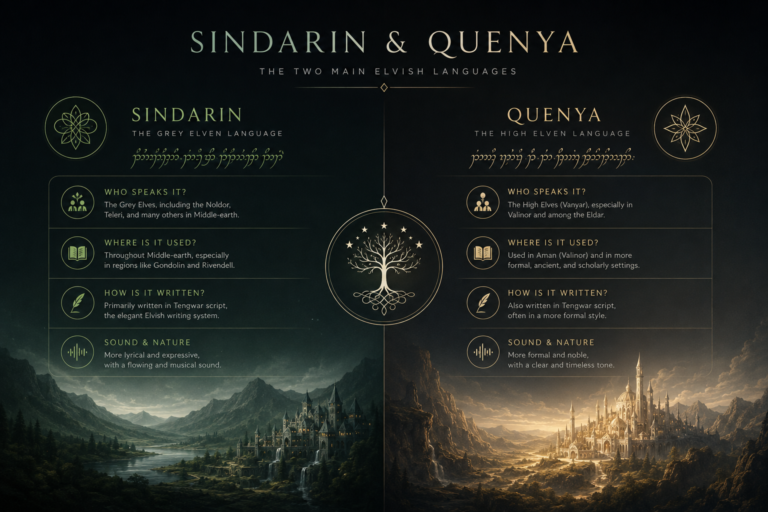
The tonal split that runs through Tolkien’s languages applies neatly to character building too:
- Sindarin suits characters meant to feel grounded, approachable, or tied to everyday adventuring life
- Quenya suits characters meant to feel formal, ancient, or connected to nobility or scholarly tradition
A rugged ranger probably fits Sindarin’s warmer tone. A high elf wizard steeped in ancient lore might carry a Quenya name more convincingly.
Building Elvish Character Names With Real Meaning
- Decide on a core trait or theme first, then search for a documented root word matching that concept
- Keep the name to one or two syllables of real meaning, since overly long constructed names become unwieldy at the table
- Confirm whether your chosen root comes from Sindarin or Quenya, and keep the rest of your character’s naming consistent
- Consider a nickname derived from the full name for quick, casual use during sessions
That last tip solves a genuinely common problem. A beautiful, meaningful full name can still be a mouthful mid-combat, so having a shorter derived nickname ready keeps play moving smoothly.
Common Mistakes to Avoid
- Choosing a name purely for how “elfy” it sounds without any underlying meaning
- Mixing Sindarin and Quenya roots within a single invented name
- Picking something so long or complex that your table struggles to say it consistently
- Assuming a name is documented Tolkien vocabulary when it’s actually a fan-made approximation
Avoiding these keeps your character’s name both memorable and something you can actually explain if a fellow Tolkien fan at the table asks about it.
Final Thoughts
Elvish character names offer something most fantasy name generators can’t: real linguistic weight borrowed from a mythology built specifically around depth and meaning. Match your name to your character’s core trait, choose the language whose tone fits their story, and keep it short enough to actually use at the table. Built that way, a name stops being a placeholder and starts feeling like it was always meant to belong to your character.