Elvish Words for Family and Friendship
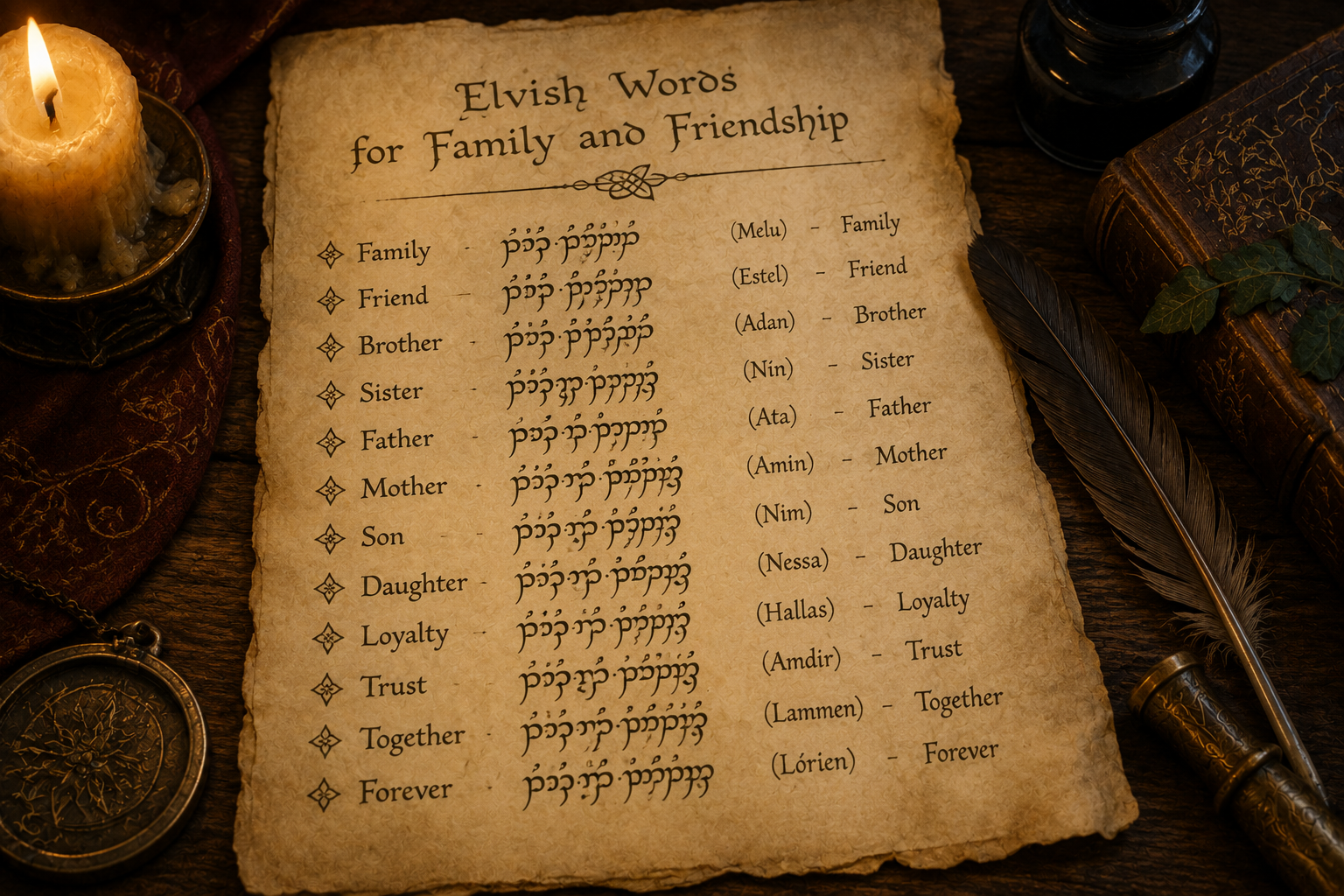
Not every meaningful Elvish phrase is about romance or grand blessings. Some of the most requested translations come from something quieter: a sibling bond, a lifelong friendship, or the simple word for “mother” or “brother” rendered in a language that feels like it was built to hold weight. Elvish words for family and friendship cover exactly that ground, and they tend to carry just as much sincerity as anything written for a wedding.
Here’s what these words actually mean, and how to use them with the care they deserve.
Why These Words Matter Beyond Romance
It’s easy to assume Elvish translation requests center on love or ceremony, but family and friendship vocabulary comes up just as often, often for gifts, memorial pieces, or tattoos honoring a specific relationship. Tolkien wrote extensively about loyalty, kinship, and companionship throughout his legendarium, particularly through the bonds within the Fellowship, which means this vocabulary is genuinely well documented rather than an afterthought.
That documentation is part of why these words feel so fitting. They weren’t invented to sound nice; they were built to describe real, lasting bonds within the story itself.
Common Words for Family
A handful of terms appear consistently across Sindarin and Quenya resources:
- Naneth – Sindarin for “mother,” a warm, commonly referenced term
- Adar – Sindarin for “father,” appearing directly in Tolkien’s writing
- Hîr – Sindarin for “lord” or sometimes used affectionately within close family contexts
- Onórë – a Quenya term associated with “sibling” or close kinship bonds
Sindarin family terms tend to feel warm and grounded, fitting for everyday use, while Quenya alternatives often carry a more formal, almost ceremonial tone.
Common Words for Friendship
Friendship carries its own rich vocabulary, distinct from romantic or family terms:
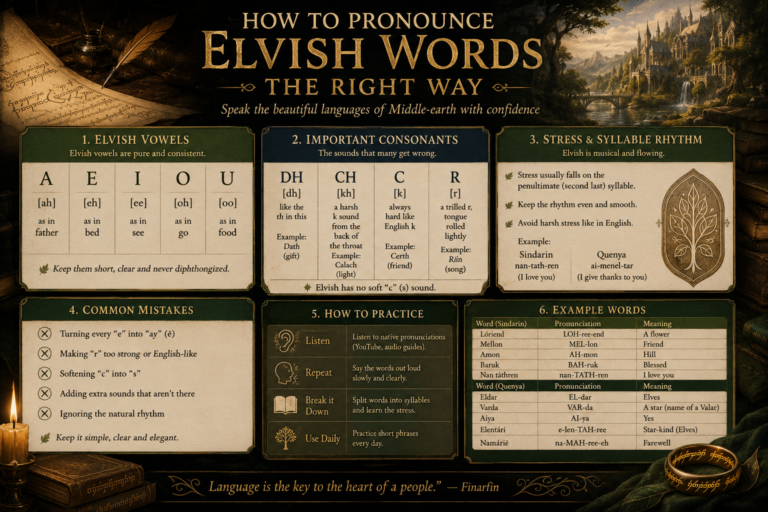
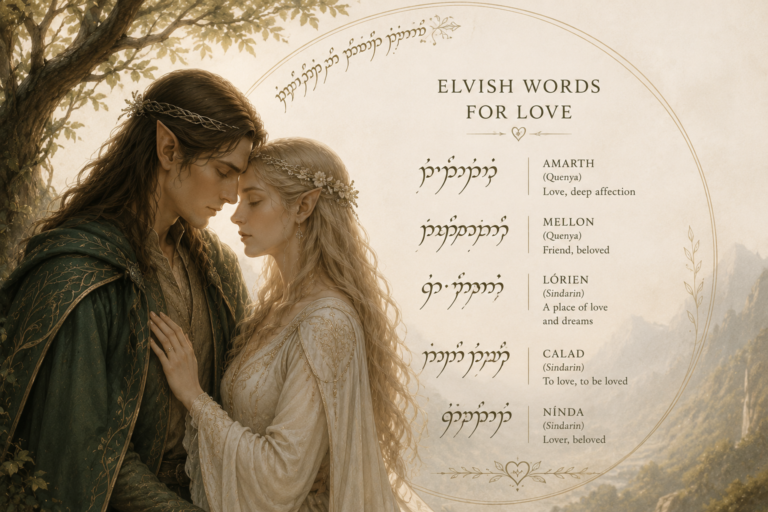
- Mellon – Sindarin for “friend,” widely recognized thanks to its famous use at the doors of Moria
- Gwend – another Sindarin term tied to close companionship or bond
- Nildë – a Quenya word associated with “friendship,” reflecting a more formal register
“Mellon” is probably the single most recognized Elvish word among casual fans, precisely because of how memorably it appears in the story itself, which makes it a genuinely reliable, well-documented choice.
Sindarin or Quenya for These Relationships?
The usual tonal pattern applies here as well:
- Sindarin terms feel closer to everyday, spoken affection, well suited for a sibling, close friend, or parent
- Quenya terms carry more weight and formality, fitting for a memorial piece or something meant to feel timeless
A phrase for a close friend probably belongs in Sindarin. A phrase honoring a family member who’s passed might sit more naturally in Quenya’s more elevated tone.
How to Use These Elvish Words for Family and Friendship Thoughtfully
- Confirm which specific relationship a word describes, since terms for “sibling,” “close friend,” and “companion” aren’t always interchangeable
- Cross-check meaning against more than one source, especially for less common family terms with thinner documentation
- Keep phrases short and direct, since elaborate descriptions of relationships rarely have a clean Elvish equivalent
- Consider the tone of the context; a memorial piece and a casual gift call for different registers
That first point deserves real attention. A word that reads as “friend” in a casual list might carry a more specific meaning, like “close companion in hardship,” once you check its actual documented root.
Final Thoughts
Elvish words for family and friendship carry a sincerity that comes straight from Tolkien’s own writing about loyalty, kinship, and the Fellowship itself. Take the time to confirm a word’s exact meaning, choose the tone that matches your relationship, and use it somewhere it can genuinely be appreciated. Handled with that care, a single word borrowed from Middle-earth can honor a bond in a way few other languages manage quite as well.