Elvish Names for Pets: Meaningful Ideas Worth Considering
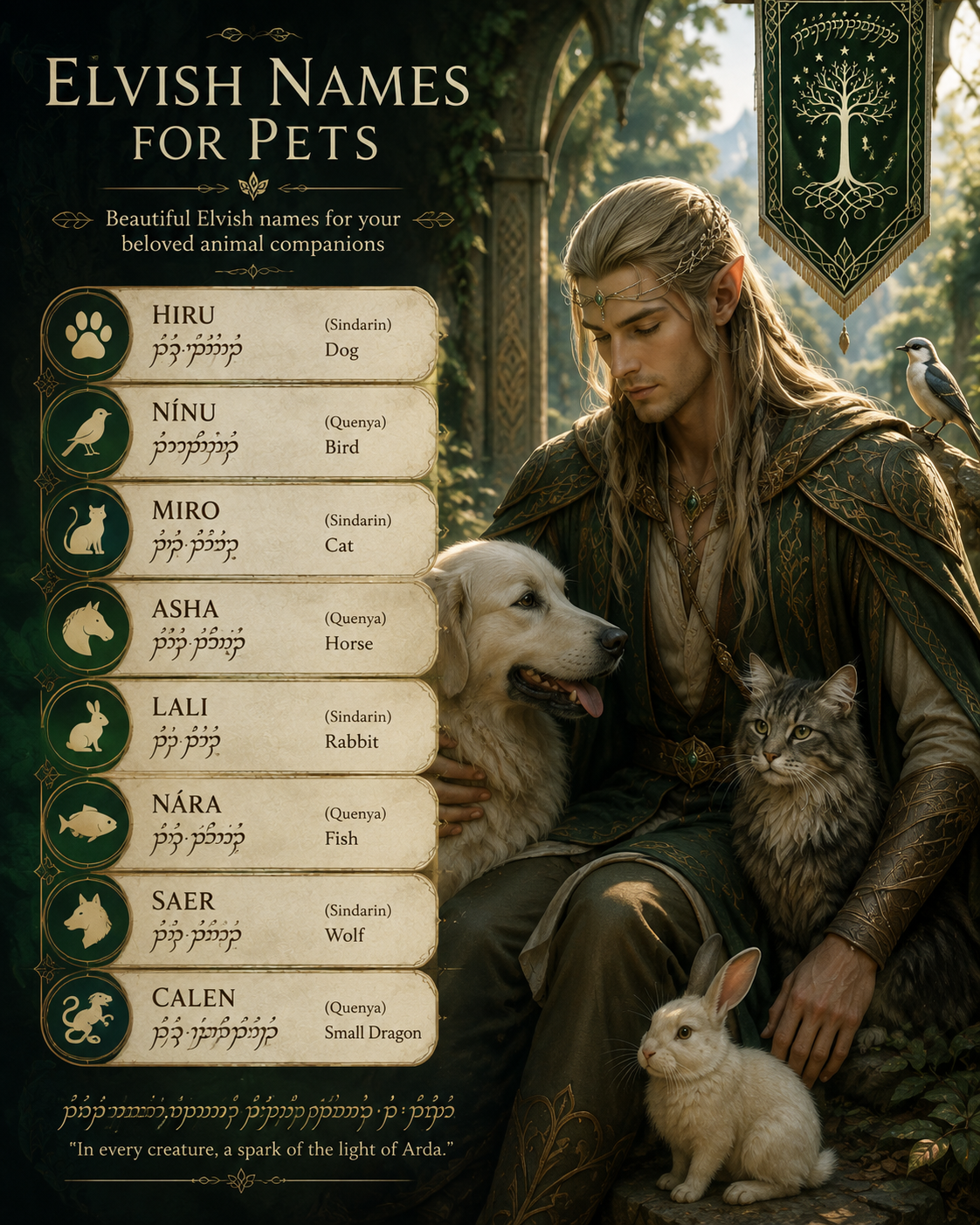
Naming a pet is one of those small joys that somehow still feels like a big decision, and for a lot of Tolkien fans, the usual shortlist of names just doesn’t quite scratch the itch. Elvish names for pets offer something a little different: real linguistic meaning behind the sound, drawn from a world built with genuine care rather than a random name generator.
Here’s how to find one that actually fits, along with a few ideas to get you started.
Why Elvish Works Surprisingly Well for Pets
Unlike a lot of fictional naming trends, Elvish names carry documented meaning rather than just sounding exotic. A name meaning “swift,” “loyal,” or “bright” isn’t just a nice-sounding label; it’s a small phrase in disguise, which makes it feel especially fitting for a pet whose personality often inspires the search in the first place. There’s also a practical upside: most Elvish names are short enough to actually call across a backyard, unlike some longer Tolkien character names.
Name Ideas Based on Personality
Matching an Elvish name for pets to temperament tends to produce the most satisfying results:
- Roch – Sindarin for “horse,” but often adapted playfully for energetic, spirited dogs
- Nimloth – meaning roughly “white blossom,” a gentle option for a light-colored or calm companion
- Curunír-inspired shorter forms – evoking “skill” or “craft,” fitting for a clever or mischievous pet
- Gwaihir-style adaptations – tied to themes of speed and flight, popular for fast, energetic breeds
- Melui – Sindarin for “lovely” or “pleasant,” a soft, affectionate option for a gentle pet
Shorter names consistently work better in practice, both for pronunciation and for the simple reason that pets respond faster to crisp, one or two-syllable sounds.
Sindarin or Quenya for Elvish Names for Pets?
The same tonal split applies here as it does everywhere else in Elvish:
- Sindarin names tend to feel warmer, softer, and easier to say quickly, often a better fit for everyday calling
- Quenya names carry more formality and weight, which can suit a more dignified or reserved animal
A playful, energetic dog might suit a snappy Sindarin name. A stately, calm cat might carry a Quenya name surprisingly well.
Tips for Choosing the Right Name
- Say the name aloud several times in the tone you’d actually use to call your pet, not just read it silently
- Keep it short; one or two syllables tend to work best for training and everyday use
- Confirm the documented meaning behind a name before committing, since some popular “Elvish pet name” lists circulate inaccurate translations
- Consider how the name sounds shouted across a yard or park, not just how it looks written down
That first point catches people off guard more than expected. A name that reads beautifully can feel awkward the moment you actually try calling it out loud.
Mistakes to Avoid
- Choosing a name that’s too long or complex for quick, everyday use
- Trusting an unverified online list without checking a name’s real origin
- Mixing Sindarin and Quenya elements within a single invented name
- Picking a name purely for how it looks written, without testing how it sounds spoken
A few minutes of testing upfront saves you from years of stumbling over syllables at the dog park.
Final Thoughts
Elvish names for pets combine real linguistic depth with genuinely usable, everyday charm, something most naming trends can’t quite offer together. Match the name to your pet’s personality, keep it short enough to call comfortably, and verify its meaning before it becomes a permanent part of your daily routine. Done that way, a name pulled from Middle-earth can end up feeling less like a gimmick and more like it was always meant to belong to your companion.