Elvish Names for Businesses and Brands
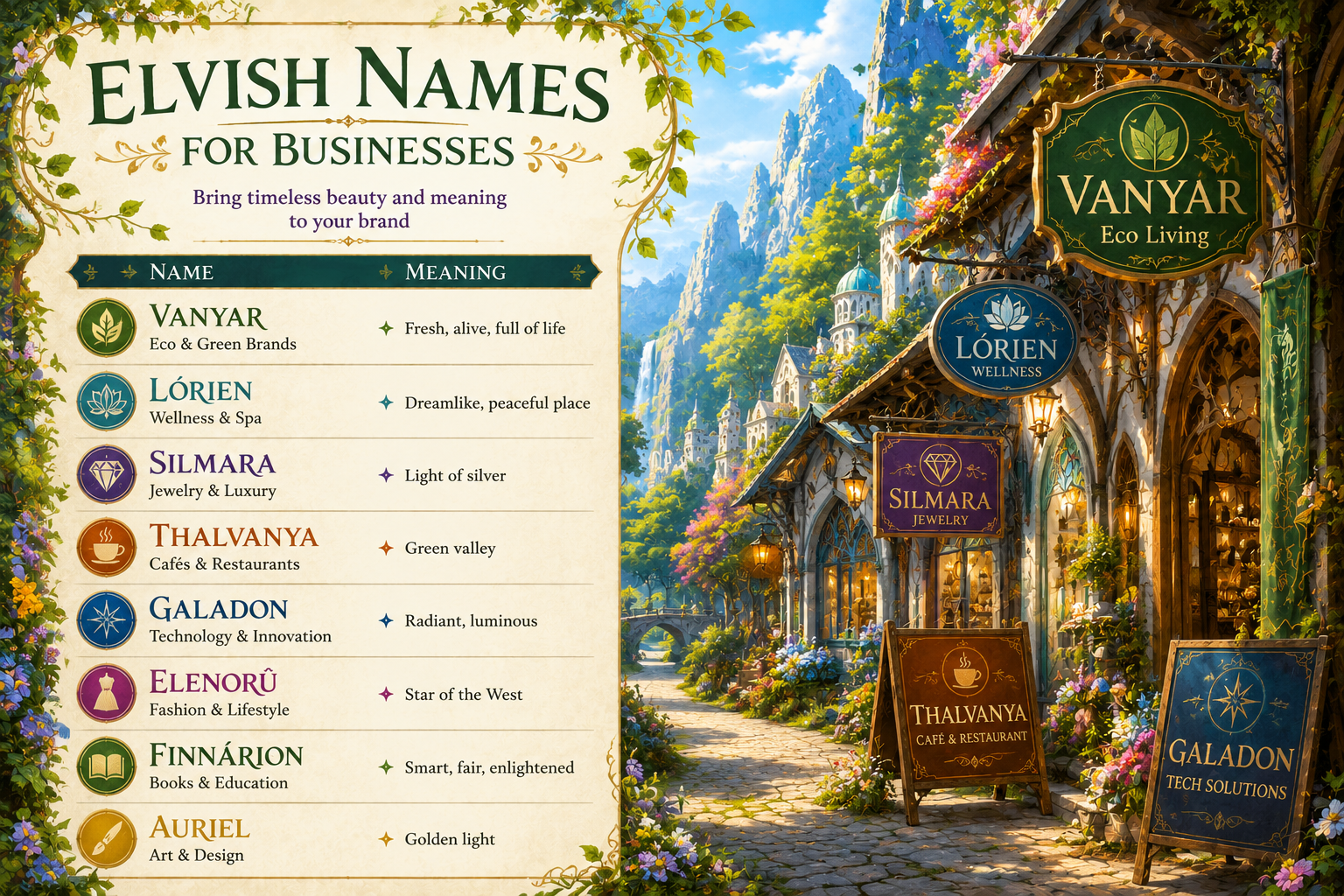
Every founder eventually hits the same wall: the good domain names are taken, the obvious words feel generic, and everything left over sounds like a hundred other startups. Elvish names for businesses offer a genuinely different lane, pulling from a language built with real linguistic depth rather than another invented-sounding tech name assembled from leftover syllables.
Here’s how to approach it properly, so the name feels intentional rather than gimmicky.
Why Elvish Works as a Branding Choice
Tolkien’s languages carry documented meaning behind nearly every word, which gives a business name genuine substance beyond just sounding pleasant. A company built around craftsmanship might draw from a word meaning “skill” or “maker.” A brand focused on renewal or growth might lean toward vocabulary tied to light or new beginnings. That layer of meaning gives customers something to discover, which works especially well for brands with a story-driven or artisanal identity.
It also doesn’t hurt that Sindarin and Quenya both carry a naturally elegant, distinctive sound that stands out in a market full of similar-feeling invented names.
Matching a Name to Your Brand Identity
Working backward from what your business represents tends to produce the strongest results when picking Elvish names for businesses:
- Craft or artisanal businesses – look toward words tied to skill, making, or craftsmanship
- Wellness or renewal-focused brands – nature vocabulary tied to light, growth, or water tends to fit well
- Creative or design studios – words tied to beauty, art, or vision carry natural relevance
- Adventure or outdoor brands – vocabulary tied to journeys, mountains, or open sky fits the tone directly
Choosing a concept first, then finding documented vocabulary to match, produces far more coherent results than picking a name purely because it sounds appealing.
Sindarin or Quenya for a Business Name?
The same tonal distinction that runs through all Elvish vocabulary applies here too:
- Sindarin names tend to feel warmer and more approachable, well suited for consumer-facing or lifestyle brands
- Quenya names carry more formality and gravity, often fitting for premium, luxury, or heritage-focused branding
A cozy neighborhood cafe probably suits Sindarin’s grounded warmth. A high-end design studio might carry Quenya’s more elevated tone convincingly.
Practical Considerations Beyond Meaning
- Say the name aloud repeatedly to confirm it’s easy for customers to pronounce and remember
- Check domain and trademark availability early, since a beautiful name is only useful if you can actually claim it
- Keep it relatively short; long, elaborate Elvish constructions become harder to use practically in logos, signage, and casual conversation
- Confirm the documented meaning behind your chosen word, rather than trusting an unverified online list
That last point matters more for a business than almost any other use case. A brand built around a mistranslated or fabricated “Elvish” word risks real embarrassment if a knowledgeable customer ever points it out.
Common Mistakes to Avoid
- Choosing a name purely for how “fantasy” it sounds without verifying real meaning
- Mixing Sindarin and Quenya roots within a single invented brand name
- Overcomplicating pronunciation to the point customers avoid saying the name aloud
- Skipping trademark research before committing publicly to the name
A little diligence upfront avoids a costly rebrand down the line, especially once marketing materials and signage are already in motion.
Final Thoughts
Elvish names for businesses offer a rare combination: genuine linguistic depth paired with a distinctive, memorable sound most competitors simply can’t match. Choose a concept that reflects your brand first, verify the word’s real documented meaning, and make sure it’s practical enough for customers to say and remember. Built with that care, a name borrowed from Middle-earth can become something customers genuinely connect with, rather than just another forgettable invented word.