Elvish Place Names: What Middle-earth’s Locations Really Mean
Ask a Tolkien fan to name a few places in Middle-earth, and you’ll hear Rivendell, Lothlórien, and Gondolin roll off effortlessly. Fewer people realize those names aren’t just evocative sounds; they’re descriptive phrases, built the same way real-world place names often are, from geography, history, or a defining feature of the location itself. Elvish place names carry meaning the way “Newcastle” or “Oxford” do in English, just dressed in Sindarin or Quenya instead.
Here’s what some of the most iconic ones actually mean, and how Tolkien built them that way on purpose.
Why Tolkien Built Names This Way
As a philologist, Tolkien understood that real place names almost always come from something descriptive, a river crossing, a notable tree, a historical event. He applied that same logic to Middle-earth rather than inventing sounds purely for atmosphere. This is part of why the names feel so grounded despite belonging to a fantasy world; they follow the same naming logic as places you could actually visit.
That grounding is exactly what separates Tolkien’s approach from a lot of fantasy world-building that treats names as decoration rather than description.
Famous Elvish Place Names Explained
A handful of locations reveal this pattern especially clearly:
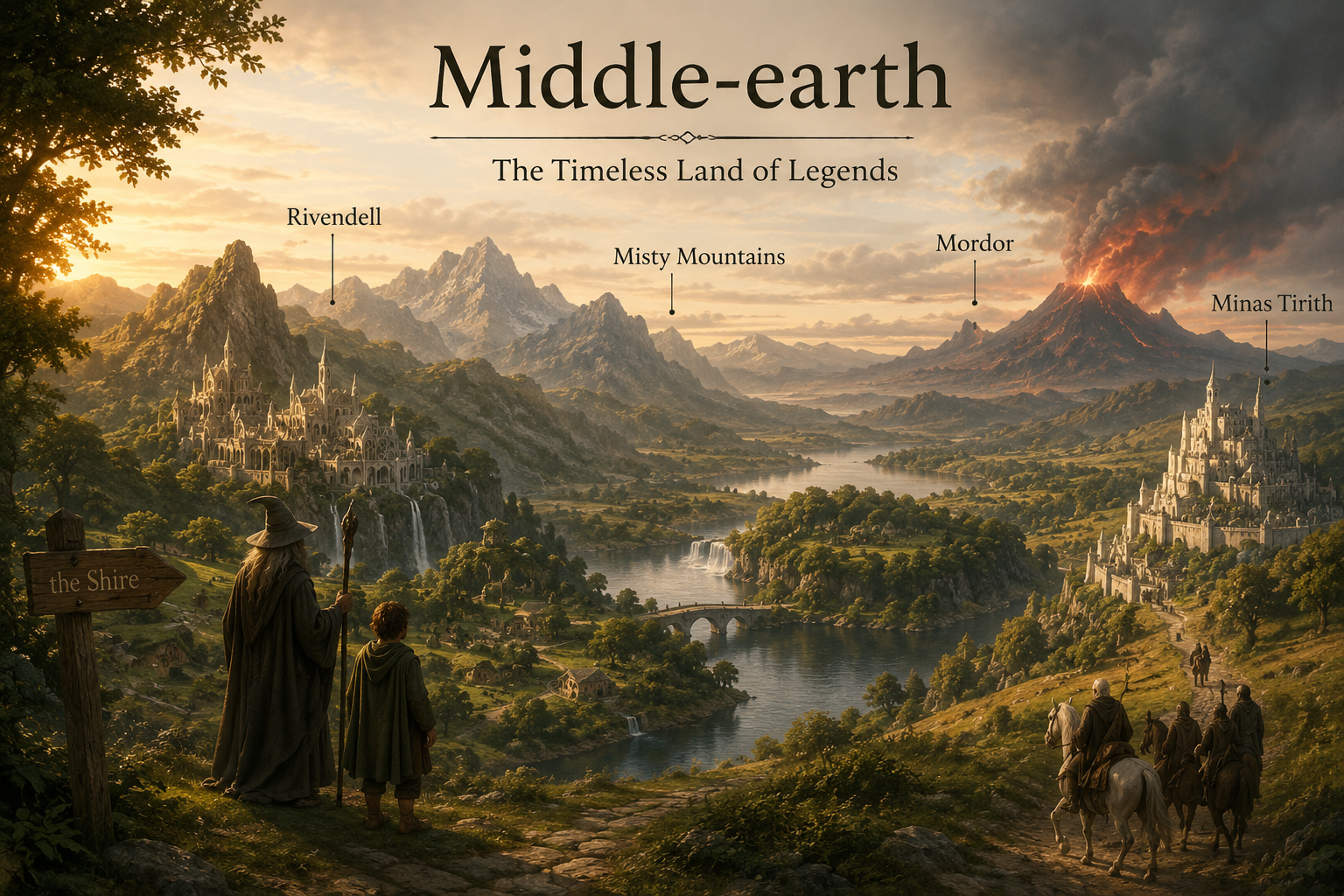
- Rivendell – the English translation of the Sindarin “Imladris,” meaning roughly “deep valley of the cleft,” describing its literal geography
- Lothlórien – generally understood as “dream-flower” or “flower of the dream-land,” reflecting the forest’s ethereal, timeless quality
- Gondolin – often interpreted as “hidden rock” or “song of stone,” tied to the city’s concealed, defensible location
- Mordor – Sindarin for “black land” or “land of shadow,” about as descriptively direct as these names get
Notice how each name isn’t just pretty sound; it’s functioning as a literal description, the same way “Rivendell” itself translates that description into English for readers.
How Compound Names Work
Many Elvish place names combine multiple root words into a single term, similar to how “Newcastle” combines “new” and “castle.” Understanding this structure helps explain why some names feel long or complex; they’re often two or three meaningful pieces stitched together rather than one invented word.
- Imladris combines roots related to “valley” and “cleft” or “ravine”
- Lothlórien combines “lot(h),” tied to flowers, with “lórien,” associated with dreams or slumber
- Gondolin combines “gond,” meaning stone, with elements tied to song or hidden concealment
Recognizing these compound patterns makes it considerably easier to guess at meaning even when encountering an unfamiliar Elvish location name for the first time.
What This Reveals About Sindarin and Quenya
Place names offer a genuinely useful window into vocabulary, since Tolkien used them constantly throughout his writing. Geographic and descriptive terms, words for water, stone, valley, forest, and light, tend to be some of the most reliably documented vocabulary in either language, precisely because Tolkien needed them repeatedly to describe his own world.
This is why place-name vocabulary often makes a genuinely practical starting point for anyone building their own Elvish phrases involving nature or geography.
Using This Naming Pattern Yourself
- Look to real place names for inspiration on structure, combining a descriptive word with a geographic feature
- Keep compound names to two clear, documented root words rather than stacking several together
- Verify each root’s meaning individually before combining them, since compound errors are easy to make
- Consider how the name sounds spoken aloud, since these locations were meant to be said, not just admired on a map
That verification step matters more than it seems. A beautiful-sounding invented compound can accidentally combine roots that don’t actually make coherent sense together.
Final Thoughts
Elvish place names reveal one of the more overlooked sides of Tolkien’s linguistic craftsmanship: even something as simple as a location’s name carries real, traceable meaning rather than existing purely for atmosphere. Understanding how names like Rivendell or Lothlórien were actually built adds a layer of appreciation that’s easy to miss on a first read, and it’s a genuinely useful pattern to borrow if you’re building Elvish phrases of your own.