How to Count in Elvish: A Guide to Sindarin and Quenya Numbers
Counting feels like the most basic building block of any language, which makes it a surprisingly good entry point if you’re just starting out. Learning how to count in Elvish gives you a small, manageable set of vocabulary to practice pronunciation, notice grammar patterns, and get a genuine feel for how Sindarin and Quenya sound, all without tackling a full sentence yet.
Here’s a breakdown of how numbers work in both languages, and why they’re not quite as simple as swapping in English digits.
Why Elvish Numbers Aren’t a Direct Translation
Tolkien built number systems into Sindarin and Quenya with the same care he gave everything else, which means they follow internal logic rather than mirroring English structure. Some numbers change form depending on what they’re counting, similar to how certain languages adjust adjectives based on gender or plurality. It’s a small detail, but it’s exactly the kind of thing that trips up anyone assuming Elvish counting works just like English with different-sounding words swapped in.
Counting in Quenya
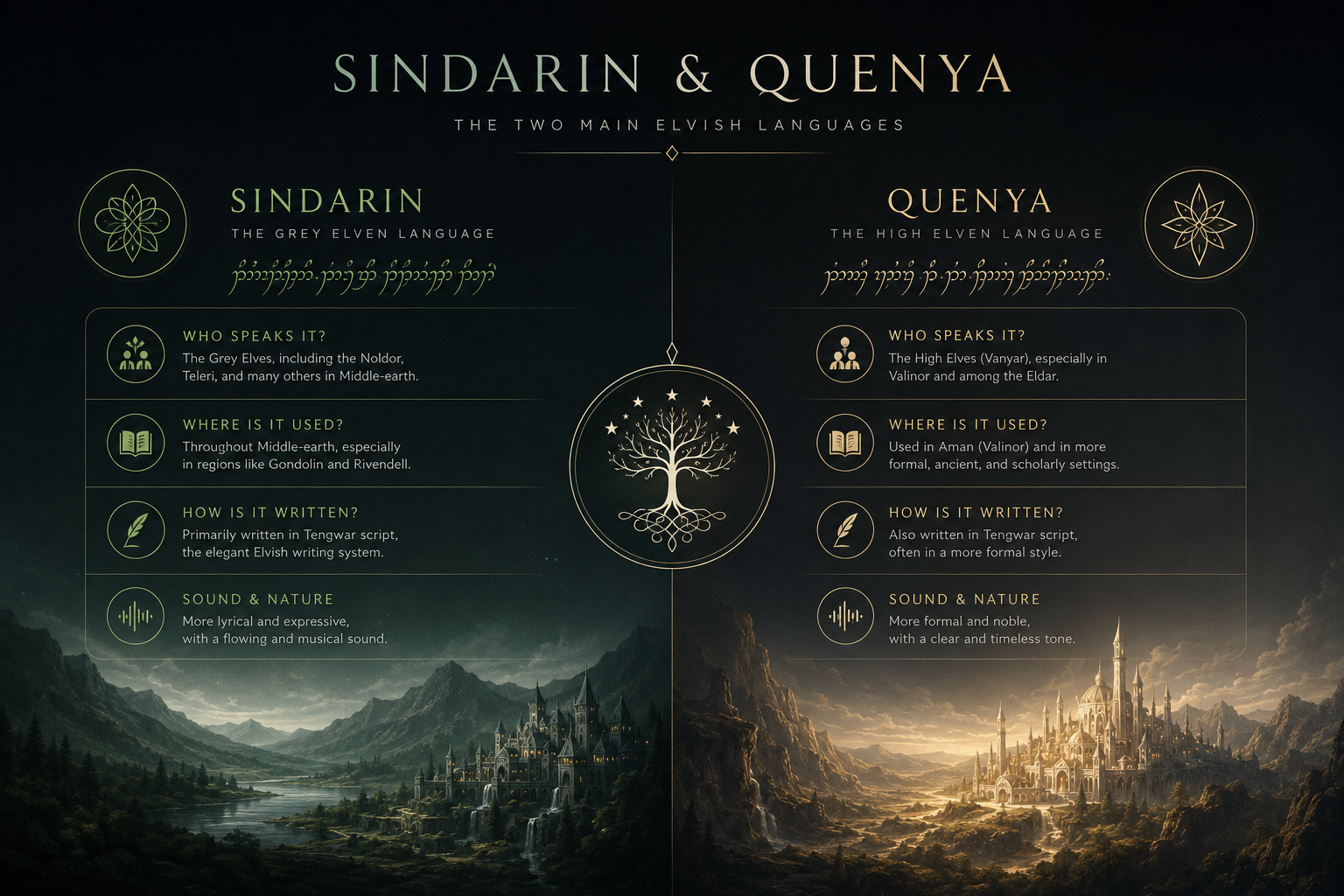
Quenya’s number system reflects its more formal, structured character, drawing on patterns similar to Finnish numerical logic:
- Min – one
- Atta – two
- Nel – three
- Canta – four
- Lempë – five
Beyond five, Quenya numbers begin combining smaller units together, a pattern common in many real-world counting systems once you move past a small base set.
Counting in Sindarin
Sindarin numbers carry a softer, more flowing sound, consistent with the language’s Welsh-inspired phonology:
- Min – one
- Tad – two
- Neledh – three
- Canad – four
- Leben – five
Notice how “min” appears in both languages for “one.” That overlap isn’t a coincidence; it reflects their shared root in Tolkien’s earlier, more primitive invented Elvish tongue before the two languages diverged.
Pronunciation Tips for Elvish Numbers
- Every vowel is pronounced clearly; nothing gets swallowed the way unstressed vowels often do in English
- “Dh” in Sindarin words like “neledh” sounds like the “th” in “this,” not a hard “d” sound
- Stress generally falls on the second-to-last syllable, consistent with broader Elvish pronunciation rules
- Practice numbers in sequence, one through five, rather than isolated single digits, since the rhythm becomes easier to internalize that way
Reading them aloud in order, rather than randomly, helps the pattern settle into memory faster than flashcard-style memorization tends to.
A Simple Way to Practice How to Count in Elvish
- Start with one through five in a single language before introducing the other, to avoid blending vocabulary
- Count everyday objects around you using the numbers you’ve learned, the same way beginners practice any new language
- Say each number aloud at least ten times before moving to the next one
- Revisit both counting systems side by side only after each feels comfortable individually
Comparing them too early tends to blur the two rather than reinforce either one.
Common Mistakes to Avoid
- Mixing Sindarin and Quenya numbers within the same sentence or count
- Assuming higher numbers follow the exact same pattern as one through five without checking
- Rushing pronunciation instead of practicing each number slowly at first
- Treating Elvish numbers as a direct word-for-word swap rather than their own internally consistent system
Small, consistent practice avoids most of these naturally, without needing to memorize exceptions upfront.
Final Thoughts
Learning how to count in Elvish is a genuinely approachable starting point for anyone easing into Sindarin or Quenya, offering just enough structure to build real pronunciation habits without the pressure of full sentences. Practice one language at a time, say the numbers aloud consistently, and let the patterns settle in naturally. Small steps like these tend to build real, lasting familiarity with Tolkien’s languages far more reliably than jumping straight into longer phrases.