Elvish Wedding Vows: A Guide to Meaningful Ceremony Language
A wedding is already one of the most personal days two people will share, so it’s no surprise some couples want language that matches that weight, something beyond the usual scripted lines. Elvish wedding vows offer exactly that, blending real linguistic history with the romantic, almost mythic tone Tolkien built into Sindarin and Quenya. Done thoughtfully, a few borrowed Elvish words can turn a ceremony into something genuinely unforgettable.
Here’s how to approach it, from choosing the right phrases to making sure they’re accurate before the big day.
Why Couples Choose Elvish for Their Ceremony
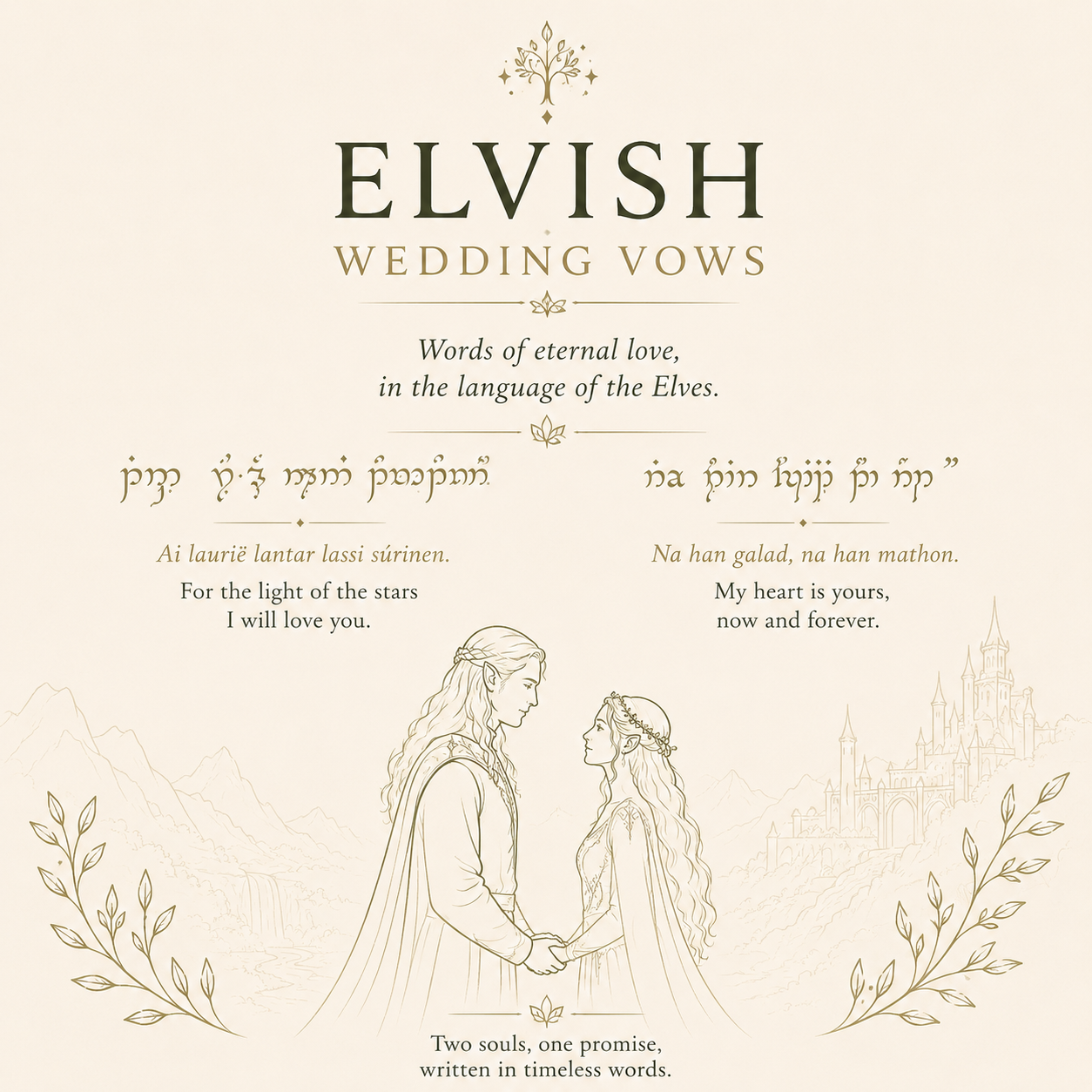
Tolkien’s Elvish languages weren’t built to sound pretty for their own sake; they carry real meaning behind nearly every word, often tied to themes of love, light, loyalty, and eternity. That depth is exactly what draws couples in. Reciting a phrase that literally translates to something like “my heart is bound to yours” hits differently than a generic vow template, especially for fans who’ve grown up with Tolkien’s world as part of their own story.
It also doesn’t hurt that both Sindarin and Quenya simply sound beautiful spoken aloud, adding a musical quality most modern languages can’t quite replicate.
Sindarin or Quenya: Which Fits a Wedding Better?
This decision usually comes down to tone, and either choice works well for different reasons:
- Sindarin feels warmer and more intimate, well suited for personal vows exchanged quietly between partners
- Quenya feels more formal and ceremonial, fitting for phrases spoken aloud to the full gathering, like an opening blessing or closing declaration
Some couples even blend both deliberately, using Quenya for a formal opening line and Sindarin for the more personal vows that follow, as long as the two languages aren’t mixed within a single phrase.
Popular Themes for Elvish Wedding Vows
Certain themes translate especially well for Elvish wedding vows, both linguistically and emotionally:
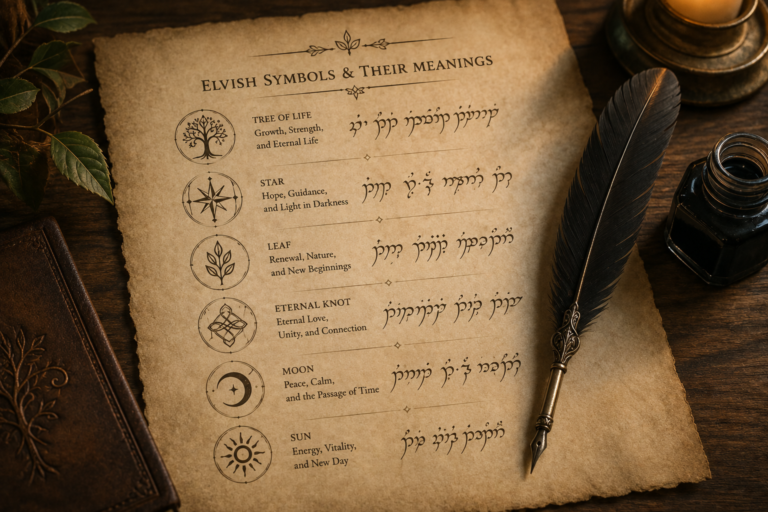
- Phrases about light or stars, tying back to Elvish reverence for starlight as a symbol of hope and guidance
- Phrases about binding or unity, reflecting commitment without leaning on modern idioms Elvish vocabulary can’t support
- Short blessings for protection or long life, often exchanged as part of a ring ceremony or closing statement
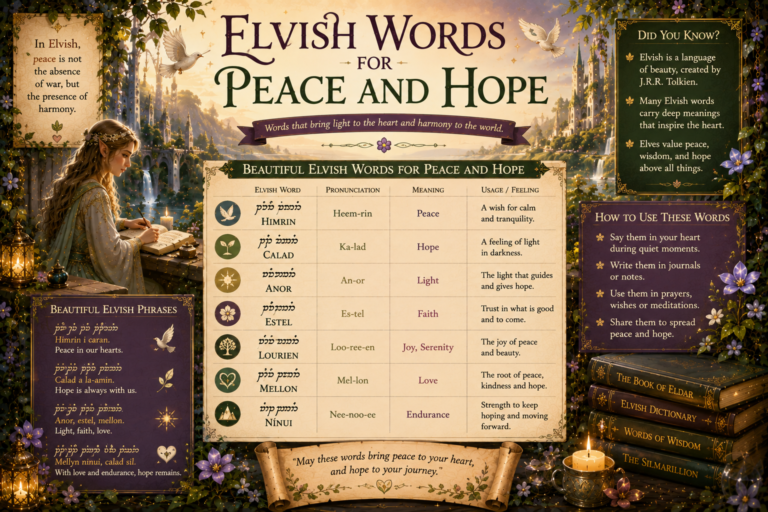
- Simple, sincere declarations of love, which tend to translate more reliably than longer, poetic English phrasing
Shorter, sincere phrases consistently outperform longer, flowery ones, mainly because Tolkien’s documented vocabulary has real limits once you move beyond simple, direct meaning.
Steps to Get Your Vows Right
- Draft your vow in English first, then simplify it before translating; complex sentence structures rarely convert cleanly
- Confirm which language, Sindarin or Quenya, matches the tone you’re going for, and stay consistent throughout
- Cross-check the translation against a second source, since a ceremony is a public, memorable moment where accuracy matters
- Practice pronunciation well before the day itself; reading it cold at the altar is a recipe for stumbling
- Have your officiant or partner review the phrase together beforehand so nobody’s caught off guard
That first step trips up more couples than any other. A beautifully written English vow doesn’t always have a clean Elvish equivalent, so simplicity really is your friend here.
A Few Things to Avoid
- Choosing a phrase purely for how it sounds without confirming what it actually means
- Mixing Sindarin and Quenya vocabulary within the same sentence
- Skipping pronunciation practice until the rehearsal, or worse, the ceremony itself
- Assuming a single online source is automatically accurate without cross-referencing it
Small oversights here tend to become the thing people remember, so it’s worth the extra care.
Final Thoughts
Elvish wedding vows carry a rare combination of genuine linguistic history and real emotional weight, but that combination only works if the words are chosen and verified with care. Keep your phrases short and sincere, pick a language that matches the moment, and practice saying it long before you’re standing at the altar. Handled that way, a few lines borrowed from Middle-earth can become one of the most meaningful parts of the entire day.