Tengwar Alphabet Explained: How Tolkien’s Elvish Script Really Works
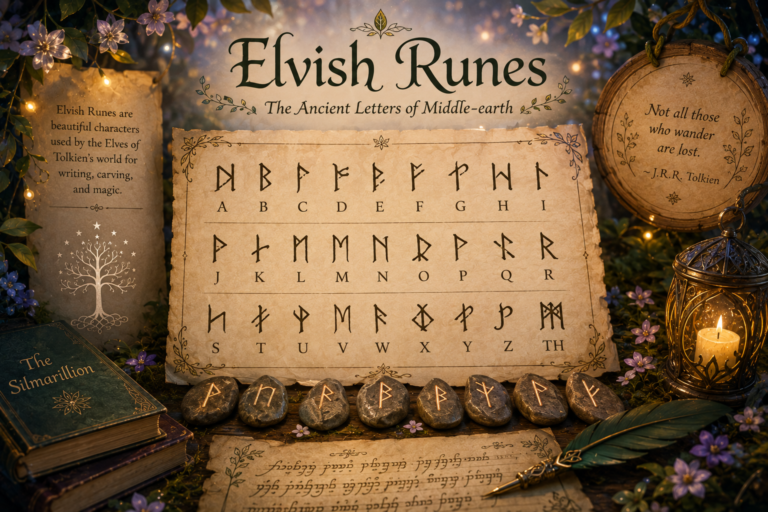
Open any page written in Elvish and you’ll notice something odd right away: it doesn’t look like an alphabet at all. There are no separate vowels lined up in a row, no letters that stay locked to a single sound. That’s because the Tengwar alphabet isn’t really an alphabet in the traditional sense. It’s a writing system, and once that distinction clicks, the whole thing stops looking mysterious and starts making sense.
This guide walks through how it actually works, so you can go from staring at unfamiliar curves to reading them with real understanding.
What Makes the Tengwar Alphabet Different
Most Western alphabets assign one fixed shape to one fixed sound. This Elvish writing system works the other way around. Each letter shape, called a “tengwa,” represents a type of consonant sound, and small modifications to that shape, like adding a bar or a curl, tell you the exact sound being used.
Vowels aren’t separate letters at all. Instead, they’re small marks placed above or below a consonant, similar to how accents work in some modern languages. Tolkien designed it this way deliberately, drawing inspiration from real-world writing systems like Arabic and Devanagari, where vowel marks work in much the same manner.
The Building Blocks: Consonants First
Consonant letters in this script are grouped by how and where they’re pronounced in the mouth, not alphabetically the way English organizes A through Z. Letters sharing a similar shape usually share a similar sound family:
- A basic curved shape often represents a “soft” consonant
- Adding a second bow to that shape typically signals a “harder” version of the same sound
- Extra strokes or doubled lines often indicate nasal sounds
Once you notice this pattern, memorization gets a lot less tedious, since you’re learning relationships between sounds rather than thirty unrelated symbols.
Adding Vowels: The Tehtar System
The small marks that represent vowels are called “tehtar.” They sit above a consonant (in most Elvish writing modes) and indicate which vowel sound follows it. This is where beginners often get tripped up, because it means a single Tengwar character can carry two pieces of information at once: the consonant and the vowel that comes after it.
Think of it like a shorthand notation you might use to speed up writing English quickly, except this one was built to be permanent, not personal.
Step-by-Step: How to Start Reading Tengwar
- Learn the basic consonant groupings first, rather than trying to memorize every character at once
- Practice recognizing tehtar marks separately from consonant shapes
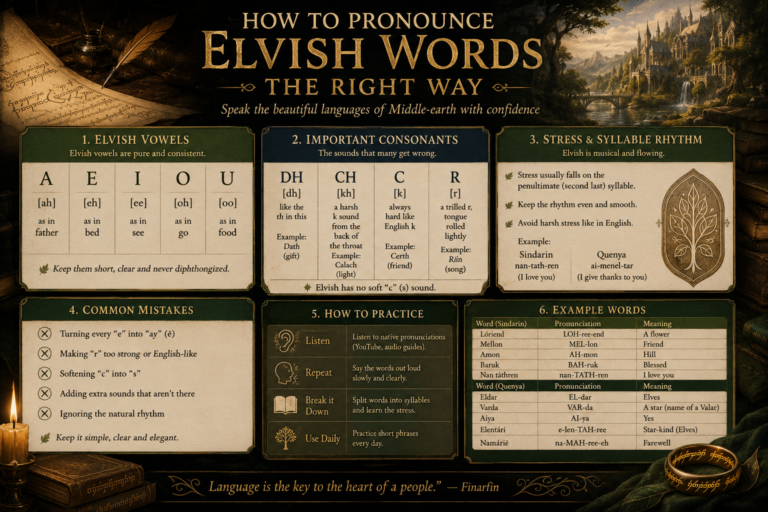
- Sound out short, simple words before attempting full phrases
- Use a reliable Tengwar chart alongside real examples, rather than isolated flashcards
- Revisit longer texts only after single words feel comfortable
Rushing this order tends to backfire. Reading Tengwar comfortably comes from pattern recognition, not brute memorization, so a slower, structured start actually gets you there faster.
Common Misconceptions About the Tengwar Alphabet
- “It’s just a secret code for English.” It isn’t. Tengwar is a flexible writing system that can represent multiple languages, including Sindarin, Quenya, and even English phonetically, but each use follows its own specific rules.
- “Every symbol has one fixed meaning.” Not quite. The same base shape can represent different sounds depending on which language or “mode” is being used.
- “You need to memorize it like a foreign vocabulary list.” Tengwar rewards understanding sound relationships far more than rote memorization.
Why Learning Tengwar Deepens Your Elvish Translations
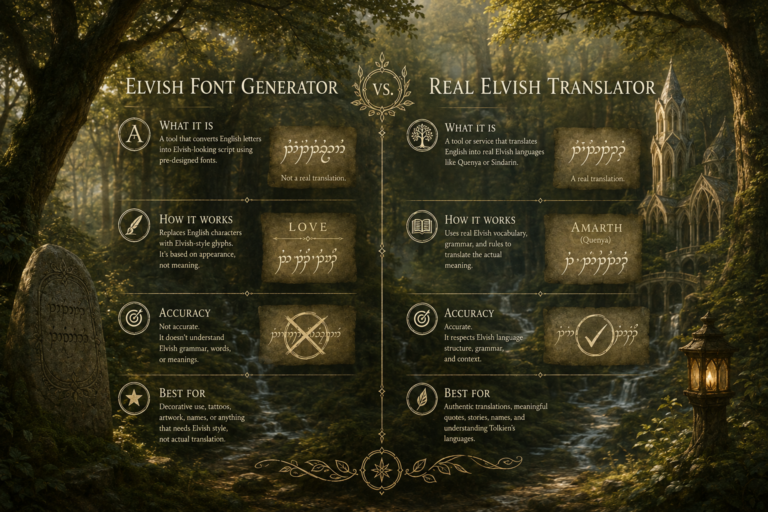
If you’ve ever run a word through an Elvish translator and wondered why the script looks the way it does, understanding the Tengwar alphabet fills that gap. Suddenly, a translated name or phrase isn’t just an image to admire; it’s something you can actually sound out and verify yourself. That small shift, from passive viewer to active reader, is where most people say Elvish stops feeling like decoration and starts feeling like a language.
Final Thoughts
The Tengwar alphabet looks intimidating for about as long as it takes to learn its underlying logic, and not a moment longer. Focus on sound families instead of isolated symbols, get comfortable with tehtar marks early, and practice with real words rather than random letter drills. Do that consistently, and you’ll find yourself reading Elvish script with genuine confidence, not just admiring it from a distance.