Augustiner-Festhalle
Munich’s oldest brewery runs the most traditional tent at Oktoberfest — the only one still pouring beer from wooden barrels, packed with regulars who treat it like a second home.
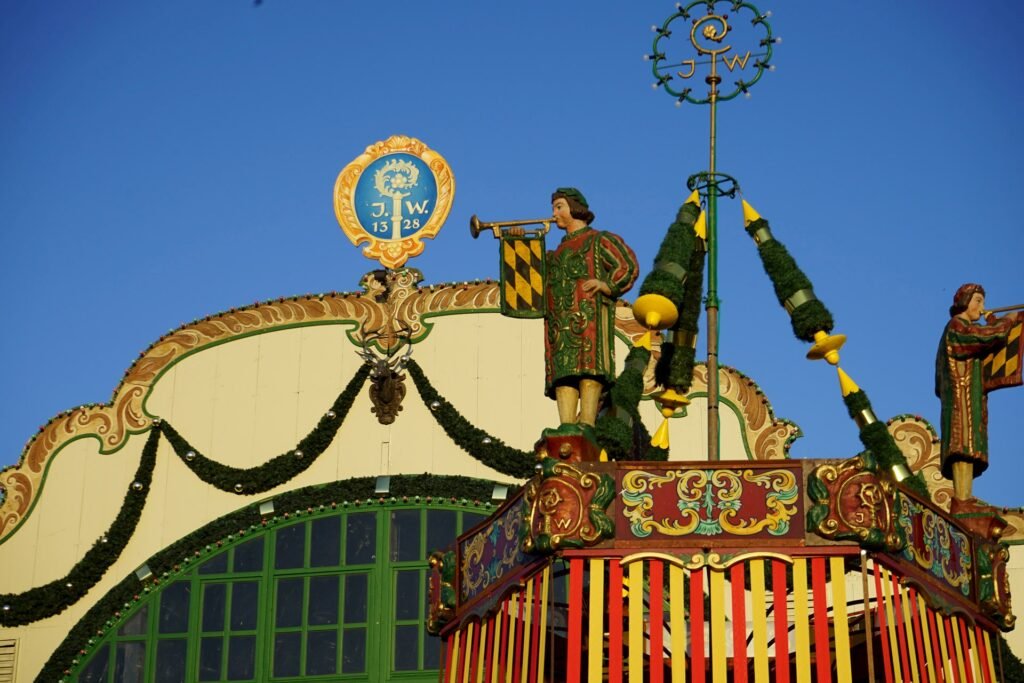
If you ask a Munich local which tent is the “real” Oktoberfest, most will point you here. The Augustiner-Festhalle is the only tent still pouring beer from traditional wooden barrels instead of steel kegs, and it’s run by a brewery that’s been making beer since 1328 — centuries before Oktoberfest existed at all.
Brothers Manfred and Thomas Vollmer host the tent today, continuing a line that traces back to 1898, when a Nuremberg innkeeper named Georg Lang first brought Augustiner beer to the Theresienwiese. Munich locals treat this tent almost like a second living room. Once the afternoon brass band gets going, it fills up fast — and unlike some of the bigger party tents, a good chunk of that crowd is repeat visitors rather than first-timers.
Why Wooden Barrels Actually Matter
This isn’t a marketing gimmick. Augustiner is the only one of Munich’s six official Oktoberfest breweries that still serves beer exclusively from 200-liter oak barrels, called “Hirschen,” instead of pressurized steel tanks. The wooden barrels hold less carbon dioxide than steel, which is why regulars describe Augustiner’s Oktoberfest beer as smoother and less gassy than what you’ll get elsewhere on the grounds.
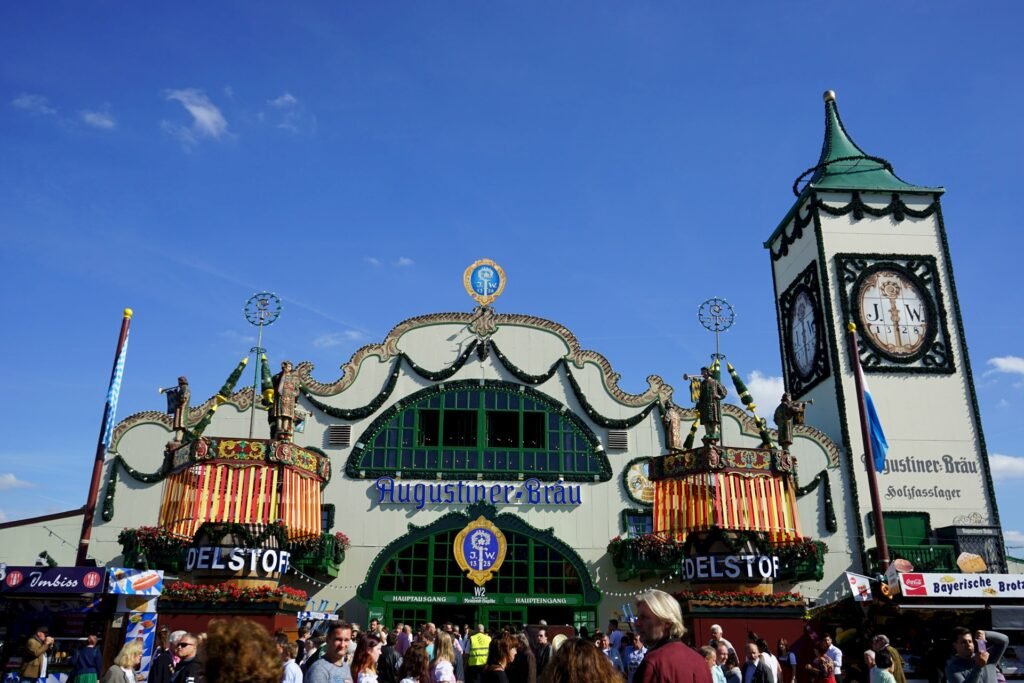
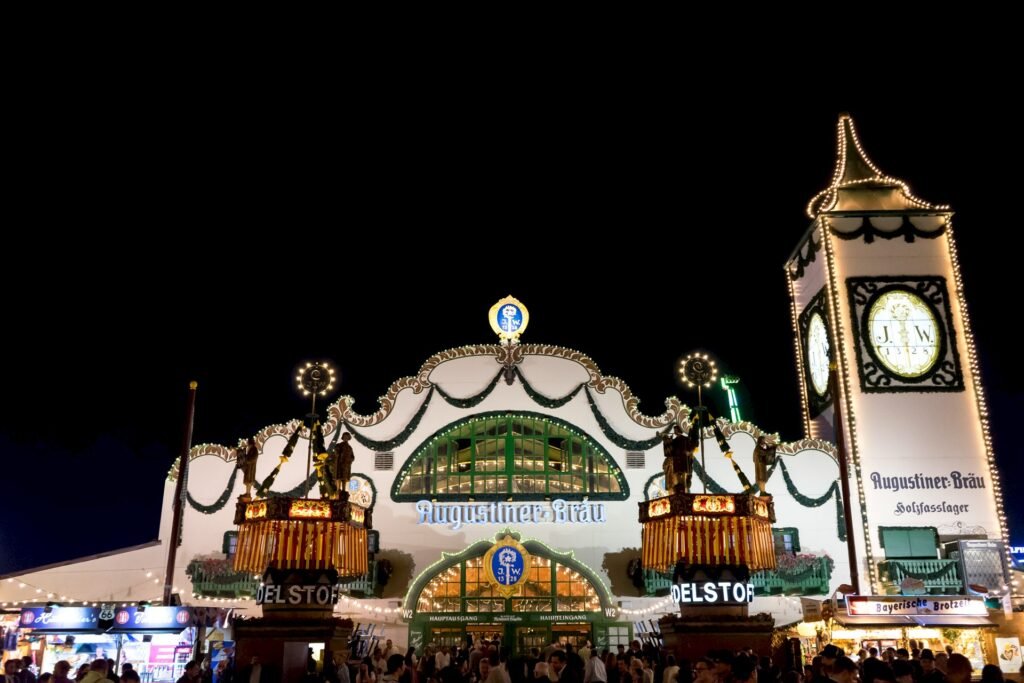
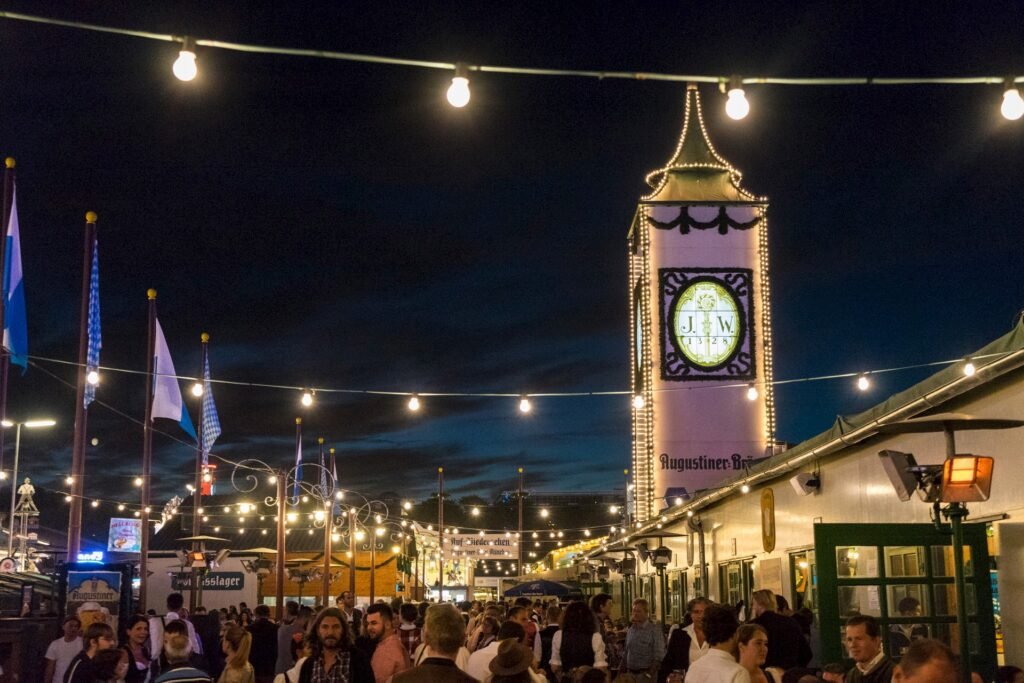
The tradition comes with real logistics. Every night, full barrels arrive at the tent and get moved into place by hand — no pumps, no shortcuts. Inside the tent’s 30-meter tower, the barrels are stored on an upper floor and lowered by an elevator system down to the taps as each one runs dry. That tower isn’t just decoration, either: it was originally built in 1926, torn down after World War II, and wasn’t rebuilt until 2010, timed to the festival’s 200th anniversary. Lit up at night, it’s one of the easiest landmarks to spot from anywhere on the Theresienwiese.
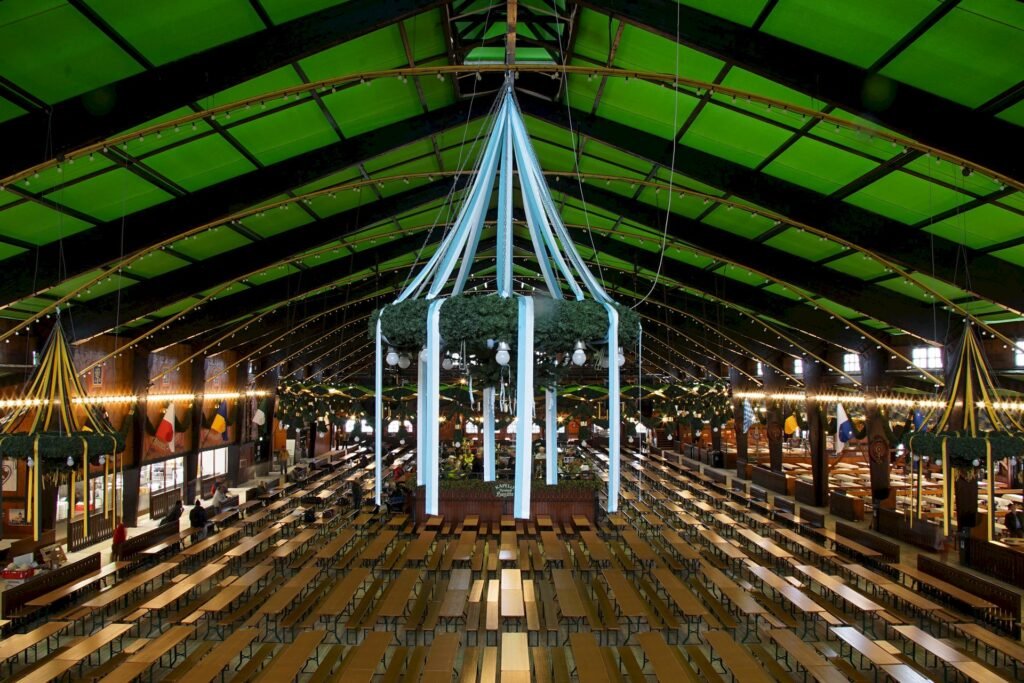
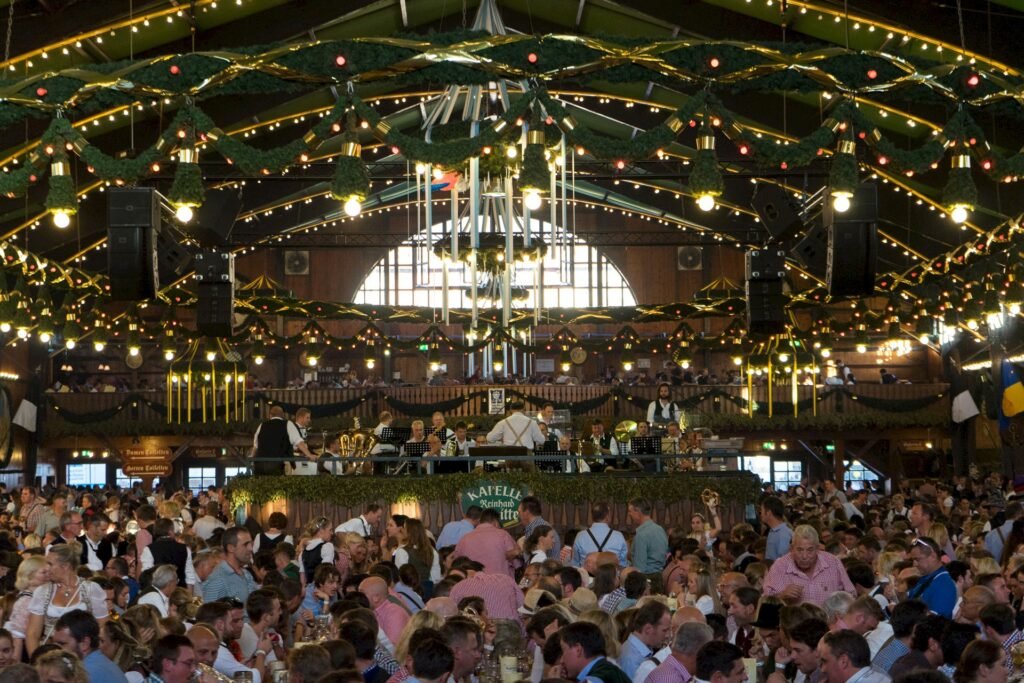
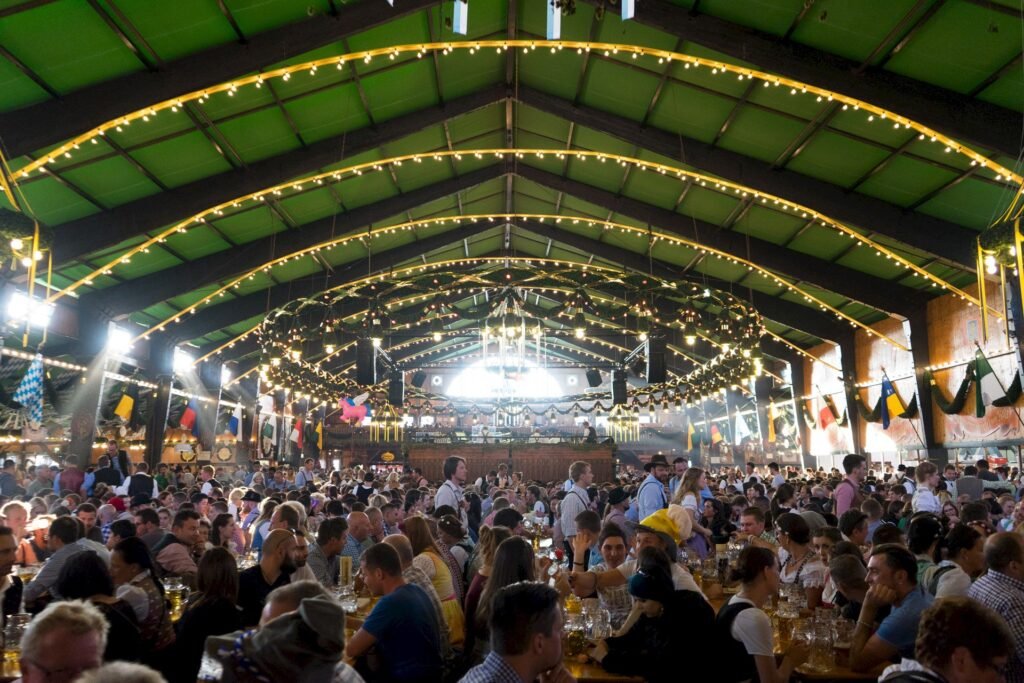
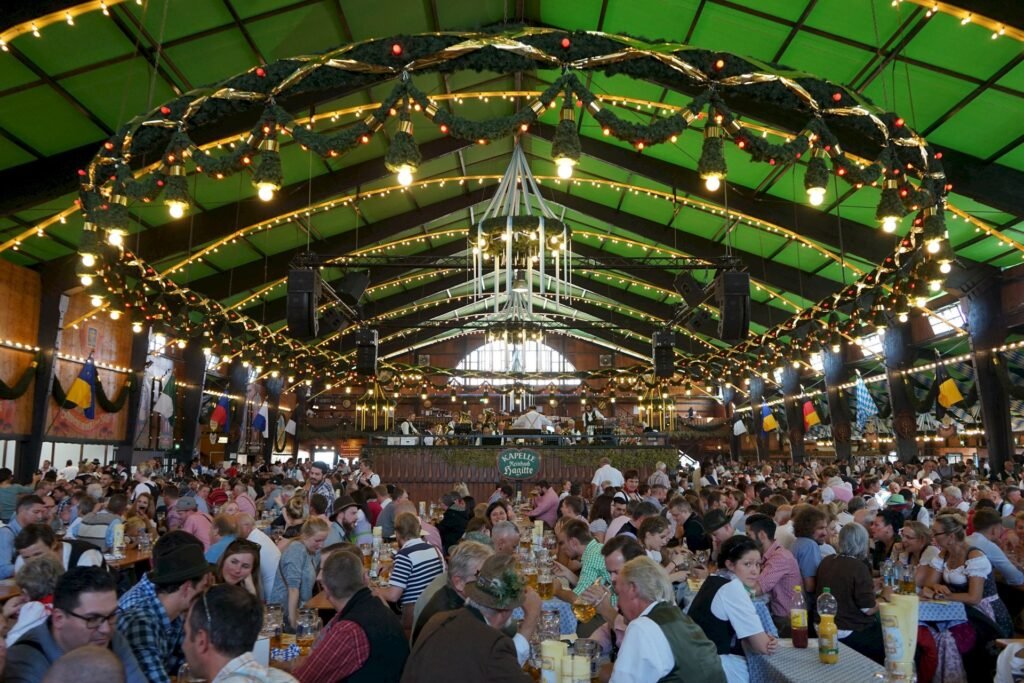
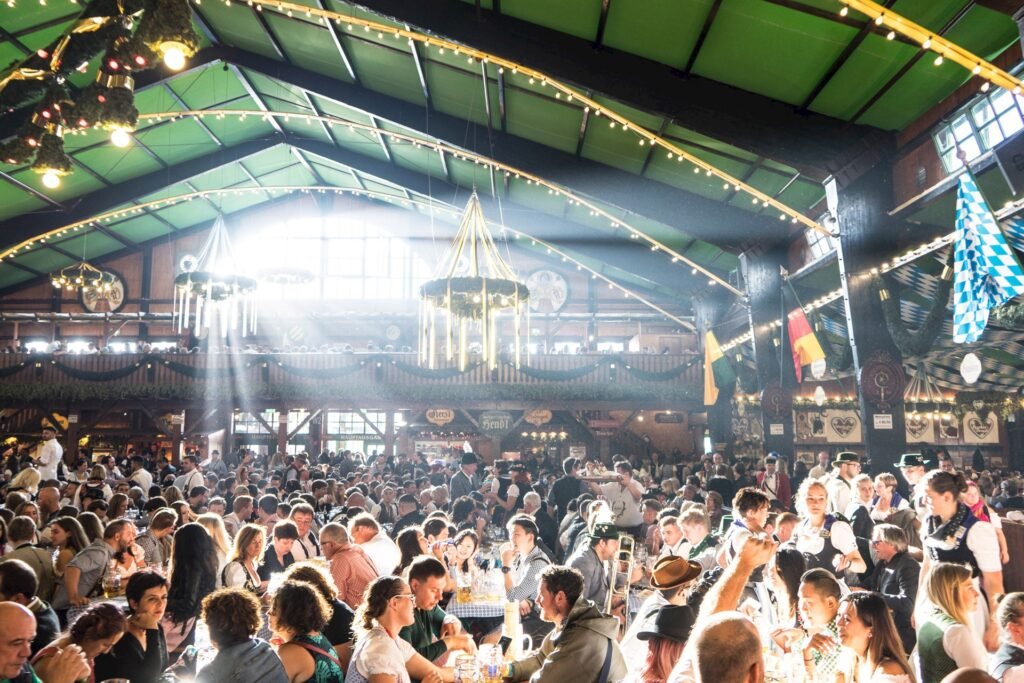
The interior got a proper refresh in 2014 — new toilets, relocated entrances, extra seating in the central hall — followed by a full sound system upgrade in 2015 and a small gallery redesign in 2024 that added a dedicated brewery balcony.
Food From Their Own Butcher Shop
Augustiner runs its own butcher operation, sourced from the Granerhof estate near Peißenberg, which supplies both this tent and the brewery’s restaurants around Munich. That’s a level of supply-chain control most tents don’t bother with, and it shows in the meat quality. Suckling pig, roast chicken, and a rotating list of sausages are the highlights, alongside vegetarian options like mushroom dishes and spinach-quark dumplings that go well beyond the usual token salad.
Beer here has consistently been one of the cheapest Maß prices at the whole festival — €14.50 in 2025, the lowest of any large tent. Food prices sit in the middle of the pack: reasonable for lunch, a bit steeper for the higher-end dinner dishes, with a noticeable gap between the cheap snacks and the pricier plates. Kids’ meals are a genuine bargain by Oktoberfest standards, and the tent runs dedicated family days with lowered prices on both food and drink. Since 2024, Augustiner has also poured non-alcoholic beer, a first for the tent.
Music and Crowd
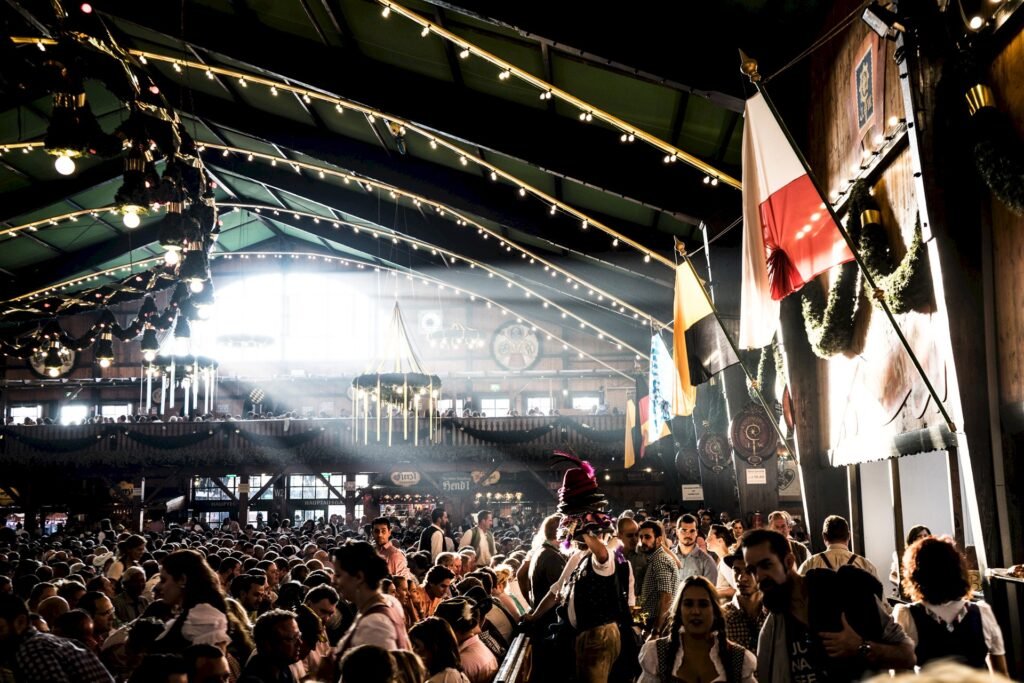
Augustiner fills up early — regulars are often seated by midday, well before most other tents get going. The vibe stays surprisingly manageable even in the evening; unlike tents where every open surface turns into a dance floor after dark, you can usually still find a seat here late at night.
The Augustiner Festkapelle, led by Reinhard Hagitte since 2001, plays classic Bavarian brass through the afternoon before shifting toward pop and rock later in the evening — though even then, brass tunes get more airtime here than at most tents. On weekends and public holidays, youth brass bands rotate in from 11 a.m. to noon alongside the main band, a detail that reflects the tent’s efforts to keep younger local musicians connected to the tradition rather than sidelined by it.
Getting There
The Augustiner-Festhalle sits at Wirtsbudenstraße 62, on the western side of the festival grounds. The U4/U5 Theresienwiese station gets you close, but during peak hours it’s badly congested. A better option for this tent specifically is the U3/U6 line to Poccistraße or Goetheplatz, both about a 10-minute walk with far less crowding at the platform.
If you’re arriving by S-Bahn, Hackerbrücke is your stop — every S-Bahn line passes through it, and it’s roughly a 10-minute walk from there to the western side of the grounds where this tent sits. Trams 18 and 19 also stop within walking distance at Holzapfelstraße.
Reservations: What to Expect
Booking a table here works differently from most tents, and it’s worth understanding before you plan around it. Public reservation slots are rare. Most tables are passed along informally to existing regulars rather than opened up through the standard online reservation form, and leftover seats often only get released in early September, in person, at the brewery’s office on Neuhauser Straße.
That said, the pattern shifts year to year. In 2023, a handful of Sunday and holiday evening slots were unexpectedly opened through the public form. In 2025, nothing was posted publicly at all — the only path in was emailing the tent directly to ask about Tuesday or Wednesday lunch availability. If a reserved table matters to you, plan on emailing ahead rather than waiting for a public release, and don’t count on getting an answer quickly.
Walk-in seating is realistic on weekday mornings and early afternoons, before the regular crowd arrives.
How It Compares to Other Traditional Tents
Augustiner shares “traditional” branding with a few other tents, but the experience is genuinely different at each one.
- Vs. Schottenhamel — Schottenhamel is where Oktoberfest officially opens each year, with the mayor tapping the first keg. It’s historically significant but also loud, crowded, and dominated by a younger, university-heavy crowd. Augustiner has more history behind its beer itself and a noticeably calmer room.
- Vs. Hacker-Festzelt — Hacker leans hard into party energy, with a painted sky ceiling and a set list built for singing along. If you came for the wooden-barrel beer tradition rather than a nightclub atmosphere, Augustiner is the clearer choice.
- Vs. Bräurösl — Bräurösl carries deep local history of its own and hosts Gay Sunday, one of the festival’s biggest single-day events. It’s a fantastic tent, but it’s built for a big, loud occasion rather than an everyday sit-down.
If Schottenhamel is where the festival begins and Hacker is where the night gets loud, Augustiner is where Munich actually drinks.
Who Should Book This Tent
This tent is worth prioritizing if you care about beer quality more than almost anything else, if you want a genuinely local crowd instead of a mostly-tourist one, or if you’re visiting with people who’d rather have a real conversation than shout over a chorus line.
It’s a weaker fit if a guaranteed reservation matters to you and you’re not willing to email ahead and wait, or if your priority is late-night party energy — this tent thins out slower into chaos and holds onto its sit-down character even after dark.
Augustiner Munich Gallery
Quick Facts
| Seats inside | 6,012 |
| Seats outside | 2,554 |
| Beer | Augustiner-Bräu |
| Host | Manfred and Thomas Vollmer |
| Music | Augustiner Festkapelle (led by Reinhard Hagitte) |
| Address | Wirtsbudenstraße 62, Theresienwiese |
| Beer served since | 1898 (tent); brewery founded 1328 |
| Website | festhalle-augustiner.com |